


Wydawcy
Katalog tematyczny
- Archeologia (109)
- Ekonomia, finanse, business (13704)
- Filozofia (1445)
- Historia (3040)
- Języki i językoznawstwo (2356)
- Lifestyle, hobby i rozrywka (475)
- Medycyna (9704)
- Nauki humanistyczne (4)
- Nauki o Ziemi i środowisku (2638)
- Nauki ścisłe (20412)
- Nauki społeczne (8486)
- Nauki techniczne (13450)
- Prawo (1696)
- Publikacje informacyjne i interdyscyplinarne (1288)
- Religia i wierzenia (917)
- Technika komputerowa (4067)
- Zdrowie, relacje międzyludzkie i rozwój osobisty (657)





Informacje szczegółowe o książce
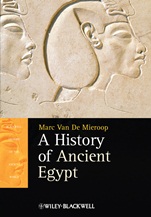
A History of Ancient Egypt
ISBN 9781405160711
Autor: Marc Van De Mieroop
Wydawca: Wiley
Dostępność: 3-6 tygodni
Cena: 203,70 zł
Przed złożeniem zamówienia prosimy o kontakt mailowy celem potwierdzenia ceny.
ISBN13: |
9781405160711 |
ISBN10: |
1405160713 |
Autor: |
Marc Van De Mieroop |
Oprawa: |
Paperback |
Rok Wydania: |
2010-08-13 |
Ilość stron: |
424 |
Wymiary: |
247x173 |
Tematy: |
HB |
A History of Ancient Egypt provides a chronological survey of Ancient Egypt from the beginning of the Egyptian state around 3000 B.C. until the time when the Roman Empire banned the writing of hieroglyphs in the late fourth century AD. This narrative history outlines major political and cultural events, and considers both social and economic life. Written in an authoritative and accessible style, and incorporating the latest scholarship, A History of Ancient Egypt is an invaluable resource for students of ancient Egyptian history.
List of Illustrations. List of Color Photographs. List of Maps. Preface. Chapter 1: Introductory Concerns. 1) What is ancient Egypt? Chronological boundaries. Geographical boundaries. What is Ancient Egyptian History? Who are the Ancient Egyptians? 2) Egypt′s Geography. The Nile River. The Desert. Climate. Frontiers and links. 3) The makeup of Egyptian historical sources. Papyri and ostraca. Monumental inscriptions. Historical criticism. 4) The Egyptians and their past. King lists. Egyptian concepts of kingship. 5) The Chronology of Egyptian History. Modern subdivisions of Egyptian history. Absolute chronology. 6) Prehistoric Developments. The Beginning of agriculture. Naqada I and II periods. Box 1: The five names of the kings of Egypt. Box 2: Egyptian city names. Chapter 2: The formation of the Egyptian state (ca. 3400–2686). 1) Sources. 2) Royal cemeteries and cities. The Late Naqada Culture. Dynasty 0. 3) The first kings. Images of War. The Unification of Egypt. 4) Ideological foundations of the new state. Kings. Cemeteries. Festivals. Royal Annals and Year Names. Gods and Cults. Bureaucracy. 5) The invention of writing. Precursors at Abydos. Hieroglyphic script. 6) Foreign Relations. The Uruk Culture of Mesopotamia. Late Fourth Millennium Nubia. Late Fourth Millennium Palestine. Box 1: Languages and scripts of ancient Egypt. Box 2: Canons of Egyptian art. Key Debate: The impetus to state formation in Egypt. Chapter 3: The Great Pyramid Builders (ca. 2686–2345). 1) Sources. 2) The evolution of the mortuary complex. Djoser′s Step Pyramid at Saqqara. Sneferu′s three pyramids. The Great Pyramids at Giza. Solar Temples of the Fifth Dynasty. 3) Administrating the Old Kingdom State. Neferirkara′s Archive at Abusir. Officialdom. 4) Ideological debates? Problems of Royal Succession. The Gods Horus and Ra. 5) Foreign Relations. Contacts with Nubia. Contacts with Asia. 6) Later traditions about the Old Kingdom. Djoser and Imhotep. Sneferu. The Great Pyramid Builders. Box 1: The afterlife of the mortuary complexes. Box 2: Egypt′s administration. Documents: 1) A papyrus from Abusir. 2) A Middle Kingdom Tale about the fifth dynasty. Key Debate: How was the Great Pyramid built? Chapter 4: The End of the Old Kingdom and the First Intermediate Period (ca. 2345–2055 BC). 1) Sources. 2) The rise of the regions and political fragmentation. Nomes and nomarchs. Mortuary Texts. Officials′ biographies. Pepy II. Why did the Old Kingdom dissolve? 3) Foreign Relations. Nubian independence. Beyond the Nile Valley. Mercenaries. 4) Competition between Herakleopolis and Thebes. Herakleopolis. Thebes. 5) Appraising the First Intermediate Period. Middle Kingdom literary reflections. Historical critique. Box: Pyramid Texts and Coffin Texts. Documents: 1) The Inscription of Pepynakht. 2) The Tale of Pepy II and his general. Key Debate: Climate Change and the First Intermediate Period. Chapter 5: The Middle Kingdom (ca. 2055–1650 BC). 1) Sources and chronology. 2) Kings and regional elites. Reunification and the Eleventh Dynasty. The start of the twelfth Dynasty and the foundation of Itj–tawi. Provincial powers in the early Middle Kingdom. Royal interference in the provinces. Administrative centralization. Royal power in the thirteenth dynasty. 3) Kings as warriors. The annexation of Nubia. 4) Egypt in the wider world. The Early Kingdom of Kush. The Eastern Desert and Sinai. Syria and Palestine. The World Beyond. Rhetoric and Practice in Foreign Relations. 5) The cult of Osiris. 6) Middle Kingdom Literature and its impact on Egyptian culture. Box 1: The Heqanakht papyri. Box 2: Reading Egyptian literature. Document: The Execration Texts. Key debate: Co–regencies. Chapter 6: The Second Intermediate period and the Hyksos (ca. 1700–1550 BC). 1) Sources and chronology. 2) Avaris: the multiple transformations of a Delta city. A history of Avaris. Cultural hybridity. Other immigrants. 3) The Hyksos. The name Hyksos. Hyksos origins. Egyptian cultural influences. Political history. The fourteenth and sixteenth dynasties. Hyksos rule in Palestine? 4) Nubia and the Kingdom of Kush. The independence of Lower Nubia. The Kingdom of Kush. Kerma. The extent of the Kingdom of Kush. 5) Thebes in the Middle. Royal tombs. Seqenenra Taa. Kamose′s war. 6) The Hyksos in later perspective. Queen Hatshepsut. The gods Ra and Seth. Manetho and Josephus. Box: Egyptian gods. Document: the Rhind mathematical papyrus. Key debate: Who were the Hyksos? Chapter 7: The Birth of Empire: The early 18th dynasty (ca. 1550–1390). 1) Egypt in a New World Order. 2) Sources and Chronology. 3) Egypt at War. War and Society in the New Kingdom. The "War of Liberation". The Annexation of Nubia. Wars in Western Asia. 4) Egypt and the Outside World. 5) Domestic Issues. Royal Succession. Hatshepsut. Royal Mortuary Customs. New Kingdom Bureaucracy. Building activity in the early 18th dynasty. Box: The Tomb of Rekhmira. Documents: 1) The biography of Ahmose, son of Ibana. 2) The Annals of Thutmose III. Key debate: Hatshepsut′s proscription. Chapter 8: The Amarna Revolution and the late 18th Dynasty (ca. 1390–1295). 1) An International Age. The Club of the Great Powers. The administration of Syria and Palestine. The rise of the Hittites. A failed marriage alliance. 2) Amenhotep III: the sun king. Amenhotep III′s divinity and his building projects. The king′s family. The king′s court. 3) From Amenhotep III to Amenhotep IV/Akhenaten. 4) Akhenaten. Theban years (years 1 to 5). Akhetaten (years 5 to 12). Turmoil (years 12 to 17). Akhenaten′s successors. Documents: 1) Hymn to Aten. 2) The Restoration Stele of Tutankhamun. Box: The city of Akhetaten. Key debate: The end of the Amarna period. 5) Akhenaten′s memory. Chapter 9: The Ramessid Empire (ca. 1295–1203). 1) Domestic policy: restoration and renewal. Sety I. Rameses II. 2) International relations: reforming the empire. Wars in Syria. A new imperial structure. Foreigners in Egypt. 3) Rameses′s court. Officials. The royal family. 4) A community of tomb builders. Documents: 1) Rameses defends his account of the battle of Qadesh. 2) Letters from Deir el–Medina. Box: Litigation over real estate. Key debate: Markets in ancient Egypt. Chapter 10: The End of Empire (ca. 1213–1070). 1) Problems at court. Sety II and Amenmessu. Saptah and Tausret. Sethnakht. 2) Breakdown of order. Tomb robberies. Workers′ strikes. 3) The decline of royal power. 4) Pressures from abroad. Libyans and Sea Peoples. The end of the international system. 5) End of the New Kingdom. Box: The Tale of Wenamun. Documents: 1) The "Israel Stele" of Merenptah. 2) Disregard for the king. Key Debate: The Sea Peoples. Chapter 11: The Third Intermediate Period (ca. 1069–715). 1) Sources and Chronology. 2) Twin cities: Thebes and Tanis (the 21st dynasty, 1069–945). Thebes. Tanis. The Concordat. 3) Libyan rule (22nd to 24th dynasties, 945–715). Centralization and diffusion of power. The God′s Wife of Amun. 4) The end of the Third Intermediate Period. Nubian resurgence. Saite Expansion. Documents: 1) Sheshonq I’s accession to power. 2) Piy′s Victory stele. Key Debate: Fortresses in Middle Egypt. Chapter 12: Egypt in the Age of Empires (ca. 715–332). 1) Sources and Chronology. 2) The Eastern Mediterranean in the First Millennium. 3) Egypt, Kush, and Assyria (ca. 715–656). Military incidents. 4) Egypt, Greeks, and Babylonians (656–525). Greek–Egyptian relations. Military activity. 5) Recollections of the past under the kings of Kush and Sais. 6) Egypt and Persia (525–332). Domination and resistance. Mixing Cultures. Box: The Apis bull and other animal cults. Document: The Petition of Petiese. Key Debate: King Cambyses and the Apis bull. Chapter 13: Greek and Roman Egypt (332 BC– AD 395). 1) Sources and Chronology. 2) Alexandria and Philae. Alexandria. Philae. 3) Kings, queens, and emperors. The Ptolemies. Queen Cleopatra VII. Roman Egypt. 4) Greeks, Romans, and Egyptians. Administration. Culture and Religion. 5) Economic developments: Agriculture, finance, and trade. 6) The African Hinterland. 7) The Christianization of Egypt. Box 1: Menches, village scribe of Kerkeosiris. Box 2: Manetho′s History of Egypt. Document: The Rosetta Stone. Key Debate: Greeks and Egyptians in Ptolemaic Egypt. Epilogue. Guide to further reading. Glossary. King list. Bibliography.
Marc Van De Mieroop is Professor of History at Columbia University. He is the author and editor of numerous publications on the Ancient Near East and ancient Egypt, including A History of the Ancient Near East, ca. 3000 – 323 B.C., 2nd edition (Wiley–Blackwell, 2007), The Eastern Mediterranean in the Age of Ramesses II (Wiley–Blackwell, 2007) and King Hammurabi of Babylon (Wiley–Blackwell, 2005).
“This Historywill probably be most valuable to readers new to the subject or to non–specialists interested in aspects of Egyptian culture and in need of historical context.” ( Antiquity , 1 January 2013)
Koszyk
Książek w koszyku: 0 szt.
Wartość zakupów: 0,00 zł
Informacje


Kontakt
Gambit
Centrum Oprogramowania
i Szkoleń Sp. z o.o.
Al. Pokoju 29b/22-24
31-564 Kraków
Siedziba Księgarni
ul. Kordylewskiego 1
31-542 Kraków
+48 12 410 5991
+48 12 410 5987
+48 12 410 5989
Subskrypcje
Administratorem danych osobowych jest firma Gambit COiS Sp. z o.o. Na podany adres będzie wysyłany wyłącznie biuletyn informacyjny.
Autoryzacja płatności

Informacje na temat autoryzacji płatności poprzez PayU.

© Copyright 2012: GAMBIT COiS Sp. z o.o. Wszelkie prawa zastrzeżone.
Projekt i wykonanie: Alchemia Studio Reklamy