


Wydawcy
Katalog tematyczny
- Archeologia (109)
- Ekonomia, finanse, business (13704)
- Filozofia (1445)
- Historia (3040)
- Języki i językoznawstwo (2356)
- Lifestyle, hobby i rozrywka (475)
- Medycyna (9704)
- Nauki humanistyczne (4)
- Nauki o Ziemi i środowisku (2638)
- Nauki ścisłe (20412)
- Nauki społeczne (8486)
- Nauki techniczne (13450)
- Prawo (1696)
- Publikacje informacyjne i interdyscyplinarne (1288)
- Religia i wierzenia (917)
- Technika komputerowa (4067)
- Zdrowie, relacje międzyludzkie i rozwój osobisty (657)





Informacje szczegółowe o książce
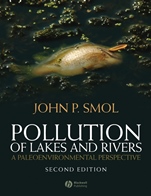
Pollution of Lakes and Rivers: A Paleoenvironmental Perspective
ISBN 9781405159135
Autor: John P. Smol
Wydawca: Wiley
Dostępność: 3-6 tygodni
Cena: 343,35 zł
Przed złożeniem zamówienia prosimy o kontakt mailowy celem potwierdzenia ceny.
ISBN13: |
9781405159135 |
ISBN10: |
1405159138 |
Autor: |
John P. Smol |
Oprawa: |
Paperback |
Rok Wydania: |
2008-01-07 |
Numer Wydania: |
2nd Edition |
Ilość stron: |
396 |
Wymiary: |
250x191 |
Tematy: |
AT |
Water is an essential life resource, yet the pollution of lakes and rivers has become an international problem, reaching crisis proportions in many regions. As demands on aquatic resources escalate, we must find new approaches to meet the challenges of the 21st century.
Now in its second edition, Pollution of Lakes and Rivers addresses many of our present–day water quality problems from an international perspective, covering critical issues such as acidification, eutrophication, land–use changes, pollution by metals and other contaminants, climatic change, and biodiversity losses. It demonstrates how paleolimnological approaches can be used to interpret the physical, chemical, and biological information stored in lake and river sediments, and how this information is integral to identifying key environmental stressors and setting targets for mitigation purposes.
The expanded second edition includes over 250 additional references and a new chapter on recent climatic change and its effects on water quality and quantity. This comprehensive, up–to–date volume provides essential insights into a multi–disciplinary science aimed at tackling some of the most urgent environmental problems of modern times.
PowerPoint slides of the artwork from the book are available from: http://biology.queensu.ca/∼pearl/textbook.htm
Reviews:
“This is a useful text. It provides a good level of detail so that the beginner in this area can appreciate what palaeolimnology can (and cannot) achieve. It goes beyond the simple introduction to provide a detailed understanding of how techniques can be applied ... This is a different take on the usual pollution text and would be of great use to those wishing to understand more from sedimentary records.”
Taken from the British Ecological Society’s Teaching Ecology website
Spis treści:
Preface to the second edition.
About the author.
1 There is n
o substitute for water.
2 How long is long?.
3 Sediments: an ecosystem’s memory.
4 Retrieving the sedimentary archive and establishing the geochronological clock: collecting and dating sediment cores.
5 Reading the records stored in sediments: the present is a key to the past.
6 The paleolimnologist’s Rosetta Stone: calibrating indicators to environmental variables using surface–sediment training sets.
7 Acidification: finding the “smoking gun”.
8 Metals, technological development, and the environment.
9 Persistent organic pollutants: industrially synthesized chemicals “hopping” across the planet.
10 Mercury – “the metal that slipped away”.
11 Eutrophication: the environmental consequences of over–fertilization.
12 Erosion: tracking the accelerated movement of material from land to water.
13 Species invasions, biomanipulations, and extirpations.
14 Greenhouse gas emissions and a changing atmosphere: tracking the effects of climatic change on water resources.
15 Ozone depletion, acid rain, and climatic warming: the problems of multiple stressors.
16 New problems, new challenges.
17 Paleolimnology: a window on the past, a key to our future.
Glossary.
References.
Index
Nota biograficzna:
John P. Smol FRSC is a Professor in the Department of Biology at Queen’s University, Kingston, Ontario, Canada, with a cross–appointment at the School of Environmental Studies. He holds the Canada Research Chair in Environmental Change, and is the Editor–in–Chief for the journal Environmental Reviews and is the founding editor of the Journal of Paleolimnology, which he edited from 1987 to 2007
Okładka tylna:
Water is an essential life resource, yet the pollution of lakes and rivers has become an international problem, reaching crisis proportions in many regions. As demands on aquat
ic resources escalate, we must find new approaches to meet the challenges of the 21st century.
Now in its second edition, Pollution of Lakes and Rivers addresses many of our present–day water quality problems from an international perspective, covering critical issues such as acidification, eutrophication, land–use changes, pollution by metals and other contaminants, climatic change, and biodiversity losses. It demonstrates how paleolimnological approaches can be used to interpret the physical, chemical, and biological information stored in lake and river sediments, and how this information is integral to identifying key environmental stressors and setting targets for mitigation purposes.
The expanded second edition includes over 250 additional references and a new chapter on recent climatic change and its effects on water quality and quantity. This comprehensive, up–to–date volume provides essential insights into a multi–disciplinary science aimed at tackling some of the most urgent environmental problems of modern times.
PowerPoint slides of the artwork from the book are available from: http://biology.queensu.ca/∼pearl/textbook.htm
Reviews:
“This is a useful text. It provides a good level of detail so that the beginner in this area can appreciate what palaeolimnology can (and cannot) achieve. It goes beyond the simple introduction to provide a detailed understanding of how techniques can be applied ... This is a different take on the usual pollution text and would be of great use to those wishing to understand more from sedimentary records.”
Taken from the British Ecological Society’s Teaching Ecology website
Koszyk
Książek w koszyku: 0 szt.
Wartość zakupów: 0,00 zł
Informacje


Kontakt
Gambit
Centrum Oprogramowania
i Szkoleń Sp. z o.o.
Al. Pokoju 29b/22-24
31-564 Kraków
Siedziba Księgarni
ul. Kordylewskiego 1
31-542 Kraków
+48 12 410 5991
+48 12 410 5987
+48 12 410 5989
Subskrypcje
Administratorem danych osobowych jest firma Gambit COiS Sp. z o.o. Na podany adres będzie wysyłany wyłącznie biuletyn informacyjny.
Autoryzacja płatności

Informacje na temat autoryzacji płatności poprzez PayU.

© Copyright 2012: GAMBIT COiS Sp. z o.o. Wszelkie prawa zastrzeżone.
Projekt i wykonanie: Alchemia Studio Reklamy