


Wydawcy
Katalog tematyczny
- Archeologia (109)
- Ekonomia, finanse, business (13704)
- Filozofia (1445)
- Historia (3040)
- Języki i językoznawstwo (2356)
- Lifestyle, hobby i rozrywka (475)
- Medycyna (9704)
- Nauki humanistyczne (4)
- Nauki o Ziemi i środowisku (2638)
- Nauki ścisłe (20412)
- Astronomia (294)
- Biologia (5119)
- Chemia (6540)
- Chemia analityczna (361)
- Chemia fizyczna (346)
- Chemia nieorganiczna (137)
- Chemia organiczna (535)
- Krystalografia (27)
- Minerologia (46)
- Fizyka (3309)
- Matematyka (4574)
- Nauki ścisłe, ogólnie (503)
- Nauki społeczne (8486)
- Nauki techniczne (13450)
- Prawo (1696)
- Publikacje informacyjne i interdyscyplinarne (1288)
- Religia i wierzenia (917)
- Technika komputerowa (4067)
- Zdrowie, relacje międzyludzkie i rozwój osobisty (657)





Informacje szczegółowe o książce
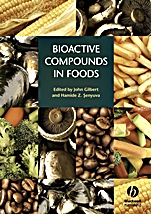
Bioactive Compounds in Foods
ISBN 9781405158756
Autor: John Gilbert, Hamide Şenyuva
Wydawca: Wiley
Dostępność: 3-6 tygodni
Cena: 926,10 zł
Przed złożeniem zamówienia prosimy o kontakt mailowy celem potwierdzenia ceny.
ISBN13: |
9781405158756 |
ISBN10: |
1405158751 |
Autor: |
John Gilbert, Hamide Şenyuva |
Oprawa: |
Hardback |
Rok Wydania: |
2008-05-16 |
Ilość stron: |
432 |
Wymiary: |
253x183 |
Tematy: |
PN |
Inherent toxicants and processing contaminants are both non–essential, bioactive substances whose levels in foods can be difficult to control. This volume covers both types of compound for the first time, examining their beneficial as well as their undesirable effects in the human diet. Chapters have been written as individually comprehensive reviews, and topics have been selected to illustrate recent scientific advances in understanding of the occurrence and mechanism of formation, exposure/risk assessment and developments in the underpinning analytical methodology. A wide range of contaminants are examined in detail, including pyrrolizidine alkaloids, glucosinolates, phycotoxins, and mycotoxins. Several process contaminants (eg acrylamide and furan), which are relatively new but which have a rapidly growing literature, are also covered.
The book provides a practical reference for a wide range of experts: specialist toxicologists (chemists and food chemists), hygienists, government officials and anyone who needs to be aware of the main issues concerning toxicants and process contaminants in food. It will also be a valuable introduction to the subject for post–graduate students.
Spis treści:
Introduction.
Professor John Gilbert, Central Science Laboratory, Sand Hutton, York, UK; and.
Dr Hamide Z. Senyuva, Ankara Test and Analysis Laboratory, Scientific and Technical Research Council of Turkey, Ankara, Turkey.
Part 1 – Natural toxicants.
1. Pyrrolizidine alkaloids.
Colin Crews, Central Science Laboratory, Sand Hutton, York, UK; and.
Professor Dr Rudi Krska, Christian Doppler Laboratory for Mycotoxin Research, Center for Analytical Chemistry, Department for Agrobiotechnology (IFA–Tulln), University of Natural Resources and Applied Life Sciences, Tulln, Austria.
2. Glucosinolates.
Dr Ruud Verkerk and Dr Matthijs Dekker, Department of
Food Technology and Nutrition Science, Agricultural University Wageningen, The Netherlands.
3. Phycotoxins in seafoods.
Dr John Leftley Scottish Association for Marine Science, Oban, Argyll, Scotland, UK and Integrin Advanced Biosystems Ltd., Marine Resource Centre, Barcaldine, Argyll, Scotland, UK; and.
Dr Fiona Hannah, University of London, University Marine Biological Station, Millport, Isle of Cumbrae, Scotland, UK.
4. Mushroom toxins.
Professor Jana Hajslova, Institute of Chemical Technology, Prague, Czech Republic.
5. Mycotoxins.
Mr Keith Scudamore, KAS Mycotoxins, Taplow, Berkshire, UK.
6. Phytoestrogens.
Dr Don Clarke, Central Science Laboratory, Sand Hutton, York, UK.
7. ß–Carboline alkaloids.
Dr T. Herraiz, Spanish Council for Scientific Research, Madrid, Spain.
8. Naturally–occuring Nitrates and Nitrites in foods.
Dr M. Reinik, Estonian Health Protection Inspectorate, Tartu Laboratory, Tartu, Estonia.
Dr T Tamme, Estonian University of Life Sciences, Department of Food Science and Hygiene, Tartu, Estonia.
Dr M. Roasto, Estonian University of Life Sciences, Dept. of Food Science and Hygiene, Tartu, Estonia.
Part II Man–made components.
9. Acrylamide in heated foods.
Dr Hamide Z. Senyuva, Ankara Test and Analysis Laboratory, Scientific and Technical Research Council of Turkey, Ankara, Turkey.
Dr Vural Gökmen, Food Engineering Department, Hacettepe University, Ankara, Turkey.
10. Furan in processed foods.
Dr Imre Blank, Science Department Head, Nestle Product Technology Center, Orbe, Switzerland.
11. Chloropropanols and chloroesters.
Dr Colin Hamlet, RHM Technology Ltd, The Lord Rank Centre, High Wycombe, Bucks, UK.
12. Hetrocyclic amines.
Dr M. Knizel, University of California, Lawrence Livermore National Labor
atory, Biology & Biotechnology Research Program, Livermore, CA, USA.
13. Polycyclic Aromatic Hydrocarbons.
Dr M. Rose, Central Science Laboratory, Sand Hutton, York, UK.
Dr Laura Cano–Lerida, Johnson Matthey Catalysis, Belasis Avenue, Chilton, Billingham, UK.
Dr P. Walton, Department of Chemistry, University of York, Heslington, York, UK.
Nota biograficzna:
Professor John Gilbert, Central Science Laboratory Sand Hutton, York, UK
Dr Hamide Z. Senyuva, Ankara Test and Analysis Laboratory, Scientific and Technical Research Council of Turkey, Ankara, Turkey
Both of the editors are employed in government organisations responsible for food safety and have published extensively on the analysis of toxicants and process contaminants and measures to monitor and control levels. Professor Gilbert has been Editor–in–Chief of the journal Food Additives and Contaminants since 2000.
Okładka tylna:
Inherent toxicants and processing contaminants are both non–essential, bioactive substances whose levels in foods can be difficult to control. This volume covers both types of compound for the first time, examining their beneficial as well as their undesirable effects in the human diet. Chapters have been written as individually comprehensive reviews, and topics have been selected to illustrate recent scientific advances in understanding of the occurrence and mechanism of formation, exposure/risk assessment and developments in the underpinning analytical methodology. A wide range of contaminants are examined in detail, including pyrrolizidine alkaloids, glucosinolates, phycotoxins, and mycotoxins. Several process contaminants (eg acrylamide and furan), which are relatively new but which have a rapidly growing literature, are also covered.
The book provides a practical reference for a wide range of experts: specialist toxicologists (chemists and food chemists), hygie
nists, government officials and anyone who needs to be aware of the main issues concerning toxicants and process contaminants in food. It will also be a valuable introduction to the subject for post–graduate students.
Koszyk
Książek w koszyku: 0 szt.
Wartość zakupów: 0,00 zł
Informacje


Kontakt
Gambit
Centrum Oprogramowania
i Szkoleń Sp. z o.o.
Al. Pokoju 29b/22-24
31-564 Kraków
Siedziba Księgarni
ul. Kordylewskiego 1
31-542 Kraków
+48 12 410 5991
+48 12 410 5987
+48 12 410 5989
Subskrypcje
Administratorem danych osobowych jest firma Gambit COiS Sp. z o.o. Na podany adres będzie wysyłany wyłącznie biuletyn informacyjny.
Autoryzacja płatności

Informacje na temat autoryzacji płatności poprzez PayU.

© Copyright 2012: GAMBIT COiS Sp. z o.o. Wszelkie prawa zastrzeżone.
Projekt i wykonanie: Alchemia Studio Reklamy