


Wydawcy
Katalog tematyczny
- Archeologia (109)
- Ekonomia, finanse, business (13704)
- Filozofia (1445)
- Historia (3040)
- Języki i językoznawstwo (2356)
- Lifestyle, hobby i rozrywka (475)
- Medycyna (9704)
- Nauki humanistyczne (4)
- Nauki o Ziemi i środowisku (2638)
- Nauki ścisłe (20412)
- Nauki społeczne (8486)
- Nauki techniczne (13450)
- Budownictwo lądowe (1045)
- Budownictwo komunikacyjne (9)
- Hydraulika (33)
- Konstrukcje budowlane (95)
- Mechanika konstrukcji (182)
- Przemysł budowlany (7)
- Chemia przemysłowa (2258)
- Elektronika i telekomunikacja (3287)
- Energetyka (1122)
- Inne nauki stosowane (363)
- Inżynieria biochemiczna (507)
- Inżynieria transportu (232)
- Mechanika i materiały (3316)
- Nauka o środowisku (321)
- Rolnictwo (507)
- Technika, ogólnie (475)
- Prawo (1696)
- Publikacje informacyjne i interdyscyplinarne (1288)
- Religia i wierzenia (917)
- Technika komputerowa (4067)
- Zdrowie, relacje międzyludzkie i rozwój osobisty (657)





Informacje szczegółowe o książce
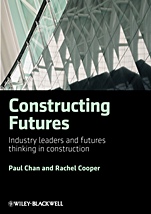
Constructing Futures: Industry leaders and futures thinking in construction
ISBN 9781405157971
Autor: Paul Chan, Rachel Cooper
Wydawca: Wiley
Dostępność: 3-6 tygodni
Cena: 476,70 zł
Przed złożeniem zamówienia prosimy o kontakt mailowy celem potwierdzenia ceny.
ISBN13: |
9781405157971 |
ISBN10: |
1405157976 |
Autor: |
Paul Chan, Rachel Cooper |
Oprawa: |
Hardback |
Rok Wydania: |
2010-11-26 |
Ilość stron: |
240 |
Wymiary: |
248x178 |
Tematy: |
Q |
The growing interest within the construction industry in future scenario planning has not always corresponded with an understanding of how futures thinking is shaped in policy–making.
Constructing Futures: industry leaders and futures thinking in construction takes a thematic approach to the future of the UK construction industry. It presents the results of a series of in–depth interviews conducted with leading construction figures and then structures the discussion into chapters addressing key contemporary issues in the industry.
These high–profile figures are drawn from a wide range of stakeholder groups representing the realities of construction – including architects, client organisations, consultants, contractors, developers, lobby groups with special interests, policy makers, professional institutions, and trade unions. A total of 15 influential figures were interviewed for the book, from Sir Michael Latham and Bob White to Wayne Hemmingway and Kevin McCloud.
The authors juxtapose the interviewees’ views with their own examination of both mainstream and construction management literature on current issues affecting the industry, combining practical insights with an exploration of the key theoretical debates.
Part I of the book looks at the industry’s past, reviewing a series of foresight studies of the construction sector and re–presenting stories of the interviewees’ lives to examine the development of leadership in the industry. In Part II, the authors focus on two fundamental issues in today’s construction industry: sustainable development and governance. Part III looks to the future, highlighting key lessons learnt and proposing a series of research questions for industry and academia.
Spis treści:
1: The Past.
· Chapter 1: Intr
oduction.
This chapter provides a background literature review on futures thinking. It poses the question as to whether key thinkers are necessarily different from people at the grassroots. The chapter also explains the methodology employed in this book. This covers the conduct of the interviews and how the data collected was analysed and presented in the subsequent chapters..
· Chapter 2: Personal motivation and development of key thinkers.
This chapter presents a cross–sectional analysis of the nature of key thinkers and seeks to understand how they got involved with their current work. The chapter is likely to distil the personal motivation and delve deep into their passion for a particular aspect of construction that each key thinker contributes in practice..
.
Part 2: The Present: What do key thinkers think about contemporary issues.
· Chapter 3: Partnering, alliances, collaboration and the whole gamut of initiatives.
The concept of partnering has been around for more than a decade in the construction industry. Through the analysis of the views of key thinkers, the chapter should present a critical discussion of the trends towards collaborative working in relation to the performance and sustenance of the construction industry..
· Chapter 4: The role of the government.
Between 30% to 40% of construction work is through the public purse. This chapter analyses the key thinkers’ views on the role of government in terms of funding projects, as well as its role in regulating (and legislation) the working practices of the industry. The chapter should also discuss the role of public–sector procurement and how this impacts on the future of the industry..
· Chapter 5: Sustainability.
Sustainability has become an important agenda in recent years, from the concerns with energy sources and efficiency, whole life costing, strategic view of procuring and using buildings, building sustainable communities e
tc. The chapter should present an analysis of the key thinkers’ views regarding sustainability and examines the notion of “cradle to grave” in greater depth..
· Chapter 6: Corporate social responsibility.
Corporate social responsibility appears to be the latest trend (or fad) in the construction industry. The chapter should present an analysis of the key thinkers’ views regarding social responsibility and questions as to whether corporate social responsibility can be achieved..
· Chapter 7: Globalisation.
Anytime, anywhere and with anyone – globalisation invades every aspect of life. The notion of “Think global act local” is inescapable from construction. The chapter should analyse the key thinkers’ views on the pervasiveness of globalisation and how this could alter the construction industry. Another likely issue to be discussed could include cross–cultural management..
· Chapter 8: Relationship management.
The construction industry is somewhat incestuous. Managing relationships forms the crux of the business. The chapter is likely to analyse the key thinkers’ views on the importance of networking, trust and building up long–term partnerships between stakeholders..
Part 3: A glimpse of the future.
· Chapter 9: Structure of the industry.
The chapter should discuss the changes to the structure of the industry in light of the key thinkers’ views of the contemporary issues above. Accordingly, the industry will become more polarised between the larger contractors (and networks of contractors) and the small jobbers who will become more distant from current industry–level initiatives. The need to reconsider the notion of a single industry becomes even more pressing..
· Chapter 10: Education and training.
The education and training will change. On the one hand, cross–cultural understanding and appreciation becomes an integral part o
f training the professional of the future. Traditional craft boundaries also become questionable with the rising interests in modern methods of construction..
· Chapter 11: Professionalism in the industry.
The traditional boundaries between built environment professionals are shifting. The re–emphasis of serving the public interest becomes core to the development of the professional. This should impact on working practices, as well as the issues of social responsibility of the professional and the regulatory aspects of professions..
· Chapter 12: Evolving nature of construction work.
Construction work transcends the traditional project–based operations to see a further integration between design, construction and use. Furthermore, the commercial aspects of construction become ever more vital and the nature of construction businesses will transform into one that places more emphasis on management. On the other hand, traditional craft will diminish and labour will upskill in higher–order abstract skills e.g. process thinking with the growth in modern methods of construction..
· Chapter 13: Conclusions and Recommendations.
This chapter synthesises the issues discussed in the book and the trends identified by the key thinkers. The chapter should also analyse the key thinkers’ views as to how to embrace the future scenarios identified.
Nota biograficzna:
Paul Chan, Lecturer, School of Mechanical, Aerospace and Civil Engineering, University of Manchester, UK
Rachel Cooper, Lancaster Institute for the Contemporary Arts, University of Lancaster, UK
Okładka tylna:
The growing interest within the construction industry in future scenario planning has not always corresponded with an understand
ing of how futures thinking is shaped in policy–making.
Constructing Futures: industry leaders and futures thinking in construction takes a thematic approach to the future of the UK construction industry. It presents the results of a series of in–depth interviews conducted with leading construction figures and then structures the discussion into chapters addressing key contemporary issues in the industry.
These high–profile figures are drawn from a wide range of stakeholder groups representing the realities of construction – including architects, client organisations, consultants, contractors, developers, lobby groups with special interests, policy makers, professional institutions, and trade unions. A total of 15 influential figures were interviewed for the book, from Sir Michael Latham and Bob White to Wayne Hemmingway and Kevin McCloud.
The authors juxtapose the interviewees’ views with their own examination of both mainstream and construction management literature on current issues affecting the industry, combining practical insights with an exploration of the key theoretical debates.
Part I of the book looks at the industry’s past, reviewing a series of foresight studies of the construction sector and re–presenting stories of the interviewees’ lives to examine the development of leadership in the industry. In Part II, the authors focus on two fundamental issues in today’s construction industry: sustainable development and governance. Part III looks to the future, highlighting key lessons learnt and proposing a series of research questions for industry and academia.
Koszyk
Książek w koszyku: 0 szt.
Wartość zakupów: 0,00 zł
Informacje


Kontakt
Gambit
Centrum Oprogramowania
i Szkoleń Sp. z o.o.
Al. Pokoju 29b/22-24
31-564 Kraków
Siedziba Księgarni
ul. Kordylewskiego 1
31-542 Kraków
+48 12 410 5991
+48 12 410 5987
+48 12 410 5989
Subskrypcje
Administratorem danych osobowych jest firma Gambit COiS Sp. z o.o. Na podany adres będzie wysyłany wyłącznie biuletyn informacyjny.
Autoryzacja płatności

Informacje na temat autoryzacji płatności poprzez PayU.

© Copyright 2012: GAMBIT COiS Sp. z o.o. Wszelkie prawa zastrzeżone.
Projekt i wykonanie: Alchemia Studio Reklamy