


Wydawcy
Katalog tematyczny
- Archeologia (109)
- Ekonomia, finanse, business (13704)
- Filozofia (1445)
- Historia (3040)
- Języki i językoznawstwo (2356)
- Lifestyle, hobby i rozrywka (475)
- Medycyna (9704)
- Nauki humanistyczne (4)
- Nauki o Ziemi i środowisku (2638)
- Nauki ścisłe (20412)
- Nauki społeczne (8486)
- Nauki techniczne (13450)
- Prawo (1696)
- Publikacje informacyjne i interdyscyplinarne (1288)
- Religia i wierzenia (917)
- Technika komputerowa (4067)
- Zdrowie, relacje międzyludzkie i rozwój osobisty (657)





Informacje szczegółowe o książce
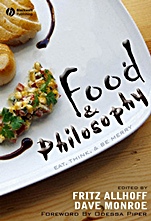
Food and Philosophy: Eat, Think, and Be Merry
ISBN 9781405157759
Autor: Fritz Allhoff, Dave Monroe
Wydawca: Wiley
Dostępność: 3-6 tygodni
Cena: 141,75 zł
Przed złożeniem zamówienia prosimy o kontakt mailowy celem potwierdzenia ceny.
ISBN13: |
9781405157759 |
ISBN10: |
1405157755 |
Autor: |
Fritz Allhoff, Dave Monroe |
Oprawa: |
Paperback |
Rok Wydania: |
2007-11-01 |
Ilość stron: |
320 |
Wymiary: |
229x152 |
Tematy: |
HP |
Insightful and zesty, this engaging volume encourages readers to sample essays that appeal to their philosophical tastes. Organized thematically like an à la carte menu, the book opens with Food in Culture & Society, a glimpse at the inherently social and cultural aspects of food, whetting the appetite for what is to follow, including topics such as: Who decides just what constitutes quality cuisine or foul fare? Is food aesthetically important? How are food and sensuality related? Do we have an ethical responsibility to eat organic, free–range, vegetarian, or locally grown foods?
In addition to contributions by philosophers, the book also includes a rare collection of essays by culinary professionals and food critics who infuse their passion for food with philosophical flavorings. Another installment in the Epicurean Trilogy (together with Wine & Philosophy and Beer & Philosophy), Food & Philosophy serves up a healthy helping of timely food–oriented thinking.
Dedication.
Acknowledgements.
Foreword.
Introduction: Settling the Table: An Introduction to Food and Philosophy (Fritz Allhoff, Western Michigan University and Dave Monroe, Michigan State University).
Appetizers: Food in Culture and Society.
1. Epicurus, The Foodies′ Philosopher (Michael Symons, Marsden Fund culinary researcher).
2. Carving Values with a Spoon (Lydia Zepeda, University of Wisconsin).
3. Should I Eat Meat?: Vegetarianism and Dietary Choice (Jen Wrye, Carleton University).
4. Sublime Hunger: A Consideration of Eating Disorders Beyond Beauty (Sheila Lintott, Bucknell University).
First Course: Taste and Food Criticism.
5. Taste Perception, Scepticism, and Gastronomic Expertise (Michael Shaffer, St. Cloud State University).
6. Who Needs a Critic?: The Standard of Taste and the Power of Branding (Jeremy Iggers, Minneapolis Star Tribune).
7. Hungry Engrams: Food and Non–Representational Memory (Fabio Perasecoli, New York University).
Second Course: Edible Art & Aesthetics.
8. Can a Soup Be Beautiful?: The Rise of Gastronomy and the Aesthetics of Food (Kevin Sweeney, University of Tampa).
9. Can Food Be Art?: The Problem of Consumption (Dave Monroe, Michigan State University).
10. Delightful, Delicious, Disgusting (Carolyn Korsmeyer, SUNY Buffalo).
11. Food Fetishes and Sin–Esthetics: Professor Dewey, Please Save Me from Myself (Glenn Kuehn, Convivium).
Dessert: Eating & Ethics.
12. Eating Well: Thinking Ethically about Food (Roger King, University of Maine)13. Picky Eating as a Moral Failing (Matt Brown, UC San Diego).
14. Shall We Dine?: Confronting the Strange and Horrifying Story of GMOs in Our Food (Paul Thompson, Michigan State University).
15. Taking Stock: An Overview of Arguments for and against Hunting (Linda Jerofke, Eastern Oregon University).
Petits Fours: Compliments of the Chef.
16. Food and Sensuality: The Perfect Pairing (Jennifer Iannolo, The Gilded Fork).
17. Duty to Cook: Exploring the Unique Intents and Ethics of Restaurant and Home Cuisine (Christian Krautkramer, Boston University).
18. Diplomacy of the Dish: Cultural Understanding through Taste (Mark Tafoya, ReMARKable Palate Personal Chef Service).
19. Balancing Tastes: Inspiration, Taste, and Aesthetics in the Kitchen (Aki Komozawa, IdeasInFood.com and Alex Talbot, IdeasInFood.com).
Afterword.
20. Thus Ate Zarathustra (Woody Allen).
Biosketches.
Fritz Allhoff, PhD, is an assistant professor of philosophy at Western Michigan University. His research areas are in ethical theory, applied ethics, and philosophy of biology/science. He is the editor of Wine & Philosophy (Blackwell 2007).
Dave Monroe was an accomplished chef, restaurant consultant, and caterer prior to pursuing academic philosophy. He is an adjunct instructor at the Applied Ethics Institute of St. Petersburg College.
It turns out that not only have reputable psychologists at well–respected institutions done experimental studies on this effect, but it also serves as a kind of foul point for various philosophical questions. The works set out to address the intersection between philosophy and areas of everyday general concern: food, wine, and beer. In addition to straightforward philosophical discussions, the volumes include historical discussions, legal questions, some personal reflections. ( Gastronomica, Fall 2008)
A truly well rounded view and a critical reflection on what and how we eat can contribute to a robust enjoyment of gastronomic pleasures. (Gourmet Retailer)
Koszyk
Książek w koszyku: 0 szt.
Wartość zakupów: 0,00 zł
Informacje


Kontakt
Gambit
Centrum Oprogramowania
i Szkoleń Sp. z o.o.
Al. Pokoju 29b/22-24
31-564 Kraków
Siedziba Księgarni
ul. Kordylewskiego 1
31-542 Kraków
+48 12 410 5991
+48 12 410 5987
+48 12 410 5989
Subskrypcje
Administratorem danych osobowych jest firma Gambit COiS Sp. z o.o. Na podany adres będzie wysyłany wyłącznie biuletyn informacyjny.
Autoryzacja płatności

Informacje na temat autoryzacji płatności poprzez PayU.

© Copyright 2012: GAMBIT COiS Sp. z o.o. Wszelkie prawa zastrzeżone.
Projekt i wykonanie: Alchemia Studio Reklamy