


Wydawcy
Katalog tematyczny
- Archeologia (109)
- Ekonomia, finanse, business (13704)
- Filozofia (1445)
- Historia (3040)
- Języki i językoznawstwo (2356)
- Lifestyle, hobby i rozrywka (475)
- Medycyna (9704)
- Nauki humanistyczne (4)
- Nauki o Ziemi i środowisku (2638)
- Nauki ścisłe (20412)
- Nauki społeczne (8486)
- Nauki techniczne (13450)
- Prawo (1696)
- Publikacje informacyjne i interdyscyplinarne (1288)
- Religia i wierzenia (917)
- Technika komputerowa (4067)
- Zdrowie, relacje międzyludzkie i rozwój osobisty (657)





Informacje szczegółowe o książce
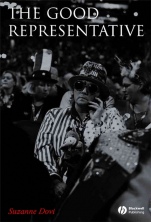
The Good Representative
ISBN 9781405155786
Autor: Suzanne Dovi
Wydawca: Wiley
Dostępność: 3-6 tygodni
Cena: 218,40 zł
Przed złożeniem zamówienia prosimy o kontakt mailowy celem potwierdzenia ceny.
ISBN13: |
9781405155786 |
ISBN10: |
1405155787 |
Autor: |
Suzanne Dovi |
Oprawa: |
Hardback |
Rok Wydania: |
2006-12-04 |
Ilość stron: |
272 |
Wymiary: |
235x165 |
Tematy: |
HPGP |
Is President George W. Bush, by democratic standards, a good or a bad representative? Who is a better representative according to democratic standards: former Rep. Tom DeLay or Senator Hillary Clinton? Political theorists typically remain silent about the proper standards that democratic citizens should use for selecting their representatives. In The Good Representative , Suzanne Dovi argues that democratic citizens should evaluate their representatives using democratic criteria. In doing so, she provides an account of what it means to represent in a democratic fashion as well as a framework within which citizens can assess the democratic credentials of their representatives. For Dovi, good democratic representatives manifest three virtues: they must be fair–minded, build critical trust, and be good gatekeepers. Arguing that democratic representation, even good democratic representation, is not always desirable, Dovi also prompts us to think about how democratic representation can be a tool of liberation or a tool of domination. This timely and provocative book articulates, for the first time, a normative framework within which democratic citizens can fruitfully proceed in assessing their representatives as democratic representatives.
Preface viii Acknowledgments xi 1 Who is a Good Representative? 1 An Ethics of Democratic Representation 6 The Proper Scope of an Ethics of Democratic Representation 9 Three Assumptions 14 The Theoretical Contribution of The Good Representative 17 Deliberative democracy 18 Descriptive representation for historically disadvantaged groups 21 The Structure of The Good Representative 23 2 Moving beyond Descriptive Representation 27 Democratic Representation and Descriptive Representation 29 Two Problems with Descriptive Representation 34 Justifying the Silence about Criteria 36 The Need for Criteria 39 The Need for Democratic Standards 44 3 Democratic Advocacy and Good Democratic Representation 52 The Scope of Democratic Representation 53 Sources of Authority for Democratic Representatives 62 Holding Democratic Representatives Accountable 65 Existing Standards for Identifying Bad Representatives 68 The interests of the constituents 69 Autonomy 71 Professional norms 72 Why Democratic Standards? 75 The importance of standards 78 The Importance of Function 81 Identifying the function of democratic representatives 84 Political advocacy 85 Democratic advocacy 88 The Three Virtues 90 Democracy and Democratic Citizens’ Preferences 92 4 The Virtue of Fair–Mindedness 100 Political Efficacy 101 Democratic Efficacy 104 Why Civic Equality? 105 The Meaning of Civic Equality 108 Using the First Virtue to Evaluate Representatives 114 Two Problems with the First Virtue 120 5 The Virtue of Critical Trust Building 124 Democratic Representation and Participation 127 Problems with Evaluating Representatives by Citizen Participation 130 The Virtue of Critical Trust Building 134 Promoting Critical Trust 139 Problems with the Second Virtue 141 6 The Virtue of Good Gatekeeping 145 Developing the Right Relationships 148 The Scope of Mutual Relations 155 The Virtue of Good Gatekeeping 161 Political opponents 162 The dispossessed 164 The marginalized 167 A Perspective of Exclusion 170 Problems with the Third Virtue 174 Conclusion 177 7 Preferable Democratic Representatives: Real–World Political Virtues 179 Preferability and the Virtues 182 Preferability and System–Dependency 183 Are Good Descriptive Representatives Good Democratic Representatives? 185 Choosing among the Virtues 190 Bad Democratic Representatives 196 Notes 201 References 228 Index 241
Suzanne Dovi is an Assistant Professor of Political Science and Philosophy at the University of Arizona. Her research interests include democratic theory, representation (especially the representation of historically disadvantaged groups), feminist theory, and normative concepts such as hypocrisy, guilt, and despair. Her work has appeared in American Political Science Review , Constellations , Journal of Politics , and Polity .
"This book provides an excellent ′yardstick′ to aid in the application of democratic theory…addresses potential problems…and discusses the realities of selecting ′good enough′ representatives." ( Choice )
Koszyk
Książek w koszyku: 0 szt.
Wartość zakupów: 0,00 zł
Informacje


Kontakt
Gambit
Centrum Oprogramowania
i Szkoleń Sp. z o.o.
Al. Pokoju 29b/22-24
31-564 Kraków
Siedziba Księgarni
ul. Kordylewskiego 1
31-542 Kraków
+48 12 410 5991
+48 12 410 5987
+48 12 410 5989
Subskrypcje
Administratorem danych osobowych jest firma Gambit COiS Sp. z o.o. Na podany adres będzie wysyłany wyłącznie biuletyn informacyjny.
Autoryzacja płatności

Informacje na temat autoryzacji płatności poprzez PayU.

© Copyright 2012: GAMBIT COiS Sp. z o.o. Wszelkie prawa zastrzeżone.
Projekt i wykonanie: Alchemia Studio Reklamy