


Wydawcy
Katalog tematyczny
- Archeologia (109)
- Ekonomia, finanse, business (13704)
- Filozofia (1445)
- Historia (3040)
- Języki i językoznawstwo (2356)
- Lifestyle, hobby i rozrywka (475)
- Medycyna (9704)
- Nauki humanistyczne (4)
- Nauki o Ziemi i środowisku (2638)
- Nauki ścisłe (20412)
- Nauki społeczne (8486)
- Nauki techniczne (13450)
- Prawo (1696)
- Publikacje informacyjne i interdyscyplinarne (1288)
- Religia i wierzenia (917)
- Technika komputerowa (4067)
- Zdrowie, relacje międzyludzkie i rozwój osobisty (657)





Informacje szczegółowe o książce
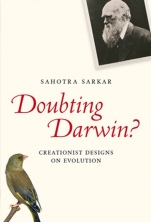
Doubting Darwin?: Creationist Designs on Evolution
ISBN 9781405154918
Autor: Sahotra Sakar
Wydawca: Wiley
Dostępność: 3-6 tygodni
Cena: 159,60 zł
Przed złożeniem zamówienia prosimy o kontakt mailowy celem potwierdzenia ceny.
ISBN13: |
9781405154918 |
ISBN10: |
1405154918 |
Autor: |
Sahotra Sakar |
Oprawa: |
Paperback |
Rok Wydania: |
2007-04-17 |
Ilość stron: |
232 |
Wymiary: |
230x155 |
Tematy: |
HP |
The debate about what to teach as science in our schools has reached boiling point, both inside and outside the classroom. From Young Earth to Intelligent Design creationism, the intrusion of political and religious ideals is damaging the integrity of our public education system.
Doubting Darwin? puts the dispute into its scientific and historical context, illuminating the intellectual debate that is shaping educational policy.
In his thought–provoking book, noted biologist and philosopher Sahotra Sarkar exposes the frauds and fallacies of Intelligent Design Theory and its claim to be good science. An expert exploration of key arguments, Doubting Darwin? adamantly rejects Intelligent Design s claim to legitimacy, showing clearly how and why it is an unsuitable alternative to evolutionary biology in the classroom. This book examines the concrete arguments and positions of the Intelligent Design Movement, analyzes the use of computer science and information theory by the creationists, and discusses the relation between Darwin and modern evolutionary theory. Doubting Darwin? is an accessible and engaging read for anyone looking to gain a genuinely informed perspective on this heated debate.
List of Figures.
Preface.
Acknowledgements.
1. Introduction.
a. The Central Argument.
b. The Evidence for Evolution.
c. Rejecting Theories.
d. Plan of the Book.
2. The Legacy of Darwin and Wallace.
a. The Theory of Natural Selection.
b. Absurd in the Highest Possible Degree .
c. Darwin s Unfortunate Retreat.
d. Wallace and Weisman.
e. The Decline of Darwinism.
f. Mind and Culture.
g. Contemporary Implications.
3. The Argument from Design.
a. Adaptation and Design.
b. Function, Design, and Selection.
c. Blind Variation.
d. Dembski s Resurrection.
4. Mere Evolution.
a. Mendel s Legacy.
b. The Modern Framework for Evolutionary Theory.
c. Selectionism and Neutralism.
d. Reconstructing the Past.
e. Contemporary Debates.
f. Terminological Choices.
5. The Cost of Lunch.
a. Evolutionary Algorithms.
b. The No Free Lunch Theorems.
c. Dembski s Excitement.
d. Utter Irrelevance.
e. Adaptationism.
f. Final Assessment.
6. Complexity is Complicated.
a. Irreducible Complexity?.
b. Pathways to ICSs.
c. The Citric Acid Cycle.
d. The Blood Clotting System.
e. The Bacterial Flagellum.
f. Protein Evolution.
g. Irreducibility and Design.
7. Questions of Information.
a. What is Biological Information?.
b. Information and Evolution.
c. Specified Complexity.
d. The Law of Conservation of Information.
e. The Cambrian Explosion .
f. Taking Leave of Creation Biology.
8. Cosmic Coincidences.
a. Physics and Biology.
b. Anthropic Principles?.
c. The Force of Improbability.
d. A Cosmological Design Argument.
e. Is Fine–Tuning Surprising?.
f. A Concluding Note.
9. Naturalism and Its Discontents.
a. What Naturalism Is.
b. Nagel s Legacy.
c. The Problem of Normativity.
d. Creationist Critiques.
e. Metaphysical Naturalism.
10 Conclusions.
a. Critiques of Evolutionary Theory.
b. Is ID Science?.
c. Back to the Classroom.
Notes.
References.
Index
Sahotra Sarkar is Professor of Integrative Biology and of Philosophy at the University of Texas at Austin. He is author of Genetics and Reductionism: A Primer (1998), Molecular Models of Life (2004), and Biodiversity and Environmental Philosophy (2005); editor of several books, including The Philosophy and History of Molecular Biology (1996), the six–volume Science and the Philosophy in the Twentieth Century: Basic Works of Logical Empiricism (1996), and co–editor of the two–volume The Philosophy of Science: An Encyclopedia (2005).
Technically sound in both philosophy of science and evolutionary theory, [Sarkar] appreciates the social responsibility of this position. He is not afraid to wade into a charged political atmosphere. It would make a wonderful textbook for an undergraduate course in either biology or philosophy, and could also be effectively used as a jumping off point into a deeper exploration of a host of topics. My copy will be close at hand on my bookshelf when ID creationists present themselves at my door. ( Bioscience, December 2008)
This is a clear and judicious book Sarkar is to be praised for his nuanced and balanced presentation of the arguments and issues he discusses. (Kaleidoscope)
Sarkar s concise, elegant prose allows him to enlighten and engage readers on every topic a must read for anyone interested in following the debate... (Choice)
Koszyk
Książek w koszyku: 0 szt.
Wartość zakupów: 0,00 zł
Informacje


Kontakt
Gambit
Centrum Oprogramowania
i Szkoleń Sp. z o.o.
Al. Pokoju 29b/22-24
31-564 Kraków
Siedziba Księgarni
ul. Kordylewskiego 1
31-542 Kraków
+48 12 410 5991
+48 12 410 5987
+48 12 410 5989
Subskrypcje
Administratorem danych osobowych jest firma Gambit COiS Sp. z o.o. Na podany adres będzie wysyłany wyłącznie biuletyn informacyjny.
Autoryzacja płatności

Informacje na temat autoryzacji płatności poprzez PayU.

© Copyright 2012: GAMBIT COiS Sp. z o.o. Wszelkie prawa zastrzeżone.
Projekt i wykonanie: Alchemia Studio Reklamy