


Wydawcy
Katalog tematyczny
- Archeologia (109)
- Ekonomia, finanse, business (13704)
- Filozofia (1445)
- Historia (3040)
- Języki i językoznawstwo (2356)
- Lifestyle, hobby i rozrywka (475)
- Medycyna (9704)
- Nauki humanistyczne (4)
- Nauki o Ziemi i środowisku (2638)
- Nauki ścisłe (20412)
- Nauki społeczne (8486)
- Edukacja (229)
- Kryminologia, opieka spełeczna (284)
- Obronność (10)
- Polityka (1389)
- Psychologia (777)
- Socjologia (410)
- Społeczeństwo i kultura (187)
- Nauki techniczne (13450)
- Prawo (1696)
- Publikacje informacyjne i interdyscyplinarne (1288)
- Religia i wierzenia (917)
- Technika komputerowa (4067)
- Zdrowie, relacje międzyludzkie i rozwój osobisty (657)





Informacje szczegółowe o książce
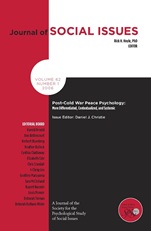
Post–Cold War Peace Psychology: More Differentiated, Contexualized and Systemic
ISBN 9781405154864
Autor: Daniel J. Christie, Rick H. Hoyle
Wydawca: Wiley
Dostępność: 3-6 tygodni
Cena: 218,40 zł
Przed złożeniem zamówienia prosimy o kontakt mailowy celem potwierdzenia ceny.
ISBN13: |
9781405154864 |
ISBN10: |
1405154861 |
Autor: |
Daniel J. Christie, Rick H. Hoyle |
Oprawa: |
Paperback |
Rok Wydania: |
2006-04-19 |
Ilość stron: |
228 |
Wymiary: |
227x155 |
Tematy: |
JC |
The domain of peace psychology is delineated by scholars from around the world who demonstrate how the focal concerns of the field vary with geohistoricalcontext: some being primarily concerned with patterns of behavior and cognition involved in the prevention of violent episodes; and others with the amelioration of structural violence. A systems perspective is used as a framework for integrating episodes and structures of violence and peace. Articles emphasizing "systemic violence" underscore the interplay of structures and episodes of violence. Articles on "systemic peacebuilding"examine the nonviolent management of conflict, and movement toward socially just structures that yield cooperative and equitable relationships across levels, from interpersonal to intergroup.
Spis treści:
TABLE OF CONTENTS.
Post–Cold War Peace Psychology:.
More Differentiated, Contextualized, and Systemic.
Issue Editor: Daniel J. Christie.
INTRODUCTION AND OVERVIEW.
What is Peace Psychology the Psychology of?.
Daniel J. Christie.
SYSTEMIC VIOLENCE.
The Psycho–Ecology of Armed Conflict.
Deborah Du Nann Winter and Mario M. Cava.
Toward a Psychosocial Theory of Military and Economic Violence in the Era of Globalization.
Marc Pilisuk and Joanne Zazzi.
Bullying in Schools: A Plea for Measure of Human Rights.
Michael B. Greene.
Reconciliation Between Aboriginal and Other Australians: The “Stolen Generations”.
Di Bretherton and David Mellor.
SYSTEMIC PEACEBUILDING.
Intergroup Contact, Forgiveness, and Experience of “the Troubles” in Northern Ireland.
Miles Hewstone, Ed Cairns, Alberto Voci, Juergen Hamberger, and Ulrike Niens.
Psychosocial Assistance for Youth: Toward Reconstruction for Peace in Angola.
Michael Wessells and Carlinda Montiero.
Peacebuilding as a Gendered Process.
Cheryl de la Rey and Susan McKay.
Terrorism: A Peace Psychological Analysis.
Richa
rd V. Wagner.
Political Psychology of Nonviolent Democratic Transitions in Southeast Asia.
Cristina Jayme Montiel.
CONCLUSIONS.
Realistic Empathy and Active Nonviolence Confront Political Reality.
Milton Schwebel
Nota biograficzna:
Daniel J. Christie is Professor of Psychology at Ohio State University and past president of Division 48 of the American Psychological Association (Society for the Study of Peace, Conflict, and Violence: Division of Peace Psychology), and Psychologists for Social Responsibility. He is co–author of Peace, Conflict, and Violence: Peace Psychology for the 21st Century (Prentice–Hall), and Series Editor for the forthcoming Peace Psychology Book Series (Springer Publishers). His recent research focuses on the structural basis of conflict and peace, human needs theory, nonviolent democratization movements, social activism, and developmental changes in children′s perceptions and understandings of violent events.
Okładka tylna:
The domain of peace psychology is delineated by scholars from around the world who demonstrate how the focal concerns of the field vary with geohistoricalcontext: some being primarily concerned with patterns of behavior and cognition involved in the prevention of violent episodes; and others with the amelioration of structural violence. A systems perspective is used as a framework for integrating episodes and structures of violence and peace. Articles emphasizing "systemic violence" underscore the interplay of structures and episodes of violence. Articles on "systemic peacebuilding"examine the nonviolent management of conflict, and movement toward socially just structures that yield cooperative and equitable relationships across levels, from interpersonal to intergroup.
Koszyk
Książek w koszyku: 0 szt.
Wartość zakupów: 0,00 zł
Informacje


Kontakt
Gambit
Centrum Oprogramowania
i Szkoleń Sp. z o.o.
Al. Pokoju 29b/22-24
31-564 Kraków
Siedziba Księgarni
ul. Kordylewskiego 1
31-542 Kraków
+48 12 410 5991
+48 12 410 5987
+48 12 410 5989
Subskrypcje
Administratorem danych osobowych jest firma Gambit COiS Sp. z o.o. Na podany adres będzie wysyłany wyłącznie biuletyn informacyjny.
Autoryzacja płatności

Informacje na temat autoryzacji płatności poprzez PayU.

© Copyright 2012: GAMBIT COiS Sp. z o.o. Wszelkie prawa zastrzeżone.
Projekt i wykonanie: Alchemia Studio Reklamy