


Wydawcy
Katalog tematyczny
- Archeologia (109)
- Ekonomia, finanse, business (13704)
- Filozofia (1445)
- Historia (3040)
- Języki i językoznawstwo (2356)
- Lifestyle, hobby i rozrywka (475)
- Medycyna (9704)
- Nauki humanistyczne (4)
- Nauki o Ziemi i środowisku (2638)
- Geografia (299)
- Nauki o Ziemi (1661)
- Geologia (414)
- Hydrologia (237)
- Meteorologia i klimatologia (114)
- Paleontologia (33)
- Wulkanologia i sejsmologia (44)
- Planowanie przestrzenne (53)
- Środowisko (607)
- Nauki ścisłe (20412)
- Nauki społeczne (8486)
- Nauki techniczne (13450)
- Prawo (1696)
- Publikacje informacyjne i interdyscyplinarne (1288)
- Religia i wierzenia (917)
- Technika komputerowa (4067)
- Zdrowie, relacje międzyludzkie i rozwój osobisty (657)





Informacje szczegółowe o książce
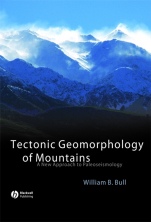
Tectonic Geomorphology of Mountains: A New Approach to Paleoseismology
ISBN 9781405154796
Autor: William B. Bull
Wydawca: Wiley
Dostępność: 3-6 tygodni
Cena: 457,80 zł
Przed złożeniem zamówienia prosimy o kontakt mailowy celem potwierdzenia ceny.
ISBN13: |
9781405154796 |
ISBN10: |
1405154799 |
Autor: |
William B. Bull |
Oprawa: |
Hardback |
Rok Wydania: |
2007-09-25 |
Ilość stron: |
328 |
Wymiary: |
259x199 |
Tematy: |
RB |
This book explores how landscapes respond to tectonic deformation.
Including much previously unpublished research and theory, Tectonic Geomorphology of Mountains uses new approaches to enhance theoretical models of landscape evolution and to better assess hazards caused by earthquakes. Readers will learn how to use key landforms as diagnostic indicators of changing landscapes, to estimate rates of mountain–range uplift, and use landslide sensitivity to earthquakes to map the locations and intensity of prehistorical seismic shaking.
Examples from around the world illustrate diverse landscapes, from the humid Southern Alps of New Zealand with phenomenal rates of uplift and erosion to the semi–arid Panamint Range of southeastern California with such miniscule annual stream power that tectonic landforms persist for millions of years.
With a balance of theory and paleoseismology applications, Tectonic Geomorphology of Mountains is essential reading for research geologists and upper–level undergraduate and graduate students in the earth sciences.
Spis treści:
Preface.
1 Scrunch and Stretch Bedrock Uplift.
1.1 Introduction.
1.2 Pure Uplift, Stretch and Scrunch Bedrock Uplift.
1.2.1 Isostatic and Tectonic Uplift.
1.2.2 Stretch and Scrunch Tectonics.
1.3 Landscape Responses to Regional Uplift.
2 Concepts for Studies of Rising Mountains.
2.1 Themes and Topics.
2.2 The Fundamental Control of Base Level.
2.2.1 Base Level.
2.2.2 Base Level Change.
2.2.3 The Base Level of Erosion.
2.2.4 The Changing Level of the Sea.
2.2.5 Spatial Decay of the Effects of Local Base Level Changes.
2.3 Threshold of Critical Power in Streams.
2.3.1 Relative Strengths of Stream Power and Resisting Power.
2.3.2 Threshold–Intersection Points.
2.4 Equilibrium in Streams.
2.4.1 Classification of Stream Terraces.
2.4.2 Feedback Mechanisms.
2.4.3
Dynamic and Static Equilibrium.
2.5 Time Lags of Response.
2.5.1 Responses to Pulses of Uplift.
2.5.2 Perturbations that Limit Continuity of Fluvial Systems.
2.5.3 Lithologic and Climatic Controls of Relaxation Times.
2.5.4 Time Spans Needed to Erode Landforms.
2.6 Tectonically–Induced Downcutting.
2.6.1 Straths, Stream–Gradient Indices, and Strath Terraces.
2.6.2 Modulation of Stream–Terrace Formation by Climatic Changes.
2.7 Nontectonic Base–Level Fall and Strath Terrace Formation.
2.8 Hydraulic Coordinates.
3 Mountain Fronts.
3.1 Introduction.
3.2 Tectonically Active Escarpments.
3.2.1 Faceted Spur Ridges.
3.2.2 Mountain–Piedmont Junctions.
3.2.3 Piedmont Forelands.
3.3 Fault Segmentation of Mountain Fronts.
3.3.1 Different Ways to Study Active Faults.
3.3.2 Segmentation Concepts and Classification.
3.3.3 Fault–Segment Boundaries.
3.3.4 Normal Fault Surface Ruptures.
3.3.5 Strike–Slip Fault Surface Ruptures.
3.4 Summary.
4 Tectonic Activity Classes of Mountain Fronts.
4.1 Tectonic Setting of the North America–Pacific Plate Boundary.
4.2 Appraisal of Regional Mountain Front Tectonic Activity.
4.2.1 Geomorphic Tools For Describing Relative Uplift Rates.
4.2.1.1 Mountain–Front Sinuosity.
4.2.1.2 Widths of Valleys.
4.2.1.3 Triangular Facets.
4.2.2 Diagnostic Landscape Classes of Relative Tectonic Activity.
4.2.3 Regional Assessments of Relative Tectonic Activity.
4.2.3.1 Response Time Complications and Strike–Slip Faulting.
4.2.3.2 Maps of Relative Uplift.
4.3 Summary.
5 Fault Scarps.
5.1 General Features.
5.2 Scarp Morphology Changes with Time.
5.2.1 Changes in Scarp Height.
5.2.2 Decreases in Maximum Scarp Slope.
5.2.3 Diffusion–Equation Modeling.
5.3 Climatic Controls of Fault–Scarp Morphology.
5.4 Lithologic Controls of Fault–Scarp Morpho
logy.
5.4.1 Fault Rupture of Different Materials.
5.4.2 Lithologic Controls on an 1887 Fault Scarp.
5.4.2.1 Geomorphic Processes.
5.4.2.2 Scarp Materials.
5.4.2.3 Scarp Morphology.
5.5 Laser Swath Digital Elevation Models.
5.6 Dating Fault Scarps with Terrestrial Cosmogenic Nuclides.
5.6.1 Alluvium.
5.6.2 Bedrock.
5.7 Summary.
6 Analyses of Prehistoric Seismic Shaking.
6.1 Paleoseismology Goals.
6.2 Earthquake–Generated Regional Rockfall Events.
6.2.1 New Zealand Earthquakes.
6.2.1.1 Tectonic Setting.
6.2.1.2 Background and Procedures.
6.2.1.3 Diagnostic Lichen–Size Peaks.
6.2.1.3 Tree–Ring Analyses.
6.2.1.5 Alpine Fault Earthquakes.
6.2.1.6 Recent Marlborough Earthquakes.
6.2.2 California Earthquakes.
6.2.2.1 Calibration of Lichen Growth Rates.
6.2.2.2 Recent Cliff Collapse.
6.2.2.3 Rockfall Processes in Glaciated Valleys.
6.2.2.4 San Andreas Fault Earthquakes.
6.2.2.5 Lichenometry and Precise Radiocarbon Dating Methods.
6.3 Summary.
References Cited.
Index
Nota biograficzna:
William B. Bull is an applied geologist educated at Colorado and Stanford Universities. He worked 12 years for the US Geological Survey as an engineering geologist and groundwater hydrologist. Studies of collapsing soils and land subsidence were quite appealing, but he changed career goals by moving to the University of Arizona where he taught geomorphology for 28 years. He continues to study landscapes of rising mountains from the perspective of earthquake hazards.
Okładka tylna:
This book explores how landscapes respond to tectonic deformation.
Including much previously unpublished research and theory, Tectonic Geomorphology of Mountains uses new approaches to enhance theoretical models of landscape evolution and to better assess hazards caused by earthquakes. Readers will learn how to use key landforms as diagnostic ind
icators of changing landscapes, to estimate rates of mountain–range uplift, and use landslide sensitivity to earthquakes to map the locations and intensity of prehistorical seismic shaking.
Examples from around the world illustrate diverse landscapes, from the humid Southern Alps of New Zealand with phenomenal rates of uplift and erosion to the semi–arid Panamint Range of southeastern California with such miniscule annual stream power that tectonic landforms persist for millions of years.
With a balance of theory and paleoseismology applications, Tectonic Geomorphology of Mountains is essential reading for research geologists and upper–level undergraduate and graduate students in the earth sciences.
Koszyk
Książek w koszyku: 0 szt.
Wartość zakupów: 0,00 zł
Informacje


Kontakt
Gambit
Centrum Oprogramowania
i Szkoleń Sp. z o.o.
Al. Pokoju 29b/22-24
31-564 Kraków
Siedziba Księgarni
ul. Kordylewskiego 1
31-542 Kraków
+48 12 410 5991
+48 12 410 5987
+48 12 410 5989
Subskrypcje
Administratorem danych osobowych jest firma Gambit COiS Sp. z o.o. Na podany adres będzie wysyłany wyłącznie biuletyn informacyjny.
Autoryzacja płatności

Informacje na temat autoryzacji płatności poprzez PayU.

© Copyright 2012: GAMBIT COiS Sp. z o.o. Wszelkie prawa zastrzeżone.
Projekt i wykonanie: Alchemia Studio Reklamy