


Wydawcy
Katalog tematyczny
- Archeologia (109)
- Ekonomia, finanse, business (13704)
- Filozofia (1445)
- Historia (3040)
- Języki i językoznawstwo (2356)
- Lifestyle, hobby i rozrywka (475)
- Medycyna (9704)
- Nauki humanistyczne (4)
- Nauki o Ziemi i środowisku (2638)
- Nauki ścisłe (20412)
- Nauki społeczne (8486)
- Edukacja (229)
- Kryminologia, opieka spełeczna (284)
- Obronność (10)
- Polityka (1389)
- Psychologia (777)
- Socjologia (410)
- Społeczeństwo i kultura (187)
- Nauki techniczne (13450)
- Prawo (1696)
- Publikacje informacyjne i interdyscyplinarne (1288)
- Religia i wierzenia (917)
- Technika komputerowa (4067)
- Zdrowie, relacje międzyludzkie i rozwój osobisty (657)





Informacje szczegółowe o książce
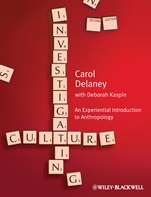
Investigating Culture: An Experiential Introduction to Anthropology
ISBN 9781405154246
Autor: Carol Delaney, Deborah Kaspin
Wydawca: Wiley
Dostępność: 3-6 tygodni
Cena: 197,40 zł
Przed złożeniem zamówienia prosimy o kontakt mailowy celem potwierdzenia ceny.
ISBN13: |
9781405154246 |
ISBN10: |
1405154241 |
Autor: |
Carol Delaney, Deborah Kaspin |
Oprawa: |
Paperback |
Rok Wydania: |
2011-04-08 |
Numer Wydania: |
2nd Edition |
Ilość stron: |
424 |
Wymiary: |
244x190 |
Tematy: |
JBK |
This exciting new edition of Investigating Culture offers a refreshing hands–on alternative to more traditional textbooks not so much by teaching facts about other cultures as helping students learn how to go about studying any culture, including their own. Delaney and Kaspin teach students to think like anthropologists, training them to confront the reflexive nature of anthropology early on and to distance themselves from the inherent flaws of studying the “exotic Other.”
Investigating Culture focuses on the variety of ways that humans orient themselves, in space and time, by means of language, the body, the structures of everyday life, and the symbols of religion and public ritual. Each chapter includes an introduction outlining the central issues, examples from a variety of cultures, supplemented by selected classic readings, suggested additional readings, and a series of exercises designed to make the analysis of culture personally accessible.
Spis treści:
Preface to Second Edition.
Acknowledgments.
1 Disorientation and Orientation.
Introduction; how culture provides orientation in the world; what is culture and how do anthropologists investigate it? Learning to think anthropologically.
Exercises.
Reading: Laura Bohannan, “Shakespeare in the Bush”.
2 Spatial Locations.
How do we situate or locate ourselves in space? Are notions of space “universal” or are they shaped by culture? This chapter explores these questions from macro to micro contexts, including discussion of maps, nations, segregation, public spaces, invisible spaces, and that space that is no place: cyberspace.
Exercises.
Reading: Sue Bridwell Beckham, “The American Front Porch: Women’s Liminal Space”.
3 All We Have Is Time.
Time is another major way we orient ourselves. What does it mean to be on time, out of time
, or in time? This chapter discusses different cultural notions of time, the development of measuring time and clocks, the construction of the Western calendar and its rootedness in a sacred worldview, and birthdays and other markers of time.
Exercises.
Reading: Ellen Goodman, “Time Is for Savoring”.
4 Language: We Are What We Speak.
Is language quintessentially human or do some other animals possess it? Communication versus language. Writing. The symbolic function and metaphor: different languages, different worlds? The social function: what information do you obtain from a person’s speech? How are race, class, and gender infl ected in language?
Exercises.
Reading: Ursula LeGuin, “She Unnames Them”.
Reading: Alan Dundes, “Seeing Is Believing”.
5 Relatives and Relations.
Notions of kinship and kinship theory: to whom are we related and how? Is there any truth to the idea that “blood is thicker than water”? What constitutes a family? This chapter also discusses different meanings of friendship, romantic relationships, and parent–child relationships.
Exercises.
Reading: Penelope Eckert, “Symbols of Category Membership”.
Reading: A. M. Hocart, “Kinship Systems”.
6 Our Bodies, Our Selves.
Are we our bodies or do we have bodies? Different concepts of the body, the gendered body, the physical body, the social body. Techniques and modifications of the body. Tattoos. Body parts and organ transplants. Traffic in body parts. Body image, advertisements, and eating disorders. Bodies before and after death.
Exercises.
Reading: Horace Miner, “Body Ritual among the Nacirema”.
7 Food for Thought.
What constitutes food? What makes a meal? What does it mean to say that “food is love”? Relation of food to the
environment. Fast food, slow food, genetically modifi ed food (“Frankenfood”). Food and sex. Food and civility. Food and religion. Cooking.
Exercises.
Reading: Jill Dubisch, “You Are What You Eat: Religious Aspects of the Health Food Movement”.
8 Clothing Matters.
Clothing does more than cover the body; it is also a cultural index of age, gender, occupation, and class. Is it then true that “clothes make the man”? Haute couture, sweat shops, clothing, and the economy.
Exercises.
Reading: Julio Ramón Ribeyro, “Alienation (An Instructive Story with a Footnote)”.
9 VIPs: Very Important People, Places, and Performances.
Certain people, places, events, and cultural practices become iconic; they embody cultural myths or epitomize cultural values. Jesse Owens. Princess Diana. Why are certain people described as “larger than life”? The Statue of Liberty. The Beatles. The global circulation of such icons.
Exercises.
Reading: Clifford Geertz, “The Impact of the Concept of Culture on the Concept of Man”.
Index.
Nota biograficzna:
Carol Delaney is Associate Professor Emerita of Cultural and Social Anthropology at Stanford University. She is author of The Seed and the Soil: Gender and Cosmology in Turkish Village Society (1991) and Abraham on Trial: The Social Legacy of Biblical Myth (1998), and is co–editor of Naturalizing Power: Essays in Feminist Cultural Analysis (1995, with Sylvia Yanagisako).
Deborah Kaspin is an Adjunct Professor of Anthropology at Rhode Island College and has taught at University of Virginia, Yale University, Wheaton College, and Rhode Island College.
Okładka tylna:
This exciting new edition of Investigating Culture offers a refreshing hands–on alternative to more traditional textbooks not so much by teaching
facts about other cultures as helping students learn how to go about studying any culture, including their own. Delaney and Kaspin teach students to think like anthropologists, training them to confront the reflexive nature of anthropology early on and to distance themselves from the inherent flaws of studying the “exotic Other.”
Investigating Culture focuses on the variety of ways that humans orient themselves, in space and time, by means of language, the body, the structures of everyday life, and the symbols of religion and public ritual. Each chapter includes an introduction outlining the central issues, examples from a variety of cultures, supplemented by selected classic readings, suggested additional readings, and a series of exercises designed to make the analysis of culture personally accessible.
Koszyk
Książek w koszyku: 0 szt.
Wartość zakupów: 0,00 zł
Informacje


Kontakt
Gambit
Centrum Oprogramowania
i Szkoleń Sp. z o.o.
Al. Pokoju 29b/22-24
31-564 Kraków
Siedziba Księgarni
ul. Kordylewskiego 1
31-542 Kraków
+48 12 410 5991
+48 12 410 5987
+48 12 410 5989
Subskrypcje
Administratorem danych osobowych jest firma Gambit COiS Sp. z o.o. Na podany adres będzie wysyłany wyłącznie biuletyn informacyjny.
Autoryzacja płatności

Informacje na temat autoryzacji płatności poprzez PayU.

© Copyright 2012: GAMBIT COiS Sp. z o.o. Wszelkie prawa zastrzeżone.
Projekt i wykonanie: Alchemia Studio Reklamy