


Wydawcy
Katalog tematyczny
- Archeologia (109)
- Ekonomia, finanse, business (13704)
- Filozofia (1445)
- Historia (3040)
- Języki i językoznawstwo (2356)
- Lifestyle, hobby i rozrywka (475)
- Medycyna (9704)
- Nauki humanistyczne (4)
- Nauki o Ziemi i środowisku (2638)
- Nauki ścisłe (20412)
- Nauki społeczne (8486)
- Nauki techniczne (13450)
- Prawo (1696)
- Publikacje informacyjne i interdyscyplinarne (1288)
- Religia i wierzenia (917)
- Technika komputerowa (4067)
- Zdrowie, relacje międzyludzkie i rozwój osobisty (657)





Informacje szczegółowe o książce
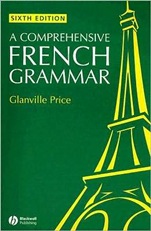
A Comprehensive French Grammar
ISBN 9781405153850
Autor: Glanville Price
Wydawca: Wiley
Dostępność: 3-6 tygodni
Cena: 192,15 zł
Przed złożeniem zamówienia prosimy o kontakt mailowy celem potwierdzenia ceny.
ISBN13: |
9781405153850 |
ISBN10: |
1405153857 |
Autor: |
Glanville Price |
Oprawa: |
Paperback |
Rok Wydania: |
2007-12-12 |
Numer Wydania: |
6th Edition |
Ilość stron: |
608 |
Wymiary: |
237x168 |
Tematy: |
CF |
Since its initial publication in 1950, A Comprehensive French Grammar has been an indispensable tool for advanced students of French language and literature. Now in its sixth edition, this well–established work reflects the changes that have occurred in the way French is commonly studied and taught. Written by renowned French scholar Glanville Price, the sixth edition includes a new section on register and medium. This classic text is characterized by clear and accessible explanations, numerous examples and sample sentences, and useful appendices covering topics including age and time, all in an easily–navigated format. This volume is essential for anyone seeking an in–depth understanding of the French language.
Preface. Selective Bibliography. Technical Terms and Abbreviations. 1. Introduction. 1.1 Alphabet. 1.2 Phonetic Transcription. 1.3 The Two Varieties of ‘H’ in French. 1.4 Capitals. 1.5 Punctuation. 1.6 Division into Syllables. 1.7 Hyphens. 1.8 Accents and the Cedilla. 1.9 Diaeresis. 1.10 Elision. 1.11 Register and Medium. 2. The Noun Phrase. 2.1 Introduction. 2.2 Determiners. 2.3 Articles. 2.3.1 Introduction. 2.3.2 Definite Article. 2.3.3 Indefinite Article. 2.3.4 Partitive Article. 2.4 Gender. 2.4.1 Introduction. 2.4.2 Gender According to Meaning. 2.4.2.1 Gender and Sex. 2.4.2.2 Other Categories. 2.4.3 The Gender of Place–names. 2.4.4 Gender Shown by Ending. 2.4.4.1 Introduction. 2.4.4.2 Masculine Endings. 2.4.4.3 Feminine Endings. 2.4.4.4 Problematic Endings. 2.4.5 The Gender of Compound Nouns. 2.4.6 Words that are Identical in Form but Different in Gender. 2.4.7 Some Anomalies of Gender. 2.4.8 Gender of Other Parts of Speech Used as Nouns. 2.5 The Feminine of Nouns and Adjectives. 2.5.1 Introduction. 2.5.2 Spoken French. 2.5.3 Written French. 2.6 The Plural of Nouns. 2.6.1 Spoken French. 2.6.2 Written French. 2.6.3 Compound Nouns. 2.6.4 Miscellaneous. 2.7 The Plural of Adjectives. 2.8 Agreement of Adjectives. 2.9 The Position of Adjectives. 2.10 The Comparison of Adjectives and Adverbs. 2.11 Adjectives Used as Nouns. 2.12 Numerals. 2.13 Fractions. 2.14 Pronouns and Pronominal Determiners. 2.14.1 Personal Pronouns. 2.14.1.1 Introduction. 2.14.1.2 Conjunctive Personal Pronouns. 2.14.1.3 Disjunctive Personal Pronouns. 2.14.1.4 Adverb Replacing Preposition + Pronoun. 2.14.2 Possessive Determiners and Pronouns. 2.14.2.1 Introduction. 2.14.2.2 Possessive Determiners. 2.14.2.3 Possessive Pronouns. 2.14.3 Demonstrative Determiners and Pronouns. 2.14.3.1 Introduction. 2.14.3.2 Demonstrative Determiners. 2.14.3.3 Demonstrative Pronouns. 2.14.3.4 The Neuter Demonstrative Pronouns. 2.14.3.5 The Simple Demonstrative Pronouns. 2.14.3.6 C’est and il est. 2.14.4 Relative Pronouns. 2.14.5 Interrogative Determiners and Pronouns. 2.14.5.1 Introduction. 2.14.5.2 Interrogative Determiners. 2.14.5.3 Interrogative Pronouns. 2.14.5.4 Indefinite Adjectives, Adverbs, Determiners and Pronouns. 2.14.6 Quantifiers. 3. Verbs. 3.1 Introduction. 3.1.1 A The Conjugations. 3.1.2 B Names of Moods and Tenses. 3.1.3 C The Persons of the Verb. 3.1.4 D Defective Verbs. 3.1.5 E The Morphology (Forms) of the Verb. 3.1.5.1 The Endings. 3.1.5.2 The Stems. 3.1.5.3 A Note on the Subjunctive. 3.1.5.4 The Verbs avoir and être. 3.1.5.5 Avoir. 3.1.5.6 Être. 3.1.5.7 First Conjugation – Verbs in –er. 3.1.5.8 Second Conjugation – Verbs in –ir. 3.1.5.9 Third Conjugation – Verbs in –re. 3.1.5.10 Verbs in –oir. 3.1.5.11 Irregular Verbs. 3.1.6 F Reflexive Verbs. 3.1.7 G The Passive. 3.1.8 H Negative and Interrogative Conjugations. 3.1.9 I Person and Number. 3.1.9.1 Introduction. 3.1.9.2 Coordinate Subjects. 3.1.9.3 Collective Nouns. 3.1.10 J Tenses. 3.1.10.1 Introduction. 3.1.10.2 The ‘Historic Present’. 3.1.10.3 The Imperfect, the Preterite, and the Perfect. 3.1.10.4 The Pluperfect and the Past Anterior. 3.1.10.5 The ‘Double–Compound’ Tenses. 3.1.10.6 Tenses with depuis (que), il y a (voici, voilà)…que. 3.1.10.7 The Future, aller faire, etc. 3.1.10.8 The Conditional. 3.1.10.9 Tenses in Conditional Sentences with si ‘if’. 3.1.11 K The Infinitive. 3.1.12 L The Present Participle. 3.1.13 M The Past Participle. 3.1.13.1 Introduction. 3.1.13.2 Compound Tenses with avoir. 3.1.13.3 Compound Tenses with être. 3.1.13.4 Verbs Compounded with avoir or être. 3.1.13.5 The Absolute use of the Past Participle. 3.1.13.6 The Agreement of the Past Participle. 3.1.14 N The Moods. 3.1.15 O The Subjunctive. 3.1.15.1 Introduction. 3.1.15.2 Fixed Expressions. 3.1.15.3 Constructions Allowing a Minimum of Variation. 3.1.15.4 Constructions Allowing a Greater Degree of Variation. 3.1.15.5 The Subjunctive Introduced by que (Introduction). 3.1.15.6 The Subjunctive in Independent Clauses. 3.1.15.7 The Subjunctive in Dependent que–clauses. 3.1.15.8 The Subjunctive after Conjunctions Formed on the Basis of que. 3.1.15.9 The Subjunctive in Relative Clauses. 3.1.15.10 The Tenses of the Subjunctive. 3.1.16 P ‘May, Might, Must, Ought, Should, Would’. 3.1.17 Q The Imperative. 3.1.18 R The Complement of Verbs. 3.1.19 S Idioms with avoir, être, faire. 4. The Structure of the Sentence. 4.1 Negation. 4.1.1 Introduction. 4.1.1.1 A Negation. 4.1.1.1.1 Introduction. 4.1.1.1.2 Ne and Another Element. 4.1.1.1.3 Negation without ne. 4.1.1.1.4 Ne Alone. 4.1.1.1.5 De, du, etc., un(e) and the Direct Object of Negative Verbs. 4.1.1.2 B The Negative Conjunction ni ‘Neither, Nor’. 4.1.1.3 C Negation of an Element Other Than a Verb. 4.2 Interrogative Sentences (Questions). 4.2.1 Introduction. 4.2.1.1 A Direct Questions – Total Interrogation. 4.2.1.2 B Direct Questions – Partial Interrogation. 4.2.1.3 C Indirect Questions. 4.3 Inversion. 4.4 Dislocation. 5. Adverbs, Prepositions and Conjunctions. 5.1 Adverbs. 5.1.1 Introduction. 5.1.1.1 A Adverbs of Manner. 5.1.1.2 B Adverbs of Time. 5.1.1.3 C Adverbs of Place. 5.1.1.4 D Adverbs of Quantity. 5.1.1.5 E Adverbs of Affirmation or Doubt. 5.1.1.6 F Adverbs of Negation. 5.1.1.7 G Interrogative Adverbs. 5.1.2 The Comparison of Adverbs. 5.1.3 The Position of Adverbs. 5.2 Prepositions. 5.2.1 Introduction. 5.2.2 Simple Prepositions. 5.2.3 Complex Prepositions. 5.2.4 Government of Verbs by Prepositions. 5.2.5 Repetition of Prepositions. 5.2.6 The Meaning and Use of Individual Prepositions. 5.2.7 Prepositions Used with Adjectives or Past Participles. 5.3 Conjunctions. 5.3.1 Introduction. 5.3.2 Compound Conjunctions Not Requiring the Subjunctive. 5.3.4 Compound Conjunctions Requiring the Subjunctive. 5.3.5 Que as a Subordinating Conjunction. Appendix. Index
Glanville Price is Emeritus Professor of French at the University of Wales Aberystwyth. His publications include The French Language, Present and Past (revised edition, 1998), Encyclopedia of the Languages of Europe (Blackwell 1998), Languages in Britain and Ireland (Blackwell 2000), and An Introduction to French Pronunciation (Blackwell, second edition, 2005). He is the Series Editor of the Blackwell Reference Grammars .
"A work which lives up to its title. It is not only remarkably comprehensive, but also highly readable and easily navigable, thanks not least to its excellent index." ( French Language Studies , March 2009) "Accessibly organized and filled with contextual examples, it is both an exceptional quick reference for the seasoned Francophone and outstanding primer for the novice speaker." ( Library Journal ) Praise for earlier editions: "This beautifully written scholarly text abounds with idiosyncratic asides and lessons within lessons." ( French Review ) “As a pedagogic grammar, it is remarkably reliable and complete, with two key elements: a good index and excellent cross–referencing. He pitches the explanations at a level which is useful from first to final year undergraduate linguists.” ( Journal of French Language Studies ) “Remarkably comprehensive … an essential grammar but good for a browse too. Conventional grammar and very much more is covered in meticulous detail.” ( Times Education Supplement ) “Glanville Price has admirably carried out the task he set himself. The most striking revision is the reorganization of material which brings together information previously scattered in two, three or even more places. This is a vast improvement.” ( French Studies )
Koszyk
Książek w koszyku: 0 szt.
Wartość zakupów: 0,00 zł
Informacje


Kontakt
Gambit
Centrum Oprogramowania
i Szkoleń Sp. z o.o.
Al. Pokoju 29b/22-24
31-564 Kraków
Siedziba Księgarni
ul. Kordylewskiego 1
31-542 Kraków
+48 12 410 5991
+48 12 410 5987
+48 12 410 5989
Subskrypcje
Administratorem danych osobowych jest firma Gambit COiS Sp. z o.o. Na podany adres będzie wysyłany wyłącznie biuletyn informacyjny.
Autoryzacja płatności

Informacje na temat autoryzacji płatności poprzez PayU.

© Copyright 2012: GAMBIT COiS Sp. z o.o. Wszelkie prawa zastrzeżone.
Projekt i wykonanie: Alchemia Studio Reklamy