


Wydawcy
Katalog tematyczny
- Archeologia (109)
- Ekonomia, finanse, business (13704)
- Filozofia (1445)
- Historia (3040)
- Języki i językoznawstwo (2356)
- Lifestyle, hobby i rozrywka (475)
- Medycyna (9704)
- Chirurgia (272)
- Inne gałęzie medycyny (1871)
- Medycyna kliniczna (4187)
- Choroby wewnętrzne (514)
- Dermatologia (51)
- Diagnostyka medyczna (3)
- Endokrynologia (144)
- Gastroenterologia (27)
- Geriatria (50)
- Ginekologia i położnictwo (134)
- Hematologia (46)
- Hepatologia (10)
- Kardiologia (71)
- Laryngologia (12)
- Nefrologia (10)
- Neurologia (500)
- Oftalmologia (50)
- Pediatria (33)
- Pulmunologia (32)
- Reumatologia (14)
- Terapia genowa (1)
- Układ mięśniowo-szkieletowy (1)
- Urologia (14)
- Medycyna niekonwencjonalna (14)
- Medycyna przedkliniczna (269)
- Medycyna, ogólnie (1740)
- Medyczne służby pomocnicze (745)
- Studia medyczne (16)
- Weterynaria (548)
- Nauki humanistyczne (4)
- Nauki o Ziemi i środowisku (2638)
- Nauki ścisłe (20412)
- Nauki społeczne (8486)
- Nauki techniczne (13450)
- Prawo (1696)
- Publikacje informacyjne i interdyscyplinarne (1288)
- Religia i wierzenia (917)
- Technika komputerowa (4067)
- Zdrowie, relacje międzyludzkie i rozwój osobisty (657)





Informacje szczegółowe o książce
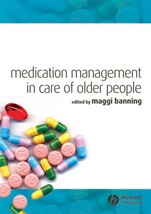
Medication Management in Care of Older People
ISBN 9781405151740
Autor: Maggi Banning
Wydawca: Wiley
Dostępność: 3-6 tygodni
Cena: 323,40 zł
Przed złożeniem zamówienia prosimy o kontakt mailowy celem potwierdzenia ceny.
ISBN13: |
9781405151740 |
ISBN10: |
1405151749 |
Autor: |
Maggi Banning |
Oprawa: |
Paperback |
Rok Wydania: |
2007-07-16 |
Ilość stron: |
200 |
Wymiary: |
244x173 |
Tematy: |
MJ |
Medication Management in Care of Older People is an accessible introduction to medication management and its role in the management of older people and their medicines. It addresses key issues in medication management, evaluates professional roles and clinical practice initiatives and explores healthcare policy and prescribing initiatives.
This text explores the biology and neurobiology of ageing, pathological conditions such as Parkinson’s and Alzheimer’s disease, medication errors, issues of concordance, long term conditions and the older person, the principles of applied pharmacology and its relationship to older people. Medication Management in Care of Older People will be of interest to health care professionals who either have an interest in medication management and older people, or who are qualified independent or supplementary prescribers, and will enable them to comprehend the principles of applied pharmacology and medication management to enable them to use this knowledge in their daily practice.
Spis treści:
Chapter 1: Older People and Their Medicines: Health Objectives and Health Initiatives.
Development of the National Service Framework (NSF) for older people.
Management of medicines.
The NHS Improvement Plan.
Building a safer NHS for patients; the role of medication safety.
Prescribing drugs.
Dispensing medicines.
Access to medicines– out of hours.
The administration of drugs.
Helping patients and carers to safely self administer medicines at home or in care homes.
Community Matrons and the management of medicines.
Patient case study.
Chapter 2: The Physiology of Human Ageing.
Homeostasis and ageing.
Ageing and the cardiovascular system.
Changes to the vascular system.
Changes to cardiac tissue.
Changes to cardiovascular function and control.
Changes to cardiovascular cells.
Implications for practice.
Hepatic ageing.
Changes to hepatic tissue.
Changes to hepatic cells.
Changes to hepatic molecular biology.
Implications for practice.
Renal ageing.
Changes to tubular function.
Implications for practice.
Ageing and the immune system.
Changes to organs and tissues.
Changes to immune cells.
Changes to immune molecules.
Ageing and the inflammatory response.
Chapter 3: The Application of Applied Pharmacology to the Older Person.
Drug absorption.
Factors that alter the absorption of drugs.
Drug distribution.
Drug metabolism.
Factors affecting drug metabolism.
Drug excretion.
Biliary excretion.
Pharmacodynamics.
Receptor agonism.
Pharmacodynamics and the effects of ageing.
Chapter 4: Medication Management and the Older Person.
Medication review and the older person.
Medication review structure.
The Single Assessment Process.
Trigger questions.
Care plans.
Health care professional involvement.
Prescribing practice.
Principles of prescribing for the older person.
Rational prescribing and prescribing support.
Conclusions.
Implications for practice.
Chapter 5: Medication Errors and the Older Person.
Introduction.
The extent of the problem.
The UK perspective.
The potential dangers of medication errors.
Definitions of medication error.
Classification of medication errors.
Causes of medication error.
Forms of medication error.
Medication errors that arise due to the supply and administration of medicines.
Factors contributing to the development of medication errors.
The nurse prescriber’s role in the prevention of medication errors.
Prescription writing education.
Preventative measures involving prescriptions.
Computerised prescribing systems.
Conclusions.
Implications for practice.
Chapter 6: Concordance with Medication and Older People.
Introduction.
Difficulties establishing a rationale.
Charac
teristics of the non–concordant individual.
Psychological theory.
Medication related issues that underpin non–concordance.
i. Polypharmacy and complicated medication regimens.
ii. Lack of education.
iii.Patient comprehension of the need to adhere to prescribed medication.
administration protocols.
Promoting concordance with medication regimens.
Patient self–medication schemes.
The prescriber’s role in the augmentation of concordance with medication for.
older people.
The art of teaching.
Teaching practicalities.
Reinforcing education.
Barriers to teaching.
Time management difficulties.
Planning early discharge.
Comprehension of applied pharmacology and therapeutics.
Conclusions.
Implications for practice.
Chapter 7: Neurophysiology, and Neuropathology of Ageing.
Introduction.
In search of a nerve cell.
Neurochemicals and synaptic transmission.
Major neurotransmitters in the brain.
The dynamic neurone, plasticity and memory.
Changes in neuronal activity and communication in the ageing brain.
What causes cellular damage with ageing.
Neuropathology of Alzheimer’s disease.
Pharmacological strategies.
Neuropathology of Parkinson’s disease.
Pharmacological approach in the treatment of PD.
Conclusions.
Implications for practice.
Chapter 8: The Management of the Older Person with a Long–term Condition.
Introduction.
Government policy and long–term conditions.
The NHS Improvement Plan.
The evolvement of the community matron.
The education and training of the community matron.
Case finding and case management.
Interprofessional working.
Lay carer’s role.
The future management of older people with long–term conditions.
Conclusions.
Implications for practice.
Chapter 9: The Community Pharmacist’s Role in the Management of Older People and their Medicine
s.
Introduction.
Education and training Community pharmacy contractual framework.
Repeat dispensing.
Medicine Use Reviews (MUR’s).
Medication Review.
Services to residential homes Swallowing difficulties Domiciliary visiting schemes.
Compliance aids.
Physical problems.
Prescribing support Multidisciplinary working.
Conclusions.
Implications for practice.
Nota biograficzna:
Maggi Banning is a Senior Lecturer in Advanced Clinical Practice at Brunel University, West London, UK
Okładka tylna:
Medication Management in Care of Older People is an accessible introduction to medication management and its role in the management of older people and their medicines. It addresses key issues in medication management, evaluates professional roles and clinical practice initiatives and explores healthcare policy and prescribing initiatives.
This text explores the biology and neurobiology of ageing, pathological conditions such as Parkinson’s and Alzheimer’s disease, medication errors, issues of concordance, long term conditions and the older person, the principles of applied pharmacology and its relationship to older people. Medication Management in Care of Older People will be of interest to health care professionals who either have an interest in medication management and older people, or who are qualified independent or supplementary prescribers, and will enable them to comprehend the principles of applied pharmacology and medication management to enable them to use this knowledge in their daily practice.
Koszyk
Książek w koszyku: 0 szt.
Wartość zakupów: 0,00 zł
Informacje


Kontakt
Gambit
Centrum Oprogramowania
i Szkoleń Sp. z o.o.
Al. Pokoju 29b/22-24
31-564 Kraków
Siedziba Księgarni
ul. Kordylewskiego 1
31-542 Kraków
+48 12 410 5991
+48 12 410 5987
+48 12 410 5989
Subskrypcje
Administratorem danych osobowych jest firma Gambit COiS Sp. z o.o. Na podany adres będzie wysyłany wyłącznie biuletyn informacyjny.
Autoryzacja płatności

Informacje na temat autoryzacji płatności poprzez PayU.

© Copyright 2012: GAMBIT COiS Sp. z o.o. Wszelkie prawa zastrzeżone.
Projekt i wykonanie: Alchemia Studio Reklamy