


Wydawcy
Katalog tematyczny
- Archeologia (109)
- Ekonomia, finanse, business (13704)
- Filozofia (1445)
- Historia (3040)
- Języki i językoznawstwo (2356)
- Lifestyle, hobby i rozrywka (475)
- Medycyna (9704)
- Nauki humanistyczne (4)
- Nauki o Ziemi i środowisku (2638)
- Nauki ścisłe (20412)
- Nauki społeczne (8486)
- Nauki techniczne (13450)
- Prawo (1696)
- Publikacje informacyjne i interdyscyplinarne (1288)
- Religia i wierzenia (917)
- Technika komputerowa (4067)
- Zdrowie, relacje międzyludzkie i rozwój osobisty (657)





Informacje szczegółowe o książce
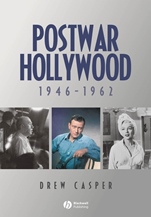
Postwar Hollywood: 1946–1962
ISBN 9781405150743
Autor: Drew Casper
Wydawca: Wiley
Dostępność: 3-6 tygodni
Cena: 493,50 zł
Przed złożeniem zamówienia prosimy o kontakt mailowy celem potwierdzenia ceny.
ISBN13: |
9781405150743 |
ISBN10: |
1405150742 |
Autor: |
Drew Casper |
Oprawa: |
Hardback |
Rok Wydania: |
2007-08-24 |
Ilość stron: |
488 |
Wymiary: |
240x159 |
Tematy: |
AB |
Post–War Hollywood Cinema is an accessible and comprehensive history of the American film industry, from 1946 to 1962. Drew Casper chronicles the restructuring of Hollywood cinema against the backdrop of the major political, economic, and social changes taking place after World War II. The most complete of its kind, this innovative book looks at a broad range of topics as it examines the cultural history, business practices, new technologies, censorship standards, emerging genres, and styles of postwar cinema. In–depth discussions of important and often–neglected films illustrate the culture/filmmaking interface, and demonstrate the triumphs and failures of Hollywood’s new methods. Casper also includes valuable footnotes and a select bibliography. An ideal text for students of time–specific and broad survey courses, as well as for the home viewer devotee, Post–War Hollywood is an entertaining resource for readers studying this unique period of the American film industry.
Introduction. Part I: Cultural Overview:The Years of Change in America, 1946––1962: . Introduction. 1. Major Historical Events. Introduction. 1.1 The Cold War. 1.2 Civil Rights. Conclusion. 2. Economic Situation. Introduction. 1.1 Economic Resurgence. 1.2 Post–Industrial Society. Conclusion. 3. Societal Issues. Introduction. 3.1 Consumer Culture and Middle–Classness. 3.2 The American Male. 3.3 The American Female. 3.4 The American Family. 3.5 Juvenile Delinquency. 3.6 Sensuality, Sex, and Violence. 3.7 Social Morality. 3.8 Crime. 3.9 Religion. Conclusion. 4. Other Popular Leisure Activities. Introduction. 4.1 Television. 4.2 Recordings and Radio. 4.3 Theater. 4.4 Adult Popular Fiction. 4.5 Sports, Travel, and Home Improvement. Conclusion. Part II: Business: . Introduction. 5. Production and Distribution. Introduction. 5.1 The Antitrust Suit Wrap–up and Fallout. 5.2 The Loss of the Audience. 5.3 The Decline and Shift in Product. 5.4 Consolidation. 5.5 The Mode of Independent Production. 5.6 Runaway Production. 5.7 Diversification. 5.8 Company Profiles: The Administrative and Financial Picture. 5.9 The Industry and HUAC. 5.10 Distribution Practices. 6. Exhibition. Conclusion. Part III: Technology: . Introduction. 7. Color. 7.1 Ansco Color and Metrocolor. 7.2 Eastman Color, Warnercolor, Color By Deluxe, Columbia Color. 7.3 Trucolor by Consolidated and Cinecolor/Natural Color/Super Cinecolor. 8. Screen Shapes and Accompanying Sound Systems. 8.1 Multi–Camera Systems. 8.2 Anamorphic Systems. 8.3 Widescreen. 8.4 Wide–Frame Systems. 8.5 The 70mm/Wide–Gauge Processes. 9. Three–Dimension, Special Effects, and Film Production Refinements. 9.1 3–D. 9.2 Special Effects. 9.3 Film Production Refinements. Conclusion. Part IV: Censorship: . Introduction. 10. Test Cases. 10.1 The Outlaw (UA, 1946/RKO, 1950). 10.2 The Jane Russell Syndrome: Rita Hayworth, Marilyn Monroe, Cyd Charisse, Sophia Loren, and Gina Lollobrigida. 10.3 The Adaptation of Controversial and Sensational Novels: Double Indemnity (P, 1944), Leave Her To Heaven (TCF, 1945), The Postman Always Rings Twice (MGM, 1946), Duel In the Sun (SRO, 1946), Forever Amber (TCF, 1947), and Flamingo Road (WB, 1949). 10. 4 Racism: Pinky (TCF, 1949) and Curley (UA, 1947). 10.5 The Bicycle Thief (1949). 10.6 Stromboli (1950). 10.7 The Miracle (1950) and the US Supreme Court Decision of 1952. 10.8 Detective Story (P, 1951), Beyond the Forest (WB, 1949), The Doctor and the Girl (MGM, 1949), A Place In the Sun (P, 1951), People Will Talk (TCF, 1952), and Code Amendments of 1951. 10.9 The Moon Is Blue (UA, 1953). 10.10 The French Line (RKO, 1953). 10.11 From Here To Eternity (C, 1953). 10.12 Shurlock’s Reign and Code Readjustments of 1954; La Ronde (1950, 1951) and M (C, 1951). 10.13 Backlash; The Man With the Golden Arm (UA, 1955) and Picnic (C, 1955). 10.14 The Code Revision of 1956. 10.15 Baby Doll (WB, 1956), Tea and Sympathy (MGM, 1956), and The Bad Seed (WB, 1956). 10.16 Giant (WB, 1956), Serenade (WB, 1956), Island In the Sun (TCF, 1957), and Sayonara (WB, 1957). 10.17 Legion Expansion: Peyton Place (TCF, 1957). 10.18 Roth vs. US and The Game of Love (1954); The Garden of Eden (Excelsior Pictures, 1957). 10.19 Vertigo (P, 1958), Bonjour Tristesse (C, 1958), and Cat On A Hot Tin Roof (MGM, 1958). 10.20 Lady Chatterley′s Lover (1957), And God Created Woman (1958), Room At the Top (1959), and Never On Sunday (1960). 10.21 Anatomy of a Murder (C, 1959). 10.22 Suddenly Last Summer (C, 1959), Some Like It Hot (UA, 1959), and Pillow Talk (U, 1959). 10.23 Blue Denim (TCF, 1959) and A Summer Place (WB, 1959). 10.24 Happy Anniversary (UA, 1959). 10.25 Elmer Gantry (UA, 1960). 10.27 Sanctuary (TCF, 1961) and Splendor In the Grass (WB, 1961). 10.28 Lolita (MGM, 1962) and the Code Amendment of 1961. 10.29 Don Juan (1959). Conclusion. Part V: Genre: . Introduction. 11. Adventure. 12. Biography. 13. Historical Spectacle. 14. Comedy. 14.1 Social Satire. 14.2 Farce. 14.3 Romantic Comedy. 14.4 Family Comedy. 14.5 Fantasy Comedy. 14.6 Comedian Comedy. 14.7 Black Comedy. 14.8 Parody. 15. Horror, Science Fiction, and Fantasy. 15.1 Horror––Science Fiction. 15.2 AIP Teenage Horror. 15.3 Modern Horror. 15.4 Science Fiction. 15.5 Fantasy. 16. Melodrama. 16.1 Family Melodrama. 16.2 Female Melodrama. 16.3 Male Melodrama. 16.4 Romance Melodrama. 17. Musical. 17.1 Musical Comedy and Musical Drama. 17.2 Musical Biography. 18. Social Problem Film and Courtroom Drama. 18.1 Social Problem Film. 18.2 Courtroom Drama. 19. Suspense Thriller. 19.1 World War II and Cold War Thriller. 19.2 Crime Thriller: Lawmen and Criminals. 19.3 Social Problem Thriller. 20. War. 21. Western. Conclusion. Part VI: Style: . Introduction. 22. Noir. Introduction. 22.1 Determinations and Practitioners. 22.2 Noir and Genre. 22.3 Mode of Representation and Attitude of Mind. 23. Documentary Realism and Psychological–Sociological Realism. Introduction. 23.1 Determinations of a Deeper Realism. 23.2 Documentary Realism: Determinations and Practitioners. 23.3 Psychological–Sociological Realism: Determinations and Practitioners. 23.4 Mode of Representation and Attitude of Mind. 24. Other Stylistic Devices. Conclusion. 25. Coda. Select Bibliography. Appendix: Hierarchical Order of Postwar Hollywood’s Top Ten Box–Office Stars (1946—62). Index
Drew Casper is the Alma and Alfred Hitchcock Professor of American Film at the University of Southern California’s School of Cinematic Arts. His books include: Vincente Minnelli and the Film Musical , The Style of Stanley Donen , and An Introduction to Film Reader . He is a DVD commentator on innumerable American films of the classical and postwar periods.
“Drew Casper’s volume is a stunning achievement in American film history. Combining love for the films themselves and the creative talent behind them with a sharp attention to contexts – cultural, social, and industrial – Casper offers a comprehensive, sharply argued look at Hollywood cinema in a complex, even vexed, historical moment.” Dana Polan, New York University
Koszyk
Książek w koszyku: 0 szt.
Wartość zakupów: 0,00 zł
Informacje


Kontakt
Gambit
Centrum Oprogramowania
i Szkoleń Sp. z o.o.
Al. Pokoju 29b/22-24
31-564 Kraków
Siedziba Księgarni
ul. Kordylewskiego 1
31-542 Kraków
+48 12 410 5991
+48 12 410 5987
+48 12 410 5989
Subskrypcje
Administratorem danych osobowych jest firma Gambit COiS Sp. z o.o. Na podany adres będzie wysyłany wyłącznie biuletyn informacyjny.
Autoryzacja płatności

Informacje na temat autoryzacji płatności poprzez PayU.

© Copyright 2012: GAMBIT COiS Sp. z o.o. Wszelkie prawa zastrzeżone.
Projekt i wykonanie: Alchemia Studio Reklamy