


Wydawcy
Katalog tematyczny
- Archeologia (109)
- Ekonomia, finanse, business (13704)
- Filozofia (1445)
- Historia (3040)
- Języki i językoznawstwo (2356)
- Lifestyle, hobby i rozrywka (475)
- Medycyna (9704)
- Nauki humanistyczne (4)
- Nauki o Ziemi i środowisku (2638)
- Nauki ścisłe (20412)
- Nauki społeczne (8486)
- Nauki techniczne (13450)
- Prawo (1696)
- Publikacje informacyjne i interdyscyplinarne (1288)
- Religia i wierzenia (917)
- Technika komputerowa (4067)
- Zdrowie, relacje międzyludzkie i rozwój osobisty (657)





Informacje szczegółowe o książce
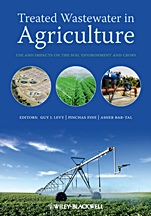
Treated Wastewater in Agriculture: Use andIimpacts on the Soil Environment and Crops
ISBN 9781405148627
Autor: Guy Levy, P. Fine, A. Bar–Tal
Wydawca: Wiley
Dostępność: 3-6 tygodni
Cena: 892,50 zł
Przed złożeniem zamówienia prosimy o kontakt mailowy celem potwierdzenia ceny.
ISBN13: |
9781405148627 |
ISBN10: |
1405148624 |
Autor: |
Guy Levy, P. Fine, A. Bar–Tal |
Oprawa: |
Hardback |
Rok Wydania: |
2010-11-05 |
Ilość stron: |
464 |
Wymiary: |
249x174 |
Tematy: |
AT |
Irrigated agriculture produces one third of the world s crop yield and half of the return from global crop production. Yet, in many parts of the world, the future of irrigated agriculture is threatened by the existing or expected shortage of fresh water. The use of treated wastewater can afford a highly effective and sustainable strategy to exploit a water resource in areas afflicted by water scarcity.
Treated Wastewater in Agriculture is broadly divided into two sections. The first includes four chapters covering technical, health, regulatory and economic aspects of treated wastewater reuse, including step–by–step details of the treatment of municipal sewage effluents. The book s second section covers the impacts of irrigation with treated wastewater on the agricultural ecosystems, considering elements including nitrogen, phosphorous, calcium, chloride, boron and heavy metals, the effects of salinity and organic material, and soil microbiology.
Compiled by a team from the world–renowned Agricultural Research Organization at the Volcani Center in Israel, and including chapters from many of the world s leading researchers in this subject, Treated Wastewater in Agriculture is an essential purchase for agricultural and plant scientists, environmental biologists and soil scientists. Professionals working in the water treatment and irrigation industries, including engineers and public health workers, will find much of great use within this excellent book. Libraries in all universities and research establishments where biological and environmental sciences, and agriculture are studied and taught, should have copies of this landmark publication on their shelves.
Preface.
Contributors list.
Part I GENERAL ASPECTS.
Chapter 1 Sources and composition of sewage effluent; treatment systems and methods (Renato Iannelli and David Giraldi).
1.1 Sources of usable wastewater.
1.2 Main characteristics of usable wastewater.
1.3 Wastewater treatments.
1.4 Framework for the selection of the optimal treatment train.
Chapter 2 Health considerations in the recycling of water and use of treated wastewater in agriculture and other non–potable purposes (Hillel Shuval).
2.1 Introduction.
2.2 Rationale: why should society allow, regulate, and thus encourage exposure of the population to known health risks?
2.3 Persistence of pathogenic microorganisms in water, soil, and on crops from wastewater–irrigation.
2.4 Disease transmission by wastewater–irrigation.
2.5 Control of crops and irrigation methods to reduce health risks.
2.6 Development of health standards and guidelines for wastewater use.
2.7 Conclusions.
Chapter 3 Irrigation with recycled water: guidelines and regulations (Nikolaos V. Paranychianakis, Miquel Salgot and Andreas N. Angelakis)
Terminology definitions.
3.1 Introduction.
3.2 Historical development of water recycling and reuse regulations.
3.3 Water recycling in agriculture: quality issues.
3.4 Treatment requirements and TWW quality monitoring.
3.5 Water reuse criteria: irrigation of agricultural crops and landscapes.
3.6 Conclusions.
Chapter 4 Economic aspects of irrigation with treated wastewater (Efrat Hadas and Yoav Kislev).
4.1 Introduction.
4.2 Wastewater in agriculture.
4.3 Wastewater and the regulation of its reuse.
4.4 Treatment.
4.5 Cost.
4.6 Replacement of fertilizers.
4.7 Cost allocation and prices.
4.8 Further considerations and alternatives.
4.9 Agreements.
4.10 The role of the government.
4.11 Concluding comments.
Part II IMPACTS ON THE SOIL ENVIRONMENT AND CROPS.
Chapter 5 Major minerals.
5.1 Nitrogen in treated wastewater–irrigation (Asher Bar–Tal).
5.2 Phosphorus (Bnayahu Bar–Yosef).
5.3 Calcium and carbonate (Gil Eshel and Michael J. Singer).
Chapter 6 Toxic elements.
6.1 Boron (Uri Yermiyahu, Alon Ben–Gal and Rami Keren).
6.2 Chlorides in treated wastewater and their effects on plants (Uzi Kafkafi).
Chapter 7 Heavy metals in soils irrigated with wastewater (Amir Hass, Uri Mingelgrin and Pinchas Fine).
List of acronyms.
7.1 Introduction.
7.2 Heavy metals in effluents.
7.3 Organic matter: composition in wastewater effluents and behavior in soil.
7.4 Attenuation of heavy metals in soils irrigated with effluents.
7.5 Loading limits of metals.
7.6 Metals: interaction with soil components.
7.7 Distribution of metals among the soil s solid fractions.
7.8 The stability, pH and Eh of free oxides, and their effect on the geochemical distribution of metals.
7.9 Heavy metal solubility and speciation in the soil solution.
7.10 Mobility of heavy metals in the soil profile.
7.11 Availability to plants.
7.12 Summary and conclusions.
Chapter 8 Salinity (Nico E. Marcar, Tivi Theiveyanathan and Daryl P. Stevens).
8.1 The nature of salinity.
8.2 Measuring salinity.
8.3 Mechanism of soil salinisation.
8.4 Salinity in wastewater.
8.5 Effects of salinity on plant growth and water use.
8.6 Water use.
8.7 Managing root–zone salinity.
8.8 Summary and conclusions.
Chapter 9 Physical aspects (Guy J. Levy and Shmuel Assouline).
9.1 Introduction.
9.2 Soil structural stability.
9.3 Soil hydraulic properties.
9.4 Soil surface sealing, infiltration and runoff.
9.5 Soil erosion.
9.6 Water repellency.
9.7 Concluding comments.
Chapter 10 Fouling in microirrigation systems applying treated wastewater effluents (Carlos G. Dosoretz, Jorge Tarchitzky, Ilan Katz, Elisha Kenig and Yona Chen).
10.1 Introduction.
10.2 Quality of treated effluents as a source of irrigation water.
10.3 Emitter clogging in relation to irrigation water quality.
10.4 Management of emitter clogging.
10.5 Recovery of clogged emitters.
10.6 Concluding remarks and future prospects.
Chapter 11 Effects of treated municipal wastewater irrigation on soil microbiology (Dror Minz, Rachel Karyo and Zev Gerstl).
11.1 Introduction.
11.2 Soil microbial ecology and activities.
11.3 Human pathogens.
11.4 Summary and conclusions.
Chapter 12 Impact of irrigation with treated wastewater on pesticides and other organic microcontaminants in soils (Zev Gerstl and Ellen R. Graber).
12.1 Introduction.
12.2 The effect of DOM on the chemical behavior of organic xenobiotics.
12.3 Effluent–borne organic contaminants.
12.4 Summary and conclusions.
Chapter 13 Organic matter in wastewater and treated wastewaterirrigated soils: properties and effects (Yona Chen, Carlos G. Dosoretz, Ilan Katz, Elizabeth Jueschke, Bernd Marschner and Jorge Tarchitzky).
13.1 Introduction.
13.2 Organic matter in wastewater.
13.3 Soil organic matter (SOM).
13.4 The influence of treated–wastewater–borne organic matter on soil organic matter.
13.5 The influence of treated–wastewater–borne organic matter on soil properties.
13.6 Concluding remarks.
Chapter 14 Analysis of transport of mixed Na/Ca salts in a three–dimensional heterogeneous variably saturated soil (David Russo).
14.1 Introduction.
14.2 Modeling of transport of mixed Na/Ca salts in spatially heterogeneous, variably saturated soils.
14.3 Simulation of transport of mixed Na/Ca salts in spatially heterogeneous, variably saturated soils.
14.4 Summary and concluding remarks.
References.
Index.
Guy J. Levy, Pinchas Fine and Asher Bar–Tal are based at the Institute of Soil, Water and Environmental Sciences, Agricultural Research Organization, The Volcani Center, Israel.
"This book provides a comprehensive and highly relevant overview of the many issues involved in the use of treated wastewater (TWW) in irrigated agriculture . . . This interesting book is recommended reading for scientists, engineers and for graduate teaching." (Experimental Agriculture, 2011)
"This book is a comprehensive examination of irrigation with TWW from both agricultural and environmental perspectives, looking at both the advantages and disadvantages of this technology . . . this book is an essential reference for anyone working in irrigation, crop production, and water management." (Booknews, 1 April 2011)
Koszyk
Książek w koszyku: 0 szt.
Wartość zakupów: 0,00 zł
Informacje


Kontakt
Gambit
Centrum Oprogramowania
i Szkoleń Sp. z o.o.
Al. Pokoju 29b/22-24
31-564 Kraków
Siedziba Księgarni
ul. Kordylewskiego 1
31-542 Kraków
+48 12 410 5991
+48 12 410 5987
+48 12 410 5989
Subskrypcje
Administratorem danych osobowych jest firma Gambit COiS Sp. z o.o. Na podany adres będzie wysyłany wyłącznie biuletyn informacyjny.
Autoryzacja płatności

Informacje na temat autoryzacji płatności poprzez PayU.

© Copyright 2012: GAMBIT COiS Sp. z o.o. Wszelkie prawa zastrzeżone.
Projekt i wykonanie: Alchemia Studio Reklamy