


Wydawcy
Katalog tematyczny
- Archeologia (109)
- Ekonomia, finanse, business (13704)
- Filozofia (1445)
- Historia (3040)
- Języki i językoznawstwo (2356)
- Lifestyle, hobby i rozrywka (475)
- Medycyna (9704)
- Nauki humanistyczne (4)
- Nauki o Ziemi i środowisku (2638)
- Nauki ścisłe (20412)
- Nauki społeczne (8486)
- Nauki techniczne (13450)
- Prawo (1696)
- Publikacje informacyjne i interdyscyplinarne (1288)
- Religia i wierzenia (917)
- Technika komputerowa (4067)
- Zdrowie, relacje międzyludzkie i rozwój osobisty (657)





Informacje szczegółowe o książce
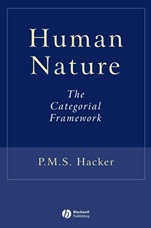
Human Nature: The Categorial Framework
ISBN 9781405147286
Autor: P. M. S. Hacker
Wydawca: Wiley
Dostępność: 3-6 tygodni
Cena: 515,55 zł
Przed złożeniem zamówienia prosimy o kontakt mailowy celem potwierdzenia ceny.
ISBN13: |
9781405147286 |
ISBN10: |
1405147288 |
Autor: |
P. M. S. Hacker |
Oprawa: |
Hardback |
Rok Wydania: |
2007-08-09 |
Ilość stron: |
344 |
Wymiary: |
238x159 |
Tematy: |
HP |
What distinguishes humanity from the rest of animate nature? What grounds the distinctive powers of human beings? What are the forms of explanation proper to the understanding of the exercise of these powers in action? Human beings have both a mind and a body but what is a mind? What is it to have a body? How is a person s mind related to their body? And what is a person?
This major new study, by one of the most penetrating and persistent critics of philosophical and scientific orthodoxy, returns to Aristotle in order to examine the salient categories in terms of which we think about ourselves and our nature. An overview of the concepts of substance, causation, power and agency provides the background for an investigation into teleology, rationality and explanations of behaviour in terms of reasons. This is the stage–set for the analysis of the concepts of mind, self, body and person.
This essay in philosophical anthropology ranges widely over themes in metaphysics, philosophy of mind and of action, and philosophy of biology, blending powerful philosophical analysis with a masterful grasp of the history of philosophical reflection on the topics in question.
Preface.
Part I: The Project.
1. Human Nature.
2. Philosophical Anthropology.
3. Grammatical Investigation.
4. Philosophical Investigation.
5. Philosophy and Mere Words .
6. A Challenge to the Autonomy of the Philosophical Enterprise: Quine.
7. The Platonic and the Aristotelian Traditions in Philosophical Anthropology.
Part II: Substance.
1. Substances: Things.
2. Substances: Stuffs.
3. Substance–referring Expressions.
4. Conceptual Connections between Things and Stuffs.
5. Substances and their Substantial parts.
6. Substances Conceived as Natural Kinds.
7. Substances Conceived as a Common Logico–linguistic Category.
8. A Historical Digression: Misconceptions of the Category of Substance.
Part III: Causation.
1. Causation: Humean, Neo–Humean and Anti–Humean.
2. On Causal Necessity.
3. Event Causation is not a Prototype.
4. The Inadequacy of Hume s Analysis: Observability, Spatio–temporal Relations, and Regularity.
5. The Flaw in the Early Modern Debate.
6. Agent Causation as Prototype.
7. Agent Causation is Only a Prototype.
8. Event Causation and Other Centres of Variation.
9. Overview.
Part IV: Powers.
1. Possibility.
2. Powers of the Inanimate.
3. Active and Passive Powers of the Inanimate.
4. Power and its Actualization.
5. Power and its Vehicle.
6. First– and Second–order Powers; Loss of Power.
7. Human Powers: Basic Distinctions.
8. Human Powers: Further Distinctions.
9. Dispositions.
Part V: Agency.
1. Inanimate Agents.
2. Inanimate Needs.
3. Animate Agents: Needs and Wants.
4. Volitional Agency: Preliminaries.
5. Doings, Acts and Actions.
6. Human Agency and Action.
7. A Historical Overview.
8. Human Action as Agential Causation of Movement.
Part VI: Teleology and Teleological Explanation.
1. Teleology and Purpose.
2. What Things have a Purpose?.
3. Purpose and Axiology.
4. The Beneficial.
5. A Historical Digression: Teleology and Causality.
Part VII: Reasons and Explanation of Human Action.
1. Rationality and Reasonableness.
2. Reason, Reasoning and Reasons.
3. Explaining Human Behaviour.
4. Explanation in Terms of Agential Reasons.
5. Causal Mythologies.
Part VIII: The Mind.
1. Homo loquens.
2. The Cartesian Mind.
3. The Nature of the Mind.
Part IX: The Self and the Body.
1. The Emergence of the Philosophers Self.
2. The Illusions of the Philosophers Self.
3. The Body.
4. The Relationship between Human Beings and their Bodies.
Part X: The Person.
1. The Emergence of the Concept.
2. An Unholy Trinity: Descartes, Locke and Hume.
3. Changing Bodies and Switching Brains: Puzzle Cases and Red Herrings.
4. The Concept of a Person.
Index
P. M. S. Hacker is the leading authority on the philosophy of Wittgenstein. He is author of the four–volume Analytical Commentary on the Philosophical Investigations, the first two volumes co–authored with G. P. Baker (Blackwell, 1980–96) and of Wittgenstein s Place in Twentieth–century Analytic Philosophy (Blackwell, 1996). He has also written extensively on philosophy of language and philosophy of mind, most recently Philosophical Foundations of Neuroscience (Blackwell, 2003), co–authored with M. R. Bennett.
"A remarkable contribution. A brilliant work in philosophical anthropology. This is philosophy as it should be. Thoroughly original and completely convincing. It is difficult to imagine a more perspicuous rendering of the ramifying network of concepts that comprise the human. "
Dennis Patterson, Rutgers University<!––end––>
Full of helpful distinctions and arguments which show in different ways how carefully we must proceed and how sensitive we must be to contexts. Notre Dame Philosophical Reviews
Hacker′s book represents the culmination of nearly 40 years of philosophical reflection on the nature of mind and world. This volume clears old pathways from overgrowth and uproots misleading signposts in an effort not only to provide clear insight into the character of human reason, disposition, and action, but also to offer a better understanding of the human mind, self, and person. Recommended. Choice Reviews
Koszyk
Książek w koszyku: 0 szt.
Wartość zakupów: 0,00 zł
Informacje


Kontakt
Gambit
Centrum Oprogramowania
i Szkoleń Sp. z o.o.
Al. Pokoju 29b/22-24
31-564 Kraków
Siedziba Księgarni
ul. Kordylewskiego 1
31-542 Kraków
+48 12 410 5991
+48 12 410 5987
+48 12 410 5989
Subskrypcje
Administratorem danych osobowych jest firma Gambit COiS Sp. z o.o. Na podany adres będzie wysyłany wyłącznie biuletyn informacyjny.
Autoryzacja płatności

Informacje na temat autoryzacji płatności poprzez PayU.

© Copyright 2012: GAMBIT COiS Sp. z o.o. Wszelkie prawa zastrzeżone.
Projekt i wykonanie: Alchemia Studio Reklamy