


Wydawcy
Katalog tematyczny
- Archeologia (109)
- Ekonomia, finanse, business (13704)
- Filozofia (1445)
- Historia (3040)
- Języki i językoznawstwo (2356)
- Lifestyle, hobby i rozrywka (475)
- Medycyna (9704)
- Chirurgia (272)
- Inne gałęzie medycyny (1871)
- Medycyna kliniczna (4187)
- Choroby wewnętrzne (514)
- Dermatologia (51)
- Diagnostyka medyczna (3)
- Endokrynologia (144)
- Gastroenterologia (27)
- Geriatria (50)
- Ginekologia i położnictwo (134)
- Hematologia (46)
- Hepatologia (10)
- Kardiologia (71)
- Laryngologia (12)
- Nefrologia (10)
- Neurologia (500)
- Oftalmologia (50)
- Pediatria (33)
- Pulmunologia (32)
- Reumatologia (14)
- Terapia genowa (1)
- Układ mięśniowo-szkieletowy (1)
- Urologia (14)
- Medycyna niekonwencjonalna (14)
- Medycyna przedkliniczna (269)
- Medycyna, ogólnie (1740)
- Medyczne służby pomocnicze (745)
- Studia medyczne (16)
- Weterynaria (548)
- Nauki humanistyczne (4)
- Nauki o Ziemi i środowisku (2638)
- Nauki ścisłe (20412)
- Nauki społeczne (8486)
- Nauki techniczne (13450)
- Prawo (1696)
- Publikacje informacyjne i interdyscyplinarne (1288)
- Religia i wierzenia (917)
- Technika komputerowa (4067)
- Zdrowie, relacje międzyludzkie i rozwój osobisty (657)





Informacje szczegółowe o książce
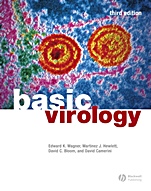
Basic Virology
ISBN 9781405147156
Autor: Edward K. Wagner, Martinez J. Hewlett, David C. Bloom, David Camerini
Wydawca: Wiley
Dostępność: 3-6 tygodni
Cena: 286,65 zł
Przed złożeniem zamówienia prosimy o kontakt mailowy celem potwierdzenia ceny.
ISBN13: |
9781405147156 |
ISBN10: |
1405147156 |
Autor: |
Edward K. Wagner, Martinez J. Hewlett, David C. Bloom, David Camerini |
Oprawa: |
Paperback |
Rok Wydania: |
2007-10-05 |
Numer Wydania: |
3rd Edition |
Ilość stron: |
580 |
Wymiary: |
276x219 |
Tematy: |
MJ |
Ideal for the student seeking a solid understanding of the basic principles in this rapidly developing field, this best–selling text offers a comprehensive introduction to the fundamentals of virology. Featuring an enhanced art program now in full–color, the new edition has been updated throughout, including cutting–edge information on emerging viruses of medical importance and expanded coverage of viral pathogenesis, viral immunology, retroviruses and HIV/AIDS. New chapters have been added dealing with HIV and AIDS, viruses and cancer, generation and use of recombinant viruses and virus–like particles, viral evolution, network biology and viruses, and animal models and transgenics.
The third edition is even more comprehensive and accessible, including chapter outlines, revised and expanded review questions, case studies, and cumulative end of section problems, which integrate topics covered in that section and challenge students to synthesize new material. Basic Virology is supported by an outstanding website – www.blackwellpublishing.com/wagner – including original animations, downloadable artwork, and online resources designed to provide both students and instructors with an enhanced understanding of the field.
Spis treści:
Preface to the First Edition.
Preface to the Second Edition.
Preface to the Third Edition.
Acknowledgments.
Part I: Virology and Viral Disease.
1. Introduction – the Impact of Viruses on Our View of Life 2.
THE SCIENCE OF VIROLOGY.
The Effect of Virus Infections on the Host Organism and Populations – Viral Pathogenesis, Virulence, and Epidemiology.
The Interaction Between Viruses and Their Hosts.
The History of Virology.
Examples of the Impact of Viral Disease on Human History.
Examples of the Evolutionary Impact of the Virus–Host Interaction.
The Origin of Viruses.
Viruses Have a Constructive as Well as D
estructive Impact on Society.
Viruses are Not the Smallest Self–replicating Pathogens.
2. An Outline of Virus Replication and Viral Pathogenesis.
VIRUS REPLICATION.
Stages of Virus Replication in the Cell.
PATHOGENESIS OF VIRAL INFECTION.
Stages of Virus–induced Pathology.
3. Virus Disease in Populations and Individual Animals.
THE NATURE OF VIRUS RESERVOIRS.
Some Viruses with Human Reservoirs.
Some Viruses with Vertebrate Reservoirs.
VIRUSES IN POPULATIONS.
Viral Epidemiology in Small and Large Populations.
Factors Affecting the Control of Viral Disease in Populations.
ANIMAL MODELS TO STUDY VIRAL PATHOGENESIS.
A Mouse Model for Studying Poxvirus Infection and Spread.
Rabies: Where is the Virus During its Long Incubation Period?.
Herpes Simplex Virus Latency.
4. Patterns of Some Viral Diseases of Humans.
The Stable Association of Viruses with their Natural Host Places Specific Constraints on the Nature of Viral Disease and Mode of Persistence.
Classification of Human Disease–Causing Viruses According to Virus–Host Dynamics.
PATTERNS OF SPECIFIC VIRAL DISEASES OF HUMANS.
Acute Infections Followed by Virus Clearing.
Infection of an “Accidental” Target Tissue Leading to Permanent Damage Despite Efficient Clearing.
Persistent Viral Infections.
Viral and Subviral Diseases with Long Incubation Periods.
SOME VIRAL INFECTIONS TARGETING SPECIFIC ORGAN SYSTEMS.
Viral Infections of Nerve Tissue.
Examples of Viral Encephalitis with Grave Prognosis.
Viral Encephalitis with Favorable Prognosis for Recovery.
Viral Infections of the Liver (Viral Hepatitis).
PROBLEMS FOR PART I.
ADDITIONAL READING FOR PART I.
Part II: Basic Properties of Viruses and Virus–Cell Interaction.
5. Virus Structure and Classification.
THE FEATURES OF A VIRUS.
Viral Genomes.
Viral Capsids.
Viral Envelopes.
CLASSIFICATION SCHEMES.
The Balti
more Scheme of Virus Classification.
Disease–based Classification Schemes for Viruses.
THE VIROSPHERE.
6. The Beginning and End of the Virus Replication Cycle.
Outline of the Virus Replication Cycle.
VIRAL ENTRY.
Mechanisms of Entry of Nonenveloped Viruses.
Entry of Enveloped Viruses.
Entry of Virus into Plant Cells.
Injection of Bacteriophage DNA into Escherichia coli.
Nonspecific Methods of Introducing Viral Genomes into Cells.
LATE EVENTS IN VIRAL INFECTION: CAPSID ASSEMBLY AND VIRION RELEASE.
Assembly of Helical Capsids.
Assembly of Icosahedral Capsids.
Generation of the Virion Envelope and Egress of the Enveloped Virion.
7. Host Immune Response to Viral Infection – The Nature of the Vertebrate Immune Response.
THE INNATE IMMUNE RESPONSE – EARLY DEFENSE AGAINST PATHOGENS.
Toll–like Receptors.
Defensins.
THE ADAPTIVE IMMUNE RESPONSE AND THE LYMPHATIC SYSTEM.
Two Pathways of Helper T Response: the Fork in the Road.
The Immunological Structure of a Protein.
Role of the Antigen–presenting Cell in Initiation of the Immune Response.
CONTROL AND DYSFUNCTION OF IMMUNITY.
Specific Viral Responses to Host Immunity.
Consequences of Immune Suppression to Virus Infections.
MEASUREMENT OF THE IMMUNE REACTION.
Measurement of Cell–mediated (T–cell) Immunity.
Measurement of Antiviral Antibody.
8. Strategies to Protect Against and Combat Viral Infection.
VACCINATION – INDUCTION OF IMMUNITY TO PREVENT VIRUS INFECTION.
Antiviral Vaccines.
Smallpox and the History of Vaccination.
How a Vaccine is Produced.
Problems with Vaccine Production and Use.
EUKARYOTIC CELL–BASED DEFENSES AGAINST VIRUS REPLICATION.
Interferon.
Other Cellular Defenses against Viral Infection.
ANTIVIRAL DRUGS.
Targeting Antiviral Drugs to Specific Features of the Virus Replication Cycle.
Other Approaches.
BACTERIAL ANTIVIRAL SYSTEMS R
11; RESTRICTION ENDONUCLEASES.
PROBLEMS FOR PART II.
ADDITIONAL READING FOR PART II.
Part III: Working with Virus.
9. Visualization and Enumeration of Virus Particles.
Using the Electron Microscope to Study and Count Viruses.
Atomic Force Microscopy – A Rapid and Sensitive Method for Visualization of Viruses and Infected Cells, Potentially in Real Time.
Indirect Methods for “Counting” Virus Particles.
10. Replicating and Measuring Biological Activity of Viruses.
Cell Culture Techniques.
Culture of Animal and Human Cells.
THE OUTCOME OF VIRUS INFECTION IN CELLS.
Fate of the Virus.
Fate of the Cell Following Virus Infection.
MEASUREMENT OF THE BIOLOGICAL ACTIVITY OF VIRUSES.
Quantitative Measure of Infectious Centers.
Use of Virus Titers to Quantitatively Control Infection Conditions.
Dilution Endpoint Methods.
11. Physical and Chemical Manipulation of the Structural Components of Viruses.
Viral Structural Proteins.
Isolation of Structural Proteins of the Virus.
Size Fractionation of Viral Structural Proteins.
CHARACTERIZING VIRAL GENOMES.
Sequence Analysis of Viral Genomes.
Measuring the Size of Viral Genomes.
The Polymerase Chain Reaction – Detection and Characterization of Extremely Small Quantities of Viral Genomes or Transcripts.
12. Characterization of Viral Products Expressed in the Infected Cell.
CHARACTERIZATION OF VIRAL PROTEINS IN THE INFECTED CELL.
Pulse Labeling of Viral Proteins at Different Times Following Infection.
Use of Immune Reagents for Study of Viral Proteins.
DETECTING AND CHARACTERIZING VIRAL NUCLEIC ACIDS IN INFECTED CELLS.
Characterization of Viral mRNA Expressed During Infection.
USE OF MICROARRAY TECHNOLOGY FOR GETTING A COMPLETE PICTURE OF THE EVENTS OCCURRING IN THE INFECTED CELL.
13. Viruses Use Cellular Processes to Express Their Genetic Information.
Prokaryotic DNA Replication is an Accurate Enzymatic M
Koszyk
Książek w koszyku: 0 szt.
Wartość zakupów: 0,00 zł
Informacje


Kontakt
Gambit
Centrum Oprogramowania
i Szkoleń Sp. z o.o.
Al. Pokoju 29b/22-24
31-564 Kraków
Siedziba Księgarni
ul. Kordylewskiego 1
31-542 Kraków
+48 12 410 5991
+48 12 410 5987
+48 12 410 5989
Subskrypcje
Administratorem danych osobowych jest firma Gambit COiS Sp. z o.o. Na podany adres będzie wysyłany wyłącznie biuletyn informacyjny.
Autoryzacja płatności

Informacje na temat autoryzacji płatności poprzez PayU.

© Copyright 2012: GAMBIT COiS Sp. z o.o. Wszelkie prawa zastrzeżone.
Projekt i wykonanie: Alchemia Studio Reklamy