


Wydawcy
Katalog tematyczny
- Archeologia (109)
- Ekonomia, finanse, business (13704)
- Filozofia (1445)
- Historia (3040)
- Języki i językoznawstwo (2356)
- Lifestyle, hobby i rozrywka (475)
- Medycyna (9704)
- Nauki humanistyczne (4)
- Nauki o Ziemi i środowisku (2638)
- Nauki ścisłe (20412)
- Astronomia (294)
- Biologia (5119)
- Chemia (6540)
- Chemia analityczna (361)
- Chemia fizyczna (346)
- Chemia nieorganiczna (137)
- Chemia organiczna (535)
- Krystalografia (27)
- Minerologia (46)
- Fizyka (3309)
- Matematyka (4574)
- Nauki ścisłe, ogólnie (503)
- Nauki społeczne (8486)
- Nauki techniczne (13450)
- Prawo (1696)
- Publikacje informacyjne i interdyscyplinarne (1288)
- Religia i wierzenia (917)
- Technika komputerowa (4067)
- Zdrowie, relacje międzyludzkie i rozwój osobisty (657)





Informacje szczegółowe o książce
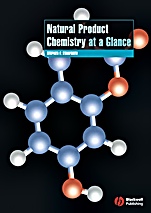
Natural Product Chemistry at a Glance
ISBN 9781405145626
Autor: Stephen P. Stanforth
Wydawca: Wiley
Dostępność: 3-6 tygodni
Cena: 200,55 zł
Przed złożeniem zamówienia prosimy o kontakt mailowy celem potwierdzenia ceny.
ISBN13: |
9781405145626 |
ISBN10: |
1405145625 |
Autor: |
Stephen P. Stanforth |
Oprawa: |
Paperback |
Rok Wydania: |
2006-06-26 |
Ilość stron: |
148 |
Wymiary: |
276x211 |
Tematy: |
PN |
Natural products have been a fertile area of chemical investigation for many years, driving the development of both analytical chemistry and of new synthetic reactions and methodologies. Many of the most important synthetic reactions in chemistry have been developed in the quest to characterise and synthesise these materials.
Natural Product Chemistry at a Glance provides a concise overview of the main principles and reactions of natural product chemistry, for students studying chemistry and related courses at undergraduate level. Based on the highly successful and student friendly “at a glance” approach, the material developed in this book has been chosen to reinforce the principles of elementary organic reactions and to highlight the similarity between many organic reactions and biological processes. It will also serve as an initial platform for more advanced excursions into the origin of natural products.
Students using Natural Product Chemistry at a Glance will find they have a resource with which they can quickly, economically and confidently acquire, regularly review and revise the basic facts that underpin the biosynthesis and chemistry of natural products.
Spis treści:
Section 1: Introduction.
1.1 Primary and Secondary Metabolites.
1.2 Properties and Purpose of Secondary Metabolites.
Section 2: Acetyl Coenzyme A: A Key Biological Intermediate.
2.1 What is Acetyl Coenzyme A? 8.
2.2 Comparison of Organic and Acetyl Coenzyme A Reactions.
2.3 Malonyl Coenzyme A – A Partnership with Acetyl Coenzyme A.
2.4 How is Acetyl Coenzyme A Used in Biosynthesis?.
Section 3: Biosynthesis of Fatty Acids.
3.1 What are Fatty Acids?.
3.2 Occurrence and Function of Fatty Acids.
3.3 Biosynthesis of Saturated Straight–Chain Fatty Acids.
3.4 Biosynthesis of Saturated Branched Fatty Acids.
3.5 Mono–unsaturated Fatty Acids.
3.6 Poly–unsaturated Fatty Acid.3.7 Oxygenated Fatty Acids.
3.8 β–Oxidation.
Section 4: Biosynthesis of Polyketides.
4.1 What are Polyketides?.
4.2 The Chemistry of 1,3–Dicarbonyls: Keto–Enol Tautomerism.
4.3 The Chemistry of 1,3–Dicarbonyls: Condensation Reactions.
4.4 Polyketide Cyclizations: Formation of Unsaturated Products.
4.5 Secondary Structural Modifications During Polyketide Cyclizations.
4.5.1 Alkylation.
4.5.2 Reduction.
4.5.3 Oxidation.
4.5.4 Decarboxylation.
4.5.5 Modifications to the Carbon Skeleton.
4.6 Alkaloids Derived from Polyketides.
4.7 The Use of Isotopes in the Elucidation of Biosynthetic Pathways.
Section 5: The Shikimic Acid Pathway.
5.1 Introduction.
5.2 Transamination.
5.3 Biosynthesis of Natural Products Derived from Cinnamic Acid.
5.4 Lignans.
5.5 Biosynthesis of Alkaloids.
5.5.1 Decarboxylation of Amino Acids and α–Keto Acids.
5.5.2 Pictet–Spengler Reaction.
5.5.3 Alkaloids Derived from Tryptophan.
5.5.4 Alkaloids Derived from Tyrosine.
Section 6: Terpenes.
6.1 What are Terpenes?.
6.2 Carbocations as Intermediates in Terpene Biosynthesis.
6.2.1 Hydride Shifts.
6.2.2 Alkyl Shifts.
6.2.3 Cyclizations.
6.3 Termination of Carbocations.
6.3.1 Loss of a Proton.
6.3.2 Addition of Water.
6.4 Terpene Biosynthesis.
6.4.1 Biosynthesis Initiated by Heterolysis of Pyrophosphates.
6.4.2 Biosynthesis from ‘Dimers’ of Pyrophosphates.
6.4.3 Biosynthesis Initiated by Protonation or Epoxidation of an Alkene.
Section 7: Natural Products Derived from Amino Acids.
7.1 Alkaloids.
7.2 Penicillins and Related Compounds 1.1 Primary and Secondary Metabolites.
7.3 Macrocyclic Peptides.
7.4 Porphyrins.
Section 8: Answers to Problems.
Section 9: Further Reading.
Index
Nota biograficzna:
Stephen Stanforth is a Reader in the School of Applied Sciences, Northumbr
ia University, Newcastle upon Tyne, UK.
Okładka tylna:
Natural products have been a fertile area of chemical investigation for many years, driving the development of both analytical chemistry and of new synthetic reactions and methodologies. Many of the most important synthetic reactions in chemistry have been developed in the quest to characterise and synthesise these materials.
Natural Product Chemistry at a Glance provides a concise overview of the main principles and reactions of natural product chemistry, for students studying chemistry and related courses at undergraduate level. Based on the highly successful and student friendly “at a glance” approach, the material developed in this book has been chosen to reinforce the principles of elementary organic reactions and to highlight the similarity between many organic reactions and biological processes. It will also serve as an initial platform for more advanced excursions into the origin of natural products.
Students using Natural Product Chemistry at a Glance will find they have a resource with which they can quickly, economically and confidently acquire, regularly review and revise the basic facts that underpin the biosynthesis and chemistry of natural products.
Koszyk
Książek w koszyku: 0 szt.
Wartość zakupów: 0,00 zł
Informacje


Kontakt
Gambit
Centrum Oprogramowania
i Szkoleń Sp. z o.o.
Al. Pokoju 29b/22-24
31-564 Kraków
Siedziba Księgarni
ul. Kordylewskiego 1
31-542 Kraków
+48 12 410 5991
+48 12 410 5987
+48 12 410 5989
Subskrypcje
Administratorem danych osobowych jest firma Gambit COiS Sp. z o.o. Na podany adres będzie wysyłany wyłącznie biuletyn informacyjny.
Autoryzacja płatności

Informacje na temat autoryzacji płatności poprzez PayU.

© Copyright 2012: GAMBIT COiS Sp. z o.o. Wszelkie prawa zastrzeżone.
Projekt i wykonanie: Alchemia Studio Reklamy