


Wydawcy
Katalog tematyczny
- Archeologia (109)
- Ekonomia, finanse, business (13704)
- Filozofia (1445)
- Historia (3040)
- Języki i językoznawstwo (2356)
- Lifestyle, hobby i rozrywka (475)
- Medycyna (9704)
- Nauki humanistyczne (4)
- Nauki o Ziemi i środowisku (2638)
- Nauki ścisłe (20412)
- Astronomia (294)
- Biologia (5119)
- Biochemia (575)
- Biologia człowieka (14)
- Biologia komórkowa (377)
- Biologia molekularna (398)
- Biologia rozwoju (130)
- Biologia, ogólnie (1277)
- Botanika (280)
- Hydrobiologia (92)
- Mikrobiologia (363)
- Mykologia (22)
- Zoologia (303)
- Chemia (6540)
- Fizyka (3309)
- Matematyka (4574)
- Nauki ścisłe, ogólnie (503)
- Nauki społeczne (8486)
- Nauki techniczne (13450)
- Prawo (1696)
- Publikacje informacyjne i interdyscyplinarne (1288)
- Religia i wierzenia (917)
- Technika komputerowa (4067)
- Zdrowie, relacje międzyludzkie i rozwój osobisty (657)





Informacje szczegółowe o książce
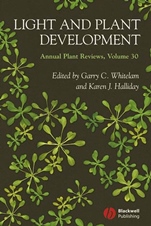
Annual Plant Reviews: Light and Plant Development
ISBN 9781405145381
Autor: Garry C. Whitelam, Karen J. Halliday
Wydawca: Wiley
Dostępność: 3-6 tygodni
Cena: 1 018,50 zł
Przed złożeniem zamówienia prosimy o kontakt mailowy celem potwierdzenia ceny.
ISBN13: |
9781405145381 |
ISBN10: |
1405145382 |
Autor: |
Garry C. Whitelam, Karen J. Halliday |
Oprawa: |
Hardback |
Rok Wydania: |
2007-02-23 |
Ilość stron: |
344 |
Wymiary: |
243x165 |
Tematy: |
PS |
Living organisms are subject to fluctuating environmental conditions. Whereas most animals are able to move away from unfavourable conditions, plants are sessile and so must cope with whatever comes their way. Of all the environmental cues that challenge the developing plant, light can probably be considered to be the most important. In addition to its key role in plant metabolism, and hence almost all life on Earth, where it drives the process of photosynthesis, light energy also acts to regulate plant growth and development. Light quantity, quality, direction and diurnal and seasonal duration regulate processes from germination, through seedling establishment to the architecture of the mature plant and the transition to reproductive development. These developmental responses of plants to light constitute photomorphogenesis.
This volume is designed to provide the reader with state–of–the–art accounts of our current knowledge of the major classes of higher plant regulatory photoreceptors and the signal transduction networks that comprise plant developmental photobiology. Consideration is also given to the ways in which knowledge of plant photoreceptors and their signalling networks can be exploited, for instance to improve the quality and productivity of commercially–grown plants. The book is directed at researchers and professionals working in plant molecular biology, plant physiology and plant biochemistry.
Spis treści:
Part 1: Photoreceptors.
Chapter 1. Phytochromes.
Andreas Hiltbrunner, Ferenc Nagy and Eberhard Schäfer.
Albert–Ludwigs–Universität Freiburg, Institute of Biology II/ Botany, Schänzlestr. 1, 79104 Freiburg, Germany, and Biological Research Centre, Institute of Plant Biology, P. O. Box 521, 6701 Szeged, Hungary.
Chapter 2. Cryptochromes.
Alfred Batschauer, Roopa Banerjee and Richard Pokorny.
Philipps–University, Biology̵
1;Plant Physiology; Karl–von–Frisch–Str. 8; 35032 Marburg; Germany.
Chapter 3. Phototropins and Other Lov–Containing Proteins.
John M. Christie.
Plant Science Group, Division of Biochemistry and Molecular Biology, Institute of Biomedical and Life Sciences, University of Glasgow, Glasgow G12 8QQ, UK.
Part 2: Photoreceptor Signal Transduction.
Chapter 4. Phytochrome Interacting Factors.
Peter H. Quail.
UC Berkeley, Plant Gene Expression Center, United States Department of Agriculture (USDA), 800 Buchanan Street, Albany, California 94710, USA.
Chapter 5. Phosphorylation/De–phosphorylation in Photoreceptor Signalling.
Catherine Lillo(1), Trudie Allen(2) and Simon Geir Møller(1,2,3).
(1) Department of Mathematics and Natural Sciences, University of Stavanger, 4036 Stavanger, Norway.
(2) Department of Biology, University of Leicester, Leicester LE1 7RH, UK.
(3) Laboratory of Plant Molecular Biology, Rockefeller University, New York, New York 10021–3699, USA.
Chapter 6. The Role of Ubiquitin/Proteasome–Mediated Proteolysis in Photoreceptor Action.
Suhua Feng and Xing Wang Deng.
Department of Molecular, Cellular and Developmental Biology, Yale University, New Haven, Connecticut, 06520–8104, USA.
Chapter 7. UV–B Perception and Signal Transduction.
Gareth I. Jenkins and Bobby A. Brown.
Plant Science Group, Division of Biochemistry and Molecular Biology, Institute of Biomedical and Life Sciences, Bower Building, University of Glasgow, Glasgow G12 8QQ, UK.
.
.
.
Part 3: Physiological Responses.
Chapter 8. Photocontrol of Flowering.
Dr Paul Devlin.
School of Biological Sciences, Royal Holloway, University of London, Egham, Surrey TW20 0EX, UK.
Chapter 9. Red: Far–red Ratio Perception and Shade Avoidance.
Keara A. Franklin and Garry C. Whitelam.
Department of Biology, Un
iversity of Leicester, LE1 7RH, UK.
Chapter 10. Photoreceptor Interactions with Other Signals.
Eve–Marie Josse and Karen J. Halliday.
School of Biological Sciences, The University of Edinburgh, Daniel Rutherford Building, The King′s Buildings, Mayfield Road, Edinburgh EH9 3JR, UK.
Part 4: Applied Aspects of Photomorphogenesis.
Chapter 11. Photoreceptor Biotechnology.
Matthew Hudson.
Department of Crop Sciences, University of Illinois, Urbana, Illinois 61801, USA.
Chapter 12. Light Quality Manipulation by Horticulture Industry.
Professor Nihal C. Rajapakse and Dr Yosepha Shahak.
Department of Horticulture, Clemson University, 168 Poole Agricultural Center, Box 340319, Clemson, SC 29634–0319, USA, and Department of Fruit Tree Sciences, Agricultural Research Organization, The Volcani Center, P.O.Box 6, Bet Dagan 50250, Israel
Nota biograficzna:
Professor Garry C. Whitelam, Head of Department, School of Biological Sciences, University of Leicester, UK
Dr Karen J. Halliday, School of Biological Sciences, The University of Edinburgh, UK
Okładka tylna:
Living organisms are subject to fluctuating environmental conditions. Whereas most animals are able to move away from unfavourable conditions, plants are sessile and so must cope with whatever comes their way. Of all the environmental cues that challenge the developing plant, light can probably be considered to be the most important. In addition to its key role in plant metabolism, and hence almost all life on Earth, where it drives the process of photosynthesis, light energy also acts to regulate plant growth and development. Light quantity, quality, direction and diurnal and seasonal duration regulate processes from germination, through seedling establishment to the architecture of the mature plant and the transition to reproductive development. These developmental responses of plants to light constitute p
hotomorphogenesis.
This volume is designed to provide the reader with state–of–the–art accounts of our current knowledge of the major classes of higher plant regulatory photoreceptors and the signal transduction networks that comprise plant developmental photobiology. Consideration is also given to the ways in which knowledge of plant photoreceptors and their signalling networks can be exploited, for instance to improve the quality and productivity of commercially–grown plants. The book is directed at researchers and professionals working in plant molecular biology, plant physiology and plant biochemistry.
Koszyk
Książek w koszyku: 0 szt.
Wartość zakupów: 0,00 zł
Informacje


Kontakt
Gambit
Centrum Oprogramowania
i Szkoleń Sp. z o.o.
Al. Pokoju 29b/22-24
31-564 Kraków
Siedziba Księgarni
ul. Kordylewskiego 1
31-542 Kraków
+48 12 410 5991
+48 12 410 5987
+48 12 410 5989
Subskrypcje
Administratorem danych osobowych jest firma Gambit COiS Sp. z o.o. Na podany adres będzie wysyłany wyłącznie biuletyn informacyjny.
Autoryzacja płatności

Informacje na temat autoryzacji płatności poprzez PayU.

© Copyright 2012: GAMBIT COiS Sp. z o.o. Wszelkie prawa zastrzeżone.
Projekt i wykonanie: Alchemia Studio Reklamy