


Wydawcy
Katalog tematyczny
- Archeologia (109)
- Ekonomia, finanse, business (13704)
- Filozofia (1445)
- Historia (3040)
- Języki i językoznawstwo (2356)
- Lifestyle, hobby i rozrywka (475)
- Medycyna (9704)
- Nauki humanistyczne (4)
- Nauki o Ziemi i środowisku (2638)
- Nauki ścisłe (20412)
- Nauki społeczne (8486)
- Nauki techniczne (13450)
- Prawo (1696)
- Publikacje informacyjne i interdyscyplinarne (1288)
- Religia i wierzenia (917)
- Technika komputerowa (4067)
- Zdrowie, relacje międzyludzkie i rozwój osobisty (657)





Informacje szczegółowe o książce
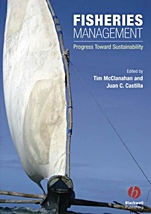
Fisheries Management: Progress toward Sustainability
ISBN 9781405139328
Autor: Tim McClanahan, Juan Carlos Castilla
Wydawca: Wiley
Dostępność: 3-6 tygodni
Cena: 1 004,85 zł
Przed złożeniem zamówienia prosimy o kontakt mailowy celem potwierdzenia ceny.
ISBN13: |
9781405139328 |
ISBN10: |
1405139323 |
Autor: |
Tim McClanahan, Juan Carlos Castilla |
Oprawa: |
Hardback |
Rok Wydania: |
2007-01-02 |
Ilość stron: |
352 |
Wymiary: |
251x181 |
Tematy: |
KNAF |
The world’s stocks of wild fish continue to decline, making the task of finding innovative, sustainable and socially acceptable methods of fisheries management more important than ever.
Several new approaches from around the world have proved to be successful in stemming the decline whilst increasing fish catches, and under the editorship of McClanahan and Castilla this international team of authors have looked to these examples to provide the reader with carefully chosen case studies offering practical suggestions and solutions for problem fisheries elsewhere. Coverage includes:
Community based fisheries
Collaborative and co–operative fisheries management
Coastal fisheries management
The future for sustainable fisheries management
Written by many of the world’s most experienced practitioners Fisheries Management: Progress toward sustainability is an important purchase for all fisheries scientists, managers and conservationists. All libraries in universities and research establishments where this area is studied and taught will find this book a valuable addition to their shelves.
Spis treści:
I. Introduction.
Chapter 1. A Brief History of Fisheries Management.
O. Defeo, T. McClanahan and J.C. Castilla.
Fishery Science and Management.
The Theory: Assessing and Managing Fisheries Systems.
Single Stocks.
Multispecies.
Fishery Research Agenda: Edge Issues for the 21st Century.
Spatial Considerations: Closed Areas and Habitat Protection.
Ecosystem–based approaches.
Reference Points, Fishery Indicators, and the Precautionary Approach.
Adaptive and Experimental Management.
The Limits to Science: When Management Fails.
Western Technocratic Models: Abuse and Misuse.
The Forgotten Social Side of Management and Attitudes.
Institutional Structures, Societal Participatory Roles, and Co–management.
Summary.
References.
II. Small–scale and Artisanal Fisheries.
Chapter 2. Successes, Lessons, and Projections from Experience in Marine Benthic Invertebrate Artisanal Fisheries in Chile.
Juan C. Castilla, Stefan Gelcich, and O. Defeo.
Introduction.
Chilean Benthic Artisanal Fisheries.
Pre–policy Stage.
Policy Process.
Pre–development Phase.
Development Phase.
Maturation Phase.
Problems with MEABR policy.
Discussion.
Perspectives for the Future.
Ecosystem Management.
Marine Protected Area Network.
Conclusions.
References.
Chapter 3. From Crisis to Institutional Sustainability in the Chilean Sea Urchin Fishery.
Carlos Moreno, Alejandro Zuleta, Ana Parma, and Lobo Orensanz.
Introduction.
The System.
Chilean Fisheries: Political Jurisdiction and Management Institutions.
Access regimes.
Southern Chile: a Geographic Labyrinth.
The Chilean Sea Urchin.
The Sea Urchin Fishery of Regions X–XI.
Fleet and Fishing Operations.
Social Matrix.
Historical Trends and Stages in Development.
Management and Scientific Advice before 2001.
The Dynamics of Depletion and Recovery.
A Quest for Alternative Models.
Social Turmoil, Political Complexities, and Prospects.
The “Contiguous Zones” Conflict.
Participatory Management.
Revamping the Monitoring and Knowledge Support.
New Challenges.
Summary.
References.
Chapter 4. Achievements and Setbacks in the Commercial Diving Fishery of San José Gulf, Argentine Patagonia.
Lobo Orensanz, Ana Parma, Néstor Ciocco and Ana Cinti.
Introduction.
Settings.
The Gulfs of Northern Argentine Patagonia.
A Sensitive Region for Marine Conservation.
The Tehuelche Scallop.
Achievements, Setbacks, and Prospects.
Round 1: Boom and Bust of the San Matías Gulf Scallop Fishery (1968–1972).
Round 2: Dredging to Commercial Diving (the 1970s).
Round 3: No Controls or Incentives (the 1980s
and 1990s).
Round 4: Recovery, Participatory Management, and Incentives (2000–2004).
Round 5: New Challenges (2005–?).
Summary.
References.
Chapter 5. Evolution and Lessons from Fisheries and Coastal Management in the Philippines.
Alan T. White, Edgardo Gomez, Angel C. Alcala, and Garry Russ.
Introduction.
Evolution of Coastal and Fisheries Management.
Legal and Policy Framework Supporting Decentralization.
Contribution of Community–Based Marine Protected Areas.
Case I: Supporting Fisheries at Apo and Sumilon Islands.
Affects on Fish Biomass.
Spillover of Fish.
Affects on Fisheries Yields.
The Role of the Local Community and Local Government.
Case 2: Supporting Fisher Livelihood through Tourism at Gilutongan Island, Cebu.
Case 3: Supporting Coral Reef Restoration, Hundred Islands National Park, Luzon.
Local Governments and Integrated Coastal and Fisheries Management.
A Benchmark System for Local Governments.
Boundary Delineation for Fisheries.
Local Government Law Enforcement.
Co–management of MPAs with Local Governments and NGOs.
Key Lessons.
References.
.
Chapter 6. Redressing Access Inequities and Implementing Formal Management Systems for Marine and Estuarine Subsistence Fisheries in South Africa.
Jean M. Harris, George M. Branch, Barry M. Clark, and Sandile C. Sibiya.
Introduction.
Testing the Waters.
Documenting a Nation–wide Phenomenon.
Defining Subsistence Fishers.
A Catalytic Local Case–study.
Providing Access.
National Recommendations for Management.
Provincial Implementation.
Creating Institutional Capacity.
Finding the Fishers and Fisheries.
Crafting Co–management.
Evaluating Progress and Success.
Implementing Systems for Fisheries Management.
Co–management as a Local Management Model.
Conclusions.
References.
Chapter 7. Collaborative Fisheries Management in Tanga
, Northern Tanzania.
Sue Wells, Melita Samoilys, Jim Anderson, Hassan Kalombo, and Solomon Makoloweka.
Introduction.
Biophysical Characteristics.
Socio–economic Characteristics – the Artisanal Fishery.
The TCZCDP Strategy.
Process for Developing CMAPS.
Content of the CMAPs.
Closed Reefs.
Implementation.
Compliance and Enforcement.
Resource Monitoring.
Review and Re–negotiation of CMAPs.
Effect of CMAs.
Improving Compliance.
Effect on Fisheries.
Discussion.
Conclusions.
References.
Chapter 8. Management of Area and Gear in Kenyan Coral Reefs.
T.R. McClanahan.
Introduction.
The Biophysical and Economic Environment.
The Social–cultural and Legal Environment.
History of Fisheries and Gears.
History of Marine Protected Areas.
Closed Areas.
Perceptions Towards Closed Areas.
Direct Effects of Marine Protected Areas.
Fish Abundance and Diversity.
Ecological Effects.
Indirect Effects of Marine Protected Areas.
Spillover of Fish.
Economic Effects.
Gear Management.
Perceptions towards Gear.
Gear Selectivity and Competition.
Effect of Seine–net Removal on Fish Catches.
Comanagement and Control.
Summary.
References.
Chapter 9. Progress Towards the Cooperative Management of Marine Hunting in the Great Barrier Reef.
Helene Marsh.
Introduction.
Site Profile.
The Management Context.
Towards Cooperative Management.
GBRMPA Initiatives: 1983–1996.
Cooperative Initiatives: 1997–1999.
The Post–planning Period: 1999 – 2001.
Subsequent Developments.
Discussion and Conclusions.
References.
III. Meso–scale Fisheries.
Chapter 10. Partnerships towards Sustainable Use of Australia′s Northern Prawn Fishery.
C. M. Dichmont, N. R. Loneragan, D. T. Brewer, and I. R. Poiner.
.
Introduction.
Management.
The Partnership Approach.
A Complex Ecosystem.<
Koszyk
Książek w koszyku: 0 szt.
Wartość zakupów: 0,00 zł
Informacje


Kontakt
Gambit
Centrum Oprogramowania
i Szkoleń Sp. z o.o.
Al. Pokoju 29b/22-24
31-564 Kraków
Siedziba Księgarni
ul. Kordylewskiego 1
31-542 Kraków
+48 12 410 5991
+48 12 410 5987
+48 12 410 5989
Subskrypcje
Administratorem danych osobowych jest firma Gambit COiS Sp. z o.o. Na podany adres będzie wysyłany wyłącznie biuletyn informacyjny.
Autoryzacja płatności

Informacje na temat autoryzacji płatności poprzez PayU.

© Copyright 2012: GAMBIT COiS Sp. z o.o. Wszelkie prawa zastrzeżone.
Projekt i wykonanie: Alchemia Studio Reklamy