


Wydawcy
Katalog tematyczny
- Archeologia (109)
- Ekonomia, finanse, business (13704)
- Filozofia (1445)
- Historia (3040)
- Języki i językoznawstwo (2356)
- Lifestyle, hobby i rozrywka (475)
- Medycyna (9704)
- Nauki humanistyczne (4)
- Nauki o Ziemi i środowisku (2638)
- Nauki ścisłe (20412)
- Nauki społeczne (8486)
- Edukacja (229)
- Kryminologia, opieka spełeczna (284)
- Obronność (10)
- Polityka (1389)
- Psychologia (777)
- Socjologia (410)
- Społeczeństwo i kultura (187)
- Nauki techniczne (13450)
- Prawo (1696)
- Publikacje informacyjne i interdyscyplinarne (1288)
- Religia i wierzenia (917)
- Technika komputerowa (4067)
- Zdrowie, relacje międzyludzkie i rozwój osobisty (657)





Informacje szczegółowe o książce
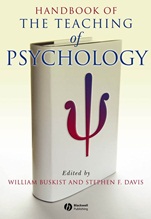
Handbook of the Teaching of Psychology
ISBN 9781405138017
Autor: William Buskist, Stephen F. Davis
Wydawca: Wiley
Dostępność: 3-6 tygodni
Cena: 267,75 zł
Przed złożeniem zamówienia prosimy o kontakt mailowy celem potwierdzenia ceny.
ISBN13: |
9781405138017 |
ISBN10: |
1405138017 |
Autor: |
William Buskist, Stephen F. Davis |
Oprawa: |
Paperback |
Rok Wydania: |
2005-09-21 |
Ilość stron: |
376 |
Wymiary: |
244x170 |
Tematy: |
JC |
The Handbook of the Teaching of Psychology is a state–of–the–art volume that provides readers with comprehensive coverage and analysis of current trends and issues, basic mechanics, and important contextual variables related to effective teaching in psychology.
Using concise and targeted chapters, written by leading scholars in the field, the volume explores a myriad of challenges in the teaching of psychology and employs a prescriptive approach to offer strategies and solutions to frequently occurring dilemmas. This book is a lively and informative volume that covers the gamut of current topics of interest to all current and future teachers of psychology.
Spis treści:
Preface.
Part I: Introduction.
1. What Teachers Need to Know about Teaching and Learning: Stephen F. Davis (Texas Wesleyan University) and William Buskist (Auburn University).
2. The Scholarship of Teaching and Pedagogy: Bernard C. Beins (Ithaca College).
3. Psychology Curricula and the New Liberal Arts: Thomas V. McGovern (Arizona State University West).
4. The Society for the Teaching of Psychology: A Psychology Teacher’s Best Friend: G. William Hill IV (Kennesaw State University).
Part III: Preparing for Teaching.
5. Options for Planning a Course and Developing a Syllabus: Anne–Marie Suddreth and Amy T. Galloway (both Appalachian State University).
6. Selecting a Text and Using Publisher–Produced Courseware: Some Suggestions and Warnings: Andrew Christopher (Albion College).
7. The First Day of Class and the Rest of the Semester: Sandra Goss Lucas (University of Illinois, Urbana–Champaign).
Part III: Techniques of Teaching: Approaches and Strategies.
8. The Classroom Lecture: Stephen H. Hobbs (Augusta State University).
9. Writing in Psychology: Robin K. Morgan (Indiana University Southeast) and Dave L. Morgan (Spalding University).
10. Let the Concert Begin:
The Music of Team Teaching: Kenneth D. Keith (University of San Diego).
11. Collaborative Learning: Maximizing Students’ Potential for Success: Tina Vazin and Phyllis Reile (both Alabama State University).
12. Problem–based Learning: Patricia A. Connor–Greene (Clemson University).
13. Understanding Human Thought: Educating Students as Critical Thinkers: Heidi R. Riggio and Diane F. Halpern (both Claremont–McKenna College).
14. Leading Discussions and Asking Questions: Tracy E. Zinn and Bryan K. Saville (both James Madison University).
15. Building a Repertoire of Effective Classroom Demonstrations: Douglas A. Bernstein (University of South Florida).
16. Lessons Learned Using PowerPoint in the Classroom: Timothy J. Huelsman (Appalachian State University).
17. Using the Internet Effectively: Home Pages and E–mail: Vincent W. Hevern (LeMoyne College).
18. Teaching Students to Use Electronic Databases: Maureen McCarthy (Kennesaw State University and American Psychological Association) and Thomas P. Pusateri (Florida Atlantic University).
Part IV: Techniques of Teaching: Special Considerations.
19. Teaching Large Classes: Katherine Kipp (University of Georgia) and Steffen Pope Wilson (Eastern Kentucky University).
20. Using Teaching Assistants Effectively: Lauren Fruh VanSickle Scharff (Stephen F. Austin State University).
21. Teaching Courses with Laboratories: Dana S. Dunn (Moravian College).
22. Independent Study: A Conceptual Framework: Jeffrey S. Katz, Bradley R. Sturz, Kent D. Bodily, and Michelle Hernandez, (all Auburn University).
23. Service–Learning: Randall E. Osborne and Oren Renick (both Texas State University–San Marcos).
24. Distance Learning: Psychology Online: Mary N. Duell (University of Massachusetts at Lowell and Middlesex Community College).
Part V: Teaching and Mentoring Diverse Students.
25. Teaching and Mentoring Nontraditional Students: Cat
hy A. Grover (Emporia State University).
26. Teaching and Mentoring Students with Disabilities: David E. Johnson (John Brown University).
27. Teaching and Mentoring Female Students: Elizabeth Yost Hammer (Loyola University–New Orleans).
28. Teaching and Mentoring Racially and Ethnically Diverse Students: Loretta Neal McGregor (Arkansas State University).
29. Using Hope Theory to Teach and Mentor Academically At–Risk Students: C. R. Snyder, Hal S. Shorey, and Kevin L. Rand (all University of Kansas, Lawrence).
30. Multiple Cultural Identities: Will the Real Student Please Stand Up?: Loreto R. Prieto (University of Akron).
Part VI: Teaching Controversial Topics in Psychology.
31. Teaching Psychology When Everyone is an Expert: David J. Pittenger (University of Tennessee–Chattanooga).
32. Psychology of Race and Ethnicity: James E. Freeman (University of Virginia).
33. Evolutionary Psychology: Lewis Barker (Auburn University).
34. Teaching Human Sexuality: Laura L. Finken (Creighton University).
35. Psychology of Gender and Related Courses: Margaret A. Lloyd (Georgia Southern University).
36. Teaching the Psychology of Religion: Teaching for Today’s World: Maureen P. Hester (Holy Names University) and Raymond F. Paloutzian (Westmont College).
37. Drugs and Behavior: Scott A. Bailey( Texas Lutheran University).
Part VII: Classroom Management Issues.
38. Ethical Teaching: William Douglas Woody (University of Northern Colorado).
39. Establishing Classroom Etiquette: General Rules of Classroom Conduct: Lisa Damour (John Carroll University).
40. Problematic College Students: Preparing and Reparing: Janie H. Wilson and Amy A. Hackney (both Georgia Southern College).
41. Preventing, Detecting, and Addressing Academic Dishonesty: Gregory J. Cizek (University of North Carolina–Chapel Hill).
Part VIII: Evaluating Student Learning.
42. Test Construction: John A. Juve (Un
iversity of Missouri–Columbia).
43. Principles of Effective Grading: Peter Giordano (Belmont University).
44. Written and Oral Assignments: Harold L. Miller, Jr. and Casey L. Lance (both Brigham Young University).
45. Group Work: Patti Price (Wingate University).
46. Writing Letters of Recommendation: R. Eric Landrum (Boise State University).
Part IX: Assessment of Teaching.
47. Using Student Evaluations to Improve Teaching: Victor A. Benassi and Lee F. Seidel (both University of New Hampshire).
48. In–Class Learning Assessment Strategies: Regan A. R. Gurung (University of Wisconsin, Green Bay).
49. Lesser Discussed Aspects of Peer Review: Context, Out–of–Classroom Work, and Communication: Baron Perlman and Lee I. McCann (both University of Wisconsin—Oshkosh).
50. Improving Teaching Through Video Feedback and Consultation: Steven Prentice–Dunn, Kristen L. Payne, and Judy M. Ledbetter (all University of Alabama).
51. Creating Teaching Portfolios: Erin B. Rasmussen (Idaho State University).
Part X: Teaching Within the Larger Context of Academic Life.
52. Helping College Students with Personal Problems: Should I Help and How?: Marcia Rossi (Tuskegee University).
53. Inviting Students to Become Research Collaborators: Susan R. Burns (Morningside College).
54. Foster Student Professional Development: R. Eric Landrum (Boise State University).
55. Professional Development Through the Integration of Teaching, Scholarship, and Service: If It is Not Fun, I’m Not Doing It: Matthew T. Huss (Creighton University).
56. Mentoring From Your Chair: Building a Valuable Relationship: Linda M. Noble (Kennesaw State University).
57. Navigating the Academic Environment: The Politics of Teaching: Randolph A. Smith (Kennesaw State University).
Index.
Nota biograficzna:
William Buskist is Distinguished Professor in the Teaching of Psychology at Auburn Univer
Koszyk
Książek w koszyku: 0 szt.
Wartość zakupów: 0,00 zł
Informacje


Kontakt
Gambit
Centrum Oprogramowania
i Szkoleń Sp. z o.o.
Al. Pokoju 29b/22-24
31-564 Kraków
Siedziba Księgarni
ul. Kordylewskiego 1
31-542 Kraków
+48 12 410 5991
+48 12 410 5987
+48 12 410 5989
Subskrypcje
Administratorem danych osobowych jest firma Gambit COiS Sp. z o.o. Na podany adres będzie wysyłany wyłącznie biuletyn informacyjny.
Autoryzacja płatności

Informacje na temat autoryzacji płatności poprzez PayU.

© Copyright 2012: GAMBIT COiS Sp. z o.o. Wszelkie prawa zastrzeżone.
Projekt i wykonanie: Alchemia Studio Reklamy