


Wydawcy
Katalog tematyczny
- Archeologia (109)
- Ekonomia, finanse, business (13704)
- Filozofia (1445)
- Historia (3040)
- Języki i językoznawstwo (2356)
- Lifestyle, hobby i rozrywka (475)
- Medycyna (9704)
- Nauki humanistyczne (4)
- Nauki o Ziemi i środowisku (2638)
- Nauki ścisłe (20412)
- Astronomia (294)
- Biologia (5119)
- Biochemia (575)
- Biologia człowieka (14)
- Biologia komórkowa (377)
- Biologia molekularna (398)
- Biologia rozwoju (130)
- Biologia, ogólnie (1277)
- Botanika (280)
- Hydrobiologia (92)
- Mikrobiologia (363)
- Mykologia (22)
- Zoologia (303)
- Chemia (6540)
- Fizyka (3309)
- Matematyka (4574)
- Nauki ścisłe, ogólnie (503)
- Nauki społeczne (8486)
- Nauki techniczne (13450)
- Prawo (1696)
- Publikacje informacyjne i interdyscyplinarne (1288)
- Religia i wierzenia (917)
- Technika komputerowa (4067)
- Zdrowie, relacje międzyludzkie i rozwój osobisty (657)





Informacje szczegółowe o książce
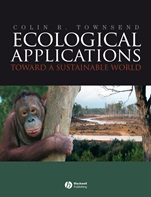
Ecological Applications: Toward a Sustainable World
ISBN 9781405136983
Autor: Colin R. Townsend
Wydawca: Wiley
Dostępność: 3-6 tygodni
Cena: 260,40 zł
Przed złożeniem zamówienia prosimy o kontakt mailowy celem potwierdzenia ceny.
ISBN13: |
9781405136983 |
ISBN10: |
1405136987 |
Autor: |
Colin R. Townsend |
Oprawa: |
Paperback |
Rok Wydania: |
2007-08-31 |
Ilość stron: |
328 |
Wymiary: |
246x188 |
Tematy: |
PS |
Ecological Applications offers a progressive examination ofthe way ecological theory can be applied to remedy the manyproblems confronting us. The text moves through the levels ofindividual organisms, populations, communities, and ecosystems,culminating with the macroecological scale of landscape, regional,and global issues. The book is designed to grab the reader sinterest with real–life problems but also to instil anunderstanding of the fundamentals of ecology.
Applications including species conservation, pest control,harvest management, biosecurity, restoration, and reserve designare explored in both terrestrial and aquatic settings. The focus ison ecological sustainability, but economic and sociopoliticaldimensions related to the sustainable use of natural resources arealso examined.
Ecological Applications is a current and comprehensiveguide to the theory and practice of ecology for students andpractitioners alike.
List of Plates.
List of Boxes.
Preface.
Acknowledgments.
1. Introduction Humans, Nature, and Human Nature.
1.1. Homo not–so–sapiens?.
1.1.1. Homo sapiens Just Another Species?.
1.1.2. Human Population Density and Technology UnderlieEnvironmental Impact.
1.2. A Biodiversity Crisis.
1.2.1. The Scale of the Biodiversity Problem.
1.2.2. Biodiversity, Ecosystem Function and EcosystemServices.
1.2.3. Drivers of Biodiversity Loss The ExtinctionVortex.
1.2.4. Habitat Loss Driven from House and Home.
1.2.5. Invaders Unwanted Biodiversity.
1.2.6. Overexploitation Too Much of a Good Thing.
1.2.7. Habitat degradation Laying Waste.
1.2.8. Global climate change Life in the Greenhouse.
1.3. Toward a Sustainable Future?.
1.3.1. Ecological Applications to Conserve, Restore, andSustain Biodiversity.
1.3.2. From an Economic Perspective Putting a Value onNature.
1.3.3. The Sociopolitical Dimension.
Part 1: Ecological Applications At The Level Of IndividualOrganisms.
2. Ecological Applications of Niche Theory.
2.1. Introduction.
2.2. Unwanted Aliens Lessons from Niche Theory.
2.2.1. Ecological Niche Modeling Predicting WhereInvaders will Succeed.
2.2.2. Are we Modeling Fundamental or Realized Niches?.
2.2.3. When Humans Disrupt Ecosystems and Make it Easy forInvaders.
2.3. Conservation of Endangered Species Each to Its OwnNiche.
2.3.1. Monarch s Winter Palace Under Siege.
2.3.2. A Species off the Rails Translocation of theTakahe.
2.4. Restoration of Habitats Impacted by Human Activities.
2.4.1. Land Reclamation Prospecting for Species toRestore Mined Sites.
2.4.2. Agricultural Intensification Risks toBiodiversity.
2.4.3. How Much Does it Cost to Restore a Species?.
2.4.4. River Restoration Going with the Flow.
3. Life–history Theory and Management.
3.1. Introduction Using Life–history Traits to MakeManagement Decisions.
3.2. Species Traits as Predictors for Effective Restoration.
3.2.1. Restoring Grassland Plants A Pastoral Duty.
3.2.2. Restoring Tropical Forest Abandoned FarmlandReclaimed for Nature.
3.3. Species Traits as Predictors of Invasion Success.
3.3.1. Species Traits Predict Invasive Conifers.
3.3.2. Invasion Success The Importance ofFlexibility.
3.3.3. Separating Invasions into Sequential Stages Different Traits for Each?.
3.3.4. What We Know and Don t Know About InvaderTraits.
3.4. Species Traits as Predictors of Extinction Risk.
3.4.1. Niche Breadth and Flexibility Freshwater andForest at Risk.
3.4.2. When Big isn t Best r/K Theory, Harvesting,Grazing and Pollution.
3.4.3. When Competitiveness Matters CSR Theory, Grazingand Habitat Fragmentation.
4. Dispersal, Migration and Management.
4.1. Introduction Why Species Mobility Matters.
4.2. Migration and Dispersal Lessons forConservation.
4.2.1. For Whom the Bell Tolls The Surprising Story of aSouth American Bird.
4.2.2. The Ups and Downs of Panda Conservation.
4.2.3. Dispersal of a Vulnerable Aquatic Insect A Damselin Distress.
4.2.4. Designing Marine Reserves.
4.3. Restoration and Species Mobility.
4.3.1. Behavior Management.
4.3.2. Bog Restoration Is Assisted Migration Needed forPeat s Sake?.
4.3.3. Wetland Forest Restoration.
4.4. Predicting the Arrival and Spread oInvaders.
4.4.1. The Great Lakes A Great Place for Invaders.
4.4.2. Lakes as Infectious Agents.
4.4.3. Invasion Hubs or Diffusive Spread?.
4.4.4. How to Manage Invasions under Globalization.
4.5. Species Mobility and Management of ProductionLandscapes.
4.5.1. Squirrels Axeman Spare that Tree.
4.5.2. Bats Axeman Cut that Track.
4.5.3. Farming the Wind The Spatial Risk oPulverizingBirds.
4.5.4. Bee Business Pollination Services of Native BeesDepend on Dispersal Distance.
Part 2: Applications at the Level of Populations.
5. Conservation of Endangered Species.
5.1. Dealing with Endangered Species A CrisisDiscipline.
5.2. Assessing Extinction Risk from Correlational Data.
5.3. Simple Algebraic Models of Population ViabilityAnalysis.
5.3.1. The Case of Fender s Blue Butterfly.
5.3.2. A Primate in Kenya How Good are the Data?.
5.4. Simulation Modeling for Population Viability Analysis.
5.4.1. An Australian Icon at Risk.
5.4.2. The Royal Catchfly A Burning Issue.
5.4.3. Ethiopian Wolves Dogged by Disease.
5.4.4. How Good is Your Population Viability Analysis?.
5.5. Conservation Genetics.
5.5.1. Genetic Rescue of the Florida Panther.
5.5.2. The Pink Pigeon Providing a Solid Foundation.
5.5.3. Reintroduction of a Red List Plant The Value of Crossing.
5.5.4. Outfoxing the Foxes of the Californian ChannelIslands.
5.6. A Broader Perspective of Conservation Ecology,Economics and Sociopolitics All Matter.
5.6.1. Genetically Modified Crops Larking About withFarmland Biodiversity.
5.6.2. Diclofenac Good for Sick Cattle, Bad forVultures.
6. Pest Management.
6.1. Introduction.
6.1.1. One Person s Pest, Another Person s Pet.
6.1.2. Eradication or Control?.
6.2. Chemical Pesticides.
6.2.1. Natural Arms Factories.
6.2.2. Take no Prisoners.
6.2.3. From Blunderbuss to Surgical Strike.
6.2.4. Cut off the Enemy s Reinforcements.
6.2.5. Changing Pest Behavior A Propaganda War.
6.2.6. When Pesticides go Wrong Target Pest Resurgenceand Secondary Pests.
6.2.7. Widespread Effects of Pesticides on Nontarget Organisms,Including People.
6.3. Biological Control.
6.3.1. Importation Biological Control A Question ofScale.
6.3.2. Conservation Biological Control Get NaturalEnemies to do the Work.
6.3.3. Inoculation Biological Control Effective inGlasshouses but Rarely in Field Crops.
6.3.4. Inundation Biological Control Using Fungi,Viruses, Bacteria and Nematodes.
6.3.5. When Biological Control Goes Wrong.
6.4. Evolution of Resistance and its Management.
6.5. Integrated Pest Management (IPM).
6.5.1. IPM against Potato Tuber Moths in New Zealand.
6.5.2. IPM against an Invasive Weed in Australia.
7. Harvest Management.
7.1. Introduction.
7.1.1. Avoiding the Tragedy of the Commons.
7.1.2. Killing Just Enough Not Too Few, Not TooMany.
7.2. Harvest Management In Practice Maximum SustainableYield (MSY) Approaches.
7.2.1. Management by Fixed Quota Of Fish and Moose.
7.2.2. Management by Fixed Effort Of Fish andAntelopes.
7.2.3. Management by Constant Escapement In Time.
7.2.4. Management by Constant Escapement In Space.
7.2.5. Evaluation of the MSY Approach The Role ofClimate.
7.2.6. Species that are Especially Vulnerable When Rare.
7.2.7. Ecologist s Role in the Assessment of MSY.
7.3. Harvest Models that Recognize Population Structure.
7.3.1. Dynamic Pool Models in Fisheries Management Looking After the Big Mothers.
7.3.2. Forestry Axeman, Spare which Tree?.
7.3.3. A Forest Bird of Cultural Importance.
7.4. Evolution of Harvested Populations Of Fish andBighorn Rams.
7.5. A Broader View of Harvest Management AddingEconomics to Ecology.
7.6. Adding a Sociopolitical Dimension to Ecology andEconomics.
7.6.1. Factoring in Human Behavior.
7.6.2. Confronting Political Realities.
Part 3: Applications at the Level of Communities andEcosystems.
8. Succession and Management.
8.1. Introduction.
8.2. Managing Succession for Restoration.
8.2.1. Restoration Timetables for Plants.
8.2.2. Restoration Timetable for Animals.
8.2.3. Invoking the Theory of Competition ColonizationTrade–offs.
8.2.4. Invoking Successional–niche Theory.
8.2.5. Invoking Facilitation Theory.
8.2.6. Invoking Enemy–interaction Theory.
8.3. Managing Succession for Harvests.
8.3.1. Benzoin Gardening in Sumatra.
8.3.2. Aboriginal Burning Enhances Harvests.
8.4. Using Succession to Control Invasions.
8.4.1. Grassland.
8.4.2. Forest.
8.5. Managing Succession for Species Conservation.
8.5.1. When Early Succession Matters Most AHare–Restoring Formula for Lynx.
8.5.2. Enforcing a Successional Mosaic First Aid forButterflies.
8.5.3. When Late Succession Matters Most Range Findingfor Tropical Birds.
8.5.4. Controlling Succession in an Invader–dominatedCommunity.
8.5.5. Nursing a Valued Plant Back to Cultural Health.
9. Applications from Food–web and Ecosystem Theory.
9.1. Introduction.
9.2. Food–web Theory and Human Disease Risk.
9.3. Food Webs and Harvest Management.
9.3.1. Who gets Top Spot in the Abalone Food Web Ottersor Humans?.
9.3.2. Food–web Consequences of Harvesting Fish FromTuna to Tiddlers.
9.4. Food Webs and Conservation Management.
9.5. Ecosystem Consequences of Invasions.
9.5.1. Ecosystem Consequences of Freshwater Invaders.
9.5.2. Ecosystem Effects of Invasive Plants Fixing theProblem.
9.6. Ecosystem Approaches to Restoration First Aid byParasites and Sawdust.
9.7. Sustainable Agroecosystems.
9.7.1. Stopping Caterpillars Eating the Broccoli So ThatPeople Can.
9.7.2. Managing Agriculture to Minimize Fertilizer Input andNutrient Loss.
9.7.3. Constructing Wetlands to Manage Water Quality.
9.7.4. Managing Lake Eutrophication.
9.8. Ecosystem Services and Ecosystem Health.
9.8.1. The value of Ecosystem Services.
9.8.2. Ecosystem Health of Forests With All theirMites.
9.8.3. Ecosystem Health in an Agricultural Landscape Bats Have a Ball.
9.8.4. Ecosystem Health of Rivers It s What WeMake It.
9.8.5. Ecosystem Health of a Marine Environment.
Part 4: Applications at the Regional and GlobalScales.
10. Landscape Management.
10.1. Introduction.
10.2. Conservation of Metapopulations.
10.2.1. The Emu–wren Making the Most of the ConservationDollar.
10.2.2. The Wood Thrush Going Down the Sink.
10.2.3. The Problem With Large Carnivores ConnectingWith Grizzly Bears.
10.3. Landscape Harvest Management.
10.3.1. Marine Protected Areas.
10.3.2. A Peruvian Forest Successional Mosaic Patching aLiving Together.
10.4. A Landscape Perspective on Pest Control.
10.4.1. Plantation Forestry in the Landscape.
10.4.2. Horticulture in the Landscape.
10.4.3. Arable Farming in the Landscape.
10.5. Restoration Landscapes.
10.5.1. Reintroduction of Vultures What a Carrion.
10.5.2. Restoring Farmed Habitat Styled for Hares.
10.5.3. Old is Good Willingness to pay for forestimprovement.
10.5.4. Cityscape Ecology Biodiversity in Berlin.
10.6. Designing Reserve Networks for BiodiversityConservation.
10.6.1. Complementarity Selecting Reserves for FishBiodiversity.
10.6.2. Irreplaceability Selecting Reserves in the CapeFloristic Region.
10.7. Multipurpose Reserve Design.
10.7.1. Marine Zoning An Italian Job.
10.7.2. A Marine Zoning Plan for New Zealand Gifts,Gains and China Shops.
10.7.3. Managing an Agricultural Landscape AMultidisciplinary Endeavor.
11. Dealing with Global Climate Change.
11.1. Introduction.
11.2. Climate Change Predictions Based on the Ecology ofIndividual Organisms.
11.2.1. Niche Theory and Conservation What a ShameMountains are Conical.
11.2.2. Niche Theory and Invasion Risk Nuisance on theMove.
11.2.3. Life–history Traits and the Fate of Species ForBetter or for Worse.
11.3. Climate Change Predictions Based on the Theory ofPopulation Dynamics.
11.3.1. Species Conservation The Bear Essentials.
11.3.2. Pest Control More or Less of a Problem?.
11.3.3. Harvesting Fish in Future Cod Willing.
11.3.4. Forestry A Boost for Developing Countries?.
11.4. Climate Change Predictions Based on Community andEcosystem Interactions.
11.4.1. Succession New Trajectories and End Points.
11.4.2. Food–web Interactions Dengue Downunder.
11.4.3. Ecosystem Services You Win Some, You LoseSome.
11.5. A Landscape Perspective Nature Reserves UnderClimate Change.
11.5.1. Mexican Cacti Reserves in the Wrong Place.
11.5.2. Fairy Shrimps A Temporary Setback.
Index
Colin Townsend obtained his DPhil at Sussex before taking up teaching positions at Oxford University and the University of East Anglia. In 1989 he moved from the UK to New Zealand, where he was appointed Chair of Zoology at the University of Otago; he is now Director of the Ecology, Conservation and Biodiversity Research Group at Otago.
I think this text will be extremely useful and popular withthe students The overall tone of the book is lively, warmlyhumorous, engaging, and clear. Dr Anita Diaz, BournemouthUniversity <!––end––>
This new text provides information on the very topicalsubject of sustainability and further shows how ecological theoriesand techniques can be applied to conservation and managementdecisions I have been reorganizing my course to moreclosely follow the structure laid out in this book because I thinkit is a logical way to teach ecology. Dr Bethan Wood,University of Glasgow
I like the organization of the book I also likehow Townsend has emphasized the applied aspects and placed theecological basics in boxes. Realistically, asTownsend states, if a student only takes one ecology course, itshould be one that emphasizes applied ecology. What a great andlong–overdue approach. Dr James Houpis, California StateUniversity, Chico
This is the first textbook that I have read with anorganization that emphasizes the contemporary application of majorconceptual paradigms in ecology This textbook provides allthat is needed in teaching undergraduate students the essentialrelationship linking ecological theory with natural resourcemanagement. Dr Eric Dibble, Mississippi StateUniversity
Koszyk
Książek w koszyku: 0 szt.
Wartość zakupów: 0,00 zł
Informacje


Kontakt
Gambit
Centrum Oprogramowania
i Szkoleń Sp. z o.o.
Al. Pokoju 29b/22-24
31-564 Kraków
Siedziba Księgarni
ul. Kordylewskiego 1
31-542 Kraków
+48 12 410 5991
+48 12 410 5987
+48 12 410 5989
Subskrypcje
Administratorem danych osobowych jest firma Gambit COiS Sp. z o.o. Na podany adres będzie wysyłany wyłącznie biuletyn informacyjny.
Autoryzacja płatności

Informacje na temat autoryzacji płatności poprzez PayU.

© Copyright 2012: GAMBIT COiS Sp. z o.o. Wszelkie prawa zastrzeżone.
Projekt i wykonanie: Alchemia Studio Reklamy