


Wydawcy
Katalog tematyczny
- Archeologia (109)
- Ekonomia, finanse, business (13704)
- Filozofia (1445)
- Historia (3040)
- Języki i językoznawstwo (2356)
- Lifestyle, hobby i rozrywka (475)
- Medycyna (9704)
- Nauki humanistyczne (4)
- Nauki o Ziemi i środowisku (2638)
- Geografia (299)
- Nauki o Ziemi (1661)
- Geologia (414)
- Hydrologia (237)
- Meteorologia i klimatologia (114)
- Paleontologia (33)
- Wulkanologia i sejsmologia (44)
- Planowanie przestrzenne (53)
- Środowisko (607)
- Nauki ścisłe (20412)
- Nauki społeczne (8486)
- Nauki techniczne (13450)
- Prawo (1696)
- Publikacje informacyjne i interdyscyplinarne (1288)
- Religia i wierzenia (917)
- Technika komputerowa (4067)
- Zdrowie, relacje międzyludzkie i rozwój osobisty (657)





Informacje szczegółowe o książce
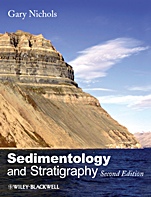
Sedimentology and Stratigraphy
ISBN 9781405135924
Autor: Gary Nichols
Wydawca: Wiley
Dostępność: 3-6 tygodni
Cena: 296,10 zł
Przed złożeniem zamówienia prosimy o kontakt mailowy celem potwierdzenia ceny.
ISBN13: |
9781405135924 |
ISBN10: |
1405135921 |
Autor: |
Gary Nichols |
Oprawa: |
Paperback |
Rok Wydania: |
2009-04-02 |
Numer Wydania: |
2nd Edition |
Ilość stron: |
432 |
Wymiary: |
246x191 |
Tematy: |
RB |
Sedimentary rocks contain the most important archive of environmental change through earth history. They record changing climates, the movement of plates, and the rise and fall of sea–level on timescales of a few thousand to billions of years. This fully revised and updated edition introduces the reader to sedimentology and stratigraphic principles, and provides tools for the interpretation of sediments and sedimentary rocks. The processes of formation, transport and deposition of sediment are considered and then applied to develop conceptual models for the full range of sedimentary environments, from deserts to deep seas and reefs to rivers.
Different approaches to using stratigraphic principles to date and correlate strata are also considered, in order to provide a comprehensive introduction to all aspects of sedimentology and stratigraphy. The text and figures are designed to be accessible to anyone completely new to the subject, and all of the illustrative material is provided in an accompanying CD–ROM.
Spis treści:
Preface.
Acknowledgements.
1 Introduction: sedimentology and stratigraphy.
1.1. Sedimentary processes.
1.2 Sedimentary environments and facies.
1.3 The spectrum of environments and facies.
1.4 Stratigraphy.
1.5 The structure of this book.
2 Terrigenous clastic sediments: gravel, sand and mud.
2.1 Classification of sediments and sedimentary rocks.
2.2 Gravel and conglomerate.
2.3 Sand and sandstone.
2.4 Clay, silt and mudrock.
2.5 Textures and analysis of terrigenous clastic sedimentary rocks.
2.6 Terrigenous clastic sediments: summary.
3 Biogenic, chemical and volcanogenic sediments.
3.1 Limestone.
3.2 Evaporite minerals.
3.3 Cherts.
3.4 Sedimentary phosphates.
3.5 Sedimentary ironstone.
3.6 Carbonaceous (organic) deposits.
3.7 Volcaniclastic rocks.
4 Processes of transport and sedimentary structures.
4.1 Transpor
t media.
4.2 The behaviour of fluids and particles in fluids.
4.3 Flows, sediment and bedforms.
4.4 Waves.
4.5 Mass flows.
4.6 Mudcracks.
4.7 Erosional sedimentary structures.
4.8 Teminology for sedimentary structures and beds.
4.9 Sedimentary structures and sedimentary environments.
5 Field sedimentology, facies and environments.
5.1 Field sedimentology.
5.2 Graphic sedimentary logs.
5.3 Palaeocurrents.
5.4 Collection of rock samples.
5.5 Description of core.
5.6 Interpreting past depositional environments.
5.7 Reconstructing palaeoenvironments in space and time.
5.8 Summary: facies and environments.
6 Continents: sources of sediment.
6.1 From source of sediment to formation of strata.
6.2 Mountain building processes.
6.3 Global climate.
6.4 Weathering processes.
6.5 Erosion and transport.
6.6 Denudation and landscape evolution.
6.7 Tectonics and denudation.
6.8 Measuring rates of denudation.
6.9 Denudation and sediment supply: summary.
7 Glacial environments.
7.1 Distribution of glacial environments.
7.2 Glacial ice.
7.3 Glaciers.
7.4 Continental glacial deposition.
7.5 Marine glacial environments.
7.6 Distribution of glacial deposits.
7.7 Ice, climate and tectonics.
7.8 Summary of glacial environments.
8 Aeolian processes.
8.1 Aeolian transport.
8.2 Deserts and ergs.
8.3 Characteristics of wind–blown particles.
8.4 Aeolian bedforms.
8.5 Desert environments.
8.6 Aeolian deposits outside deserts.
8.7 Summary.
9 Rivers and alluvial fans.
9.1 Fluvial and alluvial systems.
9.2 River forms.
9.3 Floodplain deposition.
9.4 Architecture of fluvial deposits.
9.5 Alluvial fans.
9.6 Fossils in fluvial and alluvial environments.
9.7 Soils and palaeosols.
9.8 Fluvial and alluvial fan deposition: summary.
10 Lakes.
10.1 Lakes and lacustrine environments.
10.2 Fresh
water lakes.
10.3 Saline Lakes.
10.4 Ephemeral lakes.
10.5 Controls on lacustrine deposition.
10.6 Life in lakes and fossils in lacustrine deposits.
10.7 Recognition of lacustrine facies.
11 The marine realm: morphology and processes.
11.1 Divisions of the marine realm.
11.2 Tides.
11.3 Wave and storm processes.
11.4 Thermo–haline and geostrophic currents.
11.5 Chemical and biochemical sedimentation in oceans.
11.6 Marine fossils.
11.7 Trace fossils.
11.8 Marine environments: summary.
12 Deltas.
12.1 River mouths, deltas and estuaries.
12.2 Types of delta.
12.3 Delta environments and successions.
12.4 Variations in delta morphology and facies.
12.5 Deltaic cycles and stratigraphy.
12.6 Syn–depositional deformation in deltas.
12.7 Recognition of deltaic deposits.
13 Clastic coasts and estuaries.
13.1 Coasts.
13.2 Beaches.
13.3 Barrier and lagoon systems.
13.4 Tides and coastal systems.
13.5 Coastal successions.
13.6 Estuaries.
13.7 Fossils in coastal and estuarine environments.
14 Shallow sandy seas.
14.1 Shallow marine environments of terrigenous clastic deposition.
14.2 Storm–dominated shallow clastic seas.
14.3 Tide–dominated clastic shallow seas.
14.4 Responses to change in sea level.
14.5 Criteria for the recognition of sandy shallow marine sediments.
15 Shallow marine carbonate and evaporite environments.
15.2 Coastal environments.
15.3 Shelf environments.
15.4 Types of carbonate platform.
15.5 Evaporitic basins.
16 Deep marine environments.
16.1 Ocean basins.
16.2 Submarine Fans.
16.3 Slope aprons.
16.4 Contourites.
16. 5 Oceanic sediments.
16.6 Fossils in deep ocean sediments.
16.7 Recognition of deep ocean deposits: summary.
17 Volcanic environments.
17.1 Volcanic rocks and sediment.
17.2 Transport and deposition of volcaniclastic m
aterial.
17.3 Eruption styles.
17.4 Facies associations in volcanic successions.
17.5 Volcanic material in other environments.
17.6 Volcanic rocks in Earth history.
17.7 Recognition of volcanic deposits: summary.
18 Post–depositional structures and diagenesis.
18.1 Post–depositional modification of sedimentary layers.
18.2 Diagenetic processes.
18.3 Clastic diagenesis.
18.4 Carbonate diagenesis.
18.5 Post–depositional changes to evaporites.
18.6 Diagenesis of volcaniclastic sediments.
18.7 Formation of coal, oil and gas.
19 Stratigraphy: concepts and lithostratigraphy.
19.1 Geologic time.
19.2 Stratigraphic units.
19.3 Lithostratigraphy.
19.4 Applications of lithostratigraphy.
20 Biostratigraphy.
20.1 Fossils and stratigraphy.
20.2 Classification of organisms.
20.3 Evolutionary trends.
20.4 Biozones and zone fossils.
20.5 Taxa used in biostratigraphy.
20.6 Biostratigraphic correlation.
20.7 Biostratigraphy in relation to other stratigraphic techniques.
21 Dating and correlation techniques.
21.1 Dating and correlation techniques.
21.2 Radiometric dating.
21.3 Other isotopic and chemical techniques.
21.4 Magnetostratigraphy.
21.5 Dating in the Quaternary.
22 Subsurface stratigraphy and sedimentology.
22.1 Introduction to subsurface stratigraphy and sedimentology.
22.2 Seismic reflection data.
22.3 Borehole stratigraphy and sedimentology.
22.4 Geophysical logging.
22.5 Subsurface facies and basin analysis.
23 Sequence stratigraphy and sea level changes.
23.1 Sea level changes and sedimentation.
23.2 Depositional sequences and systems tracts.
23.3 Parasequences: components of systems tracts.
23.4 Carbonate sequence stratigraphy.
23.5 Sequence stratigraphy in non–marine basins.
23.6 Alternative schemes in sequence stratigraphy.
23.7 Applications of sequence stratigraphy
.
23.8 Causes of sea level fluctuations.
23.9 Summary.
24 Sedimentary basins.
24.1 Controls on sediment accumulation.
24.2 Basins related to lithospheric extension.
24.3 Basins related to subduction.
24.4 Basins related to crustal loading.
24.5 Basins related to strike–slip plate boundaries.
24.6 Complex and hybrid basins.
24.7 The record of tectonics in stratigraphy.
24.8 Sedimentary basin analysis.
24.9 The sedimentary record.
References.
Index
Nota biograficzna:
Gary Nichols teaches sedimentology and stratigraphy at Royal Holloway University of London, UK, and has also recently taught courses at the University Centre on Svalbard, Norway. His research interests in the analysis of facies and sedimentary basins have taken him to every continent, providing experience of a wide range of sedimentary rocks types of different ages in a variety of depositional settings.
Okładka tylna:
Sedimentary rocks contain the most important archive of environmental change through earth history. They record changing climates, the movement of plates, and the rise and fall of sea–level on timescales of a few thousand to billions of years. This fully revised and updated edition introduces the reader to sedimentology and stratigraphic principles, and provides tools for the interpretation of sediments and sedimentary rocks. The processes of formation, transport and deposition of sediment are considered and then applied to develop conceptual models for the full range of sedimentary environments, from deserts to deep seas and reefs to rivers.
Different approaches to using stratigraphic principles to date and correlate strata are also considered, in order to provide a comprehensive introduction to all aspects of sedimentology and stratigraphy. The text and figures are designed to be accessible to anyone completely new to the subject, and all of the illustrative material is provided
in an accompanying CD–ROM.
Koszyk
Książek w koszyku: 0 szt.
Wartość zakupów: 0,00 zł
Informacje


Kontakt
Gambit
Centrum Oprogramowania
i Szkoleń Sp. z o.o.
Al. Pokoju 29b/22-24
31-564 Kraków
Siedziba Księgarni
ul. Kordylewskiego 1
31-542 Kraków
+48 12 410 5991
+48 12 410 5987
+48 12 410 5989
Subskrypcje
Administratorem danych osobowych jest firma Gambit COiS Sp. z o.o. Na podany adres będzie wysyłany wyłącznie biuletyn informacyjny.
Autoryzacja płatności

Informacje na temat autoryzacji płatności poprzez PayU.

© Copyright 2012: GAMBIT COiS Sp. z o.o. Wszelkie prawa zastrzeżone.
Projekt i wykonanie: Alchemia Studio Reklamy