


Wydawcy
Katalog tematyczny
- Archeologia (109)
- Ekonomia, finanse, business (13704)
- Filozofia (1445)
- Historia (3040)
- Języki i językoznawstwo (2356)
- Lifestyle, hobby i rozrywka (475)
- Medycyna (9704)
- Nauki humanistyczne (4)
- Nauki o Ziemi i środowisku (2638)
- Nauki ścisłe (20412)
- Astronomia (294)
- Biologia (5119)
- Biochemia (575)
- Biologia człowieka (14)
- Biologia komórkowa (377)
- Biologia molekularna (398)
- Biologia rozwoju (130)
- Biologia, ogólnie (1277)
- Botanika (280)
- Hydrobiologia (92)
- Mikrobiologia (363)
- Mykologia (22)
- Zoologia (303)
- Chemia (6540)
- Fizyka (3309)
- Matematyka (4574)
- Nauki ścisłe, ogólnie (503)
- Nauki społeczne (8486)
- Nauki techniczne (13450)
- Prawo (1696)
- Publikacje informacyjne i interdyscyplinarne (1288)
- Religia i wierzenia (917)
- Technika komputerowa (4067)
- Zdrowie, relacje międzyludzkie i rozwój osobisty (657)





Informacje szczegółowe o książce
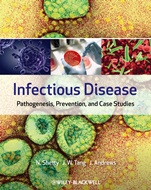
Infectious Disease: Pathogenesis, Prevention and Case Studies
ISBN 9781405135436
Autor: Nandini Shetty, Julian W Tang, Julie Andrews
Wydawca: Wiley
Dostępność: 3-6 tygodni
Cena: 408,45 zł
Przed złożeniem zamówienia prosimy o kontakt mailowy celem potwierdzenia ceny.
ISBN13: |
9781405135436 |
ISBN10: |
1405135433 |
Autor: |
Nandini Shetty, Julian W Tang, Julie Andrews |
Oprawa: |
Hardback |
Rok Wydania: |
2009-04-09 |
Ilość stron: |
664 |
Wymiary: |
288x221 |
Tematy: |
PS |
The study of infectious diseases has undergone major changes since its infancy when it was largely a documentation of epidemics. It has now evolved into a dynamic phenomenon involving the ecology of the infectious agent, pathogenesis in the host, reservoirs and vetors, as well as the complex mechanisms concerned in the spread of infection and the extent to which this spread occurs. Rapid globalization has led to unprecedented interest in infectious diseases worldwide and their effect on complex population dynamics including migration, famine, fire, war, and terrorism. It is now essential for public health officials to understand the basic science behind infectious disease and, likewise, students studying ID must have a broader understanding of the implications of infectious disease in a public health context as well as clinical presentation and prevention. The clear demand for an integrated approach has led to the publication of this text.
Spis treści:
PART 1. GENERAL PRINCIPLES OF INFECTIOUS DISEASES.
1. Microbial etiology of disease N. Shetty, E. Aarons, J. Andrews.
2. Structure and function of microbes N. Shetty, E. Aarons, J. Andrews.
3. Host defence versus microbial pathogenesis and the mechanisms of microbial escape N. Shetty, E. Aarons, J. Andrews.
4. Diagnosis of microbial infection N. Shetty, E. Aarons, J. Andrews.
5. General Principles of Antimicrobial Chemotherapy N. Shetty, E. Aarons, J. Andrews.
6. Basic concepts of the epidemiology of infectious diseases N. Shetty.
PART 2. A SYSTEMS BASED APPROACH TO INFECTIOUS DISEASES.
7. Infections of the skin, soft tissue, bone and joint N. Shetty, J.W. Tang.
8. Gastroenteritis N. Shetty, J.W. Tang.
9. Cardiac and Respiratory Tract infections N. Shetty, J.W. Tang, J. Andrews.
10. Infections of the Central Nervous System N. Shetty, J.W. Tang.
11. Infections of the Genito̵
1;urinary System N. Shetty, R. Smith.
PART 3. INFECTIONS IN SPECIAL GROUPS.
12. Obstetric, Congenital and Neonatal Infections N. Shetty, J.W. Tang, J. Andrews.
13. Infections in the immunocompromised host (HIV, solid organ transplant recipients, haematological malignancies) D. Mack, N. Shetty.
14. Health care associated infections N. Shetty.
15. The fever and rash conundrum: rashes of childhood J.W. Tang.
PART 4. INFECTIONS OF GLOBAL IMPACT.
16. Tuberculosis S. Srivastava, N. Shetty.
17. Malaria D. Mack.
18. HIV/AIDS J.W. Tang.
19. Hepatitis J.W. Tang.
20. Influenza J.W. Tang, P.K.S. Chan.
21. Infections in the returning traveler N. Shetty.
PART 5. EMERGING AND RESURGENT INFECTIONS.
22. Viral hemorrhagic fevers J.W. Tang.
23. Emerging infections I (Human monkeypox, Hantaviruses, Nipah virus, Japanese encephalitis, Chikungunya) J.W. Tang.
24. Emerging infections II (West Nile virus, Dengue, Severe Acute Respiratory Syndrome–Associated Coronavirus) J.W. Tang, P.K.S. Chan.
25. Diphtheria N. Shetty.
26. Agents of Bioterrorism J.W. Tang .
Index
Nota biograficzna:
Nandini Shetty is an MD, FRCPath, MSc (Epidemiology and Statistics). She is an Honorary Senior Lecturer at the Royal Free and University College London Medical School and she is uniquely well–qualified for authorship of this book as she has had experience teaching infectious disease from all three perspectives, basic science, public health and medical. Her clinical activities include the diagnosis and management of community and hospital acquired infection at the University College London Group of Hospitals. As a member of the faculty of the Health Protection Agency she has an important role in managing the Public Health aspects of Communicable Disease in the UK.
Julian Wei–Tze
Tang is a PhD, MRCP, FRCPath, Consultant Virologist at the National University Hospital in Singapore. He is a clinical/academic virologist interested in all aspects (pathogenesis, diagnosis, management, control and epidemiology) of viruses that can cause disease in humans – particularly HIV, influenza, and newly emerging viruses. He completed all his specialist training in the UK and has worked and taught students in London, Hong Kong, and Singapore.
Julie Andrews is an MRCP FRCPath, Consultant Microbiologist at the Whittington Hospital in London. She completed her training from University College and other affiliated hospitals in London. Her current position involves the diagnosis and management of infection in the community and the hospital and includes infection prevention and control. She also has responsibility for tutoring medical students from the Royal Free and University College London Medical School.
Okładka tylna:
The study of infectious diseases has undergone major changes since its infancy when it was largely a documentation of epidemics. It has now evolved into a dynamic phenomenon involving the ecology of the infectious agent, pathogenesis in the host, reservoirs and vetors, as well as the complex mechanisms concerned in the spread of infection and the extent to which this spread occurs. Rapid globalization has led to unprecedented interest in infectious diseases worldwide and their effect on complex population dynamics including migration, famine, fire, war, and terrorism. It is now essential for public health officials to understand the basic science behind infectious disease and, likewise, students studying ID must have a broader understanding of the implications of infectious disease in a public health context as well as clinical presentation and prevention. The clear demand for an integrated approach has led to the publication of this text.
Koszyk
Książek w koszyku: 0 szt.
Wartość zakupów: 0,00 zł
Informacje


Kontakt
Gambit
Centrum Oprogramowania
i Szkoleń Sp. z o.o.
Al. Pokoju 29b/22-24
31-564 Kraków
Siedziba Księgarni
ul. Kordylewskiego 1
31-542 Kraków
+48 12 410 5991
+48 12 410 5987
+48 12 410 5989
Subskrypcje
Administratorem danych osobowych jest firma Gambit COiS Sp. z o.o. Na podany adres będzie wysyłany wyłącznie biuletyn informacyjny.
Autoryzacja płatności

Informacje na temat autoryzacji płatności poprzez PayU.

© Copyright 2012: GAMBIT COiS Sp. z o.o. Wszelkie prawa zastrzeżone.
Projekt i wykonanie: Alchemia Studio Reklamy