


Wydawcy
Katalog tematyczny
- Archeologia (109)
- Ekonomia, finanse, business (13704)
- Filozofia (1445)
- Historia (3040)
- Języki i językoznawstwo (2356)
- Lifestyle, hobby i rozrywka (475)
- Medycyna (9704)
- Nauki humanistyczne (4)
- Nauki o Ziemi i środowisku (2638)
- Nauki ścisłe (20412)
- Nauki społeczne (8486)
- Nauki techniczne (13450)
- Budownictwo lądowe (1045)
- Budownictwo komunikacyjne (9)
- Hydraulika (33)
- Konstrukcje budowlane (95)
- Mechanika konstrukcji (182)
- Przemysł budowlany (7)
- Chemia przemysłowa (2258)
- Elektronika i telekomunikacja (3287)
- Energetyka (1122)
- Inne nauki stosowane (363)
- Inżynieria biochemiczna (507)
- Inżynieria transportu (232)
- Mechanika i materiały (3316)
- Nauka o środowisku (321)
- Rolnictwo (507)
- Technika, ogólnie (475)
- Prawo (1696)
- Publikacje informacyjne i interdyscyplinarne (1288)
- Religia i wierzenia (917)
- Technika komputerowa (4067)
- Zdrowie, relacje międzyludzkie i rozwój osobisty (657)





Informacje szczegółowe o książce
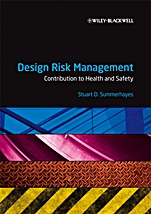
Design Risk Management: Contribution to Health and Safety
ISBN 9781405132756
Autor: Stuart D. Summerhayes
Wydawca: Wiley
Dostępność: 3-6 tygodni
Cena: 346,50 zł
Przed złożeniem zamówienia prosimy o kontakt mailowy celem potwierdzenia ceny.
ISBN13: |
9781405132756 |
ISBN10: |
1405132752 |
Autor: |
Stuart D. Summerhayes |
Oprawa: |
Paperback |
Rok Wydania: |
2010-03-16 |
Ilość stron: |
176 |
Wymiary: |
295x189 |
Tematy: |
Q |
The Construction (Design and Management) Regulations 2007 (CDM Regulations 2007) is a revision of a major piece of legislation within the wide portfolio of construction–related legislation. It seeks to improve the long term health and safety performance of the UK construction industry, with ownership of health and safety proactively undertaken by the integrated project team.
Good design has always embraced health and safety issues and design teams remain essential players as well as key contributors and communicators in matters of health and safety management. Designers have a legal responsibility to ensure that their designs account for health and safety at all stages within the holistic envelope of construction.
Design Risk Management: Contribution to Health and Safety gives detailed guidance to construction practitioners with design responsibility on how to identify and manage health and safety risks, and on the design strategies to be followed. It seeks to focus on accountability with due emphasis on the minimisation of unnecessary bureaucracy and offers documentation trails that provide an insight to managing risk and not paperwork. Subsequently it offers a process by which designers can discharge their duties in compliance with the CDM Regulations.
Spis treści:
1 Introduction.
Table 1.1 Design failures.
1.1 Major design failures in British history.
1.2 Additional Reports (The Bragg Report and HSE Research.
Report ) into design failure.
Table 1.2 Principal recommendations of the Bragg Committee.
Table 1.3 Contributory factors to historical failures.
2 Project risk management and design risk management.
2.1 Key players in project management.
2.2 Stages of the contract and their achievement.
Table 2.1 CDM duty holder actions.
3 Construction–related health and safety legislation.
3.1 Approved code of practice and guidance.
3.2 Health and Safety at Work,
etc. Act.
3.3 The Management of Health and Safety at Work.
Regulations.
3.4 The Workplace (Health, Safety and Welfare) Regulations.
3.5 The Manual Handling Operations Regulations.
3.6 The Confi ned Spaces Regulations.
3.7 The Work at Height Regulations.
3.8 The Control of Vibration at Work Regulations.
3.9 The Control of Noise at Work Regulations.
3.10 The Control of Substances Hazardous to Health.
Regulations (amended).
4 The CDM process.
4.1 Timing.
4.2 Pre–construction information.
Figure .1 Holistic diagram of the construction process.
4.3 Construction phase plan.
4.4 Health and safety file.
Figure .2 Systems approach.
Table 4.1 Applicable regulations for duty holder compliance.
Table 4.2 Construction (Design and Management) Regulations.
5 Role of the designer.
5.1 Who are designers?
Figure 5.1 The designer’s duties.
Table 5.1a Designer duties (all projects).
Table 5.1b Designer duties (additional duties on notifiable projects).
6 The design risk management process.
6.1 Additional interfaces.
6.2 Design change.
7 Documentation.
Table 7.1 Risk assessment methods.
Table 7.2 Examples of potential hazards for designers to consider.
7.1 Red, amber and green lists.
Table 7.3 Design risk assessment.
Figure 7.1 Example of a design risk assessment proforma.
Figure 7.2 Annotated notes (health and safety) on drawing.
Figure7 .3 Hazard management register and design risk assessment.
7.2 Project (health and safety) risk register.
Table 7.4 Project risk register (health and safety).
7.3 Design philosophy statements.
8 Information flow.
Table 8.1 Communication links.
8.1 Pre–construction information.
Figure 8.1 Information flow.
Figure 8.2 Design interface with other duty holders.
8.2 Construction phase plan.
8.3 Health and safety file.
Table 8.2 Design information for the health and safe
ty file.
Figure 8.3 Planning/programming integration.
Appendix One: Roadmap.
Appendix Two: References and bibliography.
Appendix Three: Web page directory.
Appendix Four: Workplace (Health, Safety and Welfare) Regulations.
Appendix Five: Design checklist.
Appendix Six: Riba Outline Plan of Work (November revision).
Index.
Colour plate section.
Nota biograficzna:
Stuart D. Summerhayes is a chartered civil engineer and Registered Fellow of the Association for Project Safety. After an early period in heavy civil engineering he spent an extensive period in the university sector delivering construction related under–graduate and post–graduate courses. He is now managing director of SYNERGY CMC Ltd , which delivers two APS accredited courses, namely The Management of CDM Co–Ordination and Design Risk Management. Both of these courses offer routes onto APS Registers which are acknowledged by the HSE as a measure of competence for the respective duty holder.
Okładka tylna:
The Construction (Design and Management) Regulations 2007 (CDM Regulations 2007) is a revision of a major piece of legislation within the wide portfolio of construction–related legislation. It seeks to improve the long term health and safety performance of the UK construction industry, with ownership of health and safety proactively undertaken by the integrated project team.
Good design has always embraced health and safety issues and design teams remain essential players as well as key contributors and communicators in matters of health and safety management. Designers have a legal responsibility to ensure that their designs account for health and safety at all stages within the holistic envelope of construction.
Design Risk Management: Contribution to Health and Safety gives detailed guidance to construction practitioners with desig
n responsibility on how to identify and manage health and safety risks, and on the design strategies to be followed. It seeks to focus on accountability with due emphasis on the minimisation of unnecessary bureaucracy and offers documentation trails that provide an insight to managing risk and not paperwork. Subsequently it offers a process by which designers can discharge their duties in compliance with the CDM Regulations.
Koszyk
Książek w koszyku: 0 szt.
Wartość zakupów: 0,00 zł
Informacje


Kontakt
Gambit
Centrum Oprogramowania
i Szkoleń Sp. z o.o.
Al. Pokoju 29b/22-24
31-564 Kraków
Siedziba Księgarni
ul. Kordylewskiego 1
31-542 Kraków
+48 12 410 5991
+48 12 410 5987
+48 12 410 5989
Subskrypcje
Administratorem danych osobowych jest firma Gambit COiS Sp. z o.o. Na podany adres będzie wysyłany wyłącznie biuletyn informacyjny.
Autoryzacja płatności

Informacje na temat autoryzacji płatności poprzez PayU.

© Copyright 2012: GAMBIT COiS Sp. z o.o. Wszelkie prawa zastrzeżone.
Projekt i wykonanie: Alchemia Studio Reklamy