


Wydawcy
Katalog tematyczny
- Archeologia (109)
- Ekonomia, finanse, business (13704)
- Filozofia (1445)
- Historia (3040)
- Języki i językoznawstwo (2356)
- Lifestyle, hobby i rozrywka (475)
- Medycyna (9704)
- Nauki humanistyczne (4)
- Nauki o Ziemi i środowisku (2638)
- Nauki ścisłe (20412)
- Nauki społeczne (8486)
- Nauki techniczne (13450)
- Prawo (1696)
- Publikacje informacyjne i interdyscyplinarne (1288)
- Religia i wierzenia (917)
- Technika komputerowa (4067)
- Zdrowie, relacje międzyludzkie i rozwój osobisty (657)





Informacje szczegółowe o książce
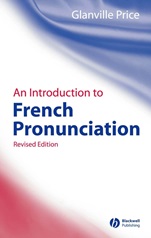
An Introduction to French Pronunciation
ISBN 9781405132558
Autor: Glanville Price
Wydawca: Wiley
Dostępność: 3-6 tygodni
Cena: 213,15 zł
Przed złożeniem zamówienia prosimy o kontakt mailowy celem potwierdzenia ceny.
ISBN13: |
9781405132558 |
ISBN10: |
1405132558 |
Autor: |
Glanville Price |
Oprawa: |
Paperback |
Rok Wydania: |
2005-04-28 |
Ilość stron: |
188 |
Wymiary: |
216x140 |
Tematy: |
CF |
In order to speak French as it is spoken by native–speakers, one needs not only to hear the language, but to know what to listen for. This comprehensive and accessible guide to current French pronunciation fulfils precisely this need. The first three chapters outline the book′s aims, level and scope, as well as the general principles of French phonetics. The author also alerts the reader to regional variations in the pronunciation of French. He then turns to specifics, including vowels, semi–consonants and consonants, providing the reader with the basic knowledge needed to understand later chapters which discuss these parts of speech at greater length. Interspersed are other chapters covering such important aspects of French pronunciation as rhythmic groups, the syllable, liaison and intonation. The orientation of An Introduction to French Pronunciation is consistently practical, and phonetic theory and technical terminology are kept to the minimum necessary. It will be of interest to anyone with a basic knowledge of French who needs help and advice in achieving a more authentic pronunciation.
Preface. 1. General Considerations. 1.1 Introduction. 1.2 Sounds, Phonemes and Allophones. 1.3 Suprasegmental Features. 1.4 The Articulation of French. 1.5 The Organization of this book. 1.6 References and Further Reading. 1.7 Phonetic Symbols. 2. The Production of Speech. 2.1 Introduction. 2.2 The Vocal Cords and Voice. 2.3 Articulators. 2.4 Active Articulators. 2.5 Passive Articulators. 2.6 Terminology. 3. The Articulation of French. 3.1 Articulatory Tension. 3.2 Pure Vowels. 4. The Vowel Phonemes. 4.1 Principles of Classification. 4.2 Point of Articulation. 4.3 The Height of the Tongue or the Degree of Aperture. 4.4 Lip Configuration. 4.5 Orality or Nasality. 4.6 Classification and IPA Symbols. 4.7 Front Unrounded Vowels. 4.8 Front Rounded Vowels. 4.9 Mute e. 4.10 Back Rounded Vowels. 4.11 Nasal Vowels. 4.12 Summary Table. 5. The Semi–Consonants. 5.1 General. 6. The Consonant Phonemes. 6.1 Principles of Classification. 6.2 Point of Articulation. 6.3 Manner (or Mode) of Articulation. 6.4 Presence or Absence of Voice. 6.5 Classification and IPA Symbols. 6.6 Stops. 6.7 Fricatives. 6.8 Lateral. 6.9 Nasals. 6.10 r–Sounds. 6.11 Summary Table. 7. The Rhythmic Group. 7.1 Introduction. 7.2 The Different Types of Group. 7.3 The Rhythmic Group. 7.4 The Rhythmic Group and the Word. 8. The Syllable. 8.1 Introduction. 8.2 The Rules of Syllabification. 8.3 Syllabification within the Sense Group. 8.4 Closed and Open Syllables. 8.5 Syllable–Timing and Stress–Timing. 9. Stress. 9.1 Normal Stress. 9.2 Emphatic Stress. 9.3 Contrastive Stress. 9.4 Normal Stress in French. 9.5 Emphatic Stress in French. 9.6 Contrastive Stress in French. 9.7 Other Types of Stress. 10. The Vowels in Detail. 10.1 Introduction. 10.2 /i/ – High Front Unrounded. 10.3 /y/ – High Front Rounded. 10.4 /u/ – High Back Rounded. 10.5 The Three Pairs of Mid–Vowels. 10.6 /e/ – High –Mid Front Unrounded; /ε/ – Low–Mid Front Unrounded. 10.7 /ø/ – High–Mid Front Rounded; /œ/ – Low–Mid Front Rounded. 10.8 /o/ – High–Mid Back Rounded; /]/ – Low–Mid Back Rounded. 10.9 /a/ – Low Front Unrounded; /Y/ Low Back Rounded. 10.10 The Nasal Vowels. 10.11 Unvoicing of Vowels. 10.12 Canadianisms. 11. Mute e. 11.1 Introduction. 11.2 Four Simple ‘Rules’. 11.3 An Expansion of the Four ‘Rules’. 11.4 Rule 1. 11.5 Rule 2. 11.6 Rule 3. 11.7 Rule 4. 11.8 Three or More Mute es in Succession. 11.9 Miscellaneous Points. 12. Vowel Length. 12.1 Introduction. 12.2 Five Simple Rules. 12.3 Rule 1. 12.4 Rule 2. 12.5 Rule 3. 12.6 Rule 4. 12.7 Rule 5. 12.8 Is Vowel Length Ever Phonemic in French?. 12.9 Other Alternatives. 13. The Semi–Consonants in Detail. 13.1 Introduction. 13.2 /i/ or /j/ after a Vowel?. 13.3 /j/, /l/ or /ll/ after /i/?. 13.4 Intervocalic /j/. 13.5 /r/. 13.6 /r/ and /w/. 13.7 Vowel or Semi–Consonant?. 14. The Consonants in Detail: (I) Stops. 14.1 Introduction. 14.2 Mode of Articulation (General). 14.3 French and English Stops. 14.4 Point of Articulation. 14.5 A Canadianism. 14.6 The Glottal Stop. 15. The Consonants in Detail: (II) Fricatives. 15.1 French and English Fricatives. 15.2 Manner of Articulation. 15.3 Point of Articulation. 16. The Consonants in Detail: (III) /r/, /l/ and the Nasals. 16.1 The Varieties of French /r/. 16.2 The Lateral Consonant /l/. 16.3 The Nasal Consonants /m/, /n/, /…/ and /N/. 16.4 The Release of Final Consonants. 16.5 Voiceless /l/ and /r/. 16.6 Voiceless /m/. 17. Gemination. 17.1 Long Consonants and Geminate Consonants. 17.2 French Geminates. 18. Consonantal Assimilation. 18.1 Introduction. 18.2 Regressive Assimilation of Fortes and Lenes. 18.3 Progressive Assimilation. 18.4 Assimilation to Vowels. 19. Liaison. 19.1 Origins. 19.2 The Problem. 19.3 The Liaison Forms. 19.4 Words Having No Special Liaison Form. 19.5 Compulsory Liaison. 19.6 Generally Acceptable Liaison. 19.7 No Liaison. 20. Intonation. 20.1 Introduction. 20.2 Types of Utterance. 20.3 Declarative Sentences. 20.4 Yes–No Questions. 20.5 Wh–Questions. 20.6 Imperative Sentences. 20.7 Level Intonation. References for Further Reading. Index.
Glanville Price is Emeritus Professor of French at the University of Wales Aberystwyth. His publications include Encyclopedia of the Languages of Europe (Blackwell 1998), Languages in Britain and Ireland (Blackwell 2000), and A Comprehensive French Grammar (Fifth Edition, Blackwell, 2003).
Praise for Glanville Price′s An Introduction to French Pronunciation, revised edition (Blackwell, 2005) ... “Glanville Price’s books on the grammar and history of the French language have been recognized as authoritative resources by generations of graduate students. The revised edition of his Introduction to French Pronunciation exhibits qualities that have contributed to the popularity of the work, especially comprehensibility and conciseness.” The Modern Language Journal Praise for Glanville Price′s A Comprehensive French Grammar (Blackwell, 2003)... “Remarkably comprehensive … an essential grammar but good for a browse too. Conventional grammar and very much more is covered in meticulous detail.” Times Education Supplement “As a pedagogic grammar, it is remarkably reliable and complete, with two key elements: a good index and excellent cross–referencing. He pitches the explanations at a level which is useful from first to final–year undergraduate linguists.” Journal of French Language Studies
Koszyk
Książek w koszyku: 0 szt.
Wartość zakupów: 0,00 zł
Informacje


Kontakt
Gambit
Centrum Oprogramowania
i Szkoleń Sp. z o.o.
Al. Pokoju 29b/22-24
31-564 Kraków
Siedziba Księgarni
ul. Kordylewskiego 1
31-542 Kraków
+48 12 410 5991
+48 12 410 5987
+48 12 410 5989
Subskrypcje
Administratorem danych osobowych jest firma Gambit COiS Sp. z o.o. Na podany adres będzie wysyłany wyłącznie biuletyn informacyjny.
Autoryzacja płatności

Informacje na temat autoryzacji płatności poprzez PayU.

© Copyright 2012: GAMBIT COiS Sp. z o.o. Wszelkie prawa zastrzeżone.
Projekt i wykonanie: Alchemia Studio Reklamy