


Wydawcy
Katalog tematyczny
- Archeologia (109)
- Ekonomia, finanse, business (13704)
- Filozofia (1445)
- Historia (3040)
- Języki i językoznawstwo (2356)
- Lifestyle, hobby i rozrywka (475)
- Medycyna (9704)
- Nauki humanistyczne (4)
- Nauki o Ziemi i środowisku (2638)
- Nauki ścisłe (20412)
- Nauki społeczne (8486)
- Edukacja (229)
- Kryminologia, opieka spełeczna (284)
- Obronność (10)
- Polityka (1389)
- Psychologia (777)
- Socjologia (410)
- Społeczeństwo i kultura (187)
- Nauki techniczne (13450)
- Prawo (1696)
- Publikacje informacyjne i interdyscyplinarne (1288)
- Religia i wierzenia (917)
- Technika komputerowa (4067)
- Zdrowie, relacje międzyludzkie i rozwój osobisty (657)





Informacje szczegółowe o książce
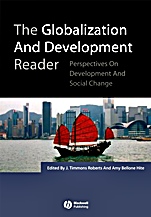
The Globalization and Development Reader: Perspectives on Development and Global Change
ISBN 9781405132367
Autor: J. Timmons Roberts, Amy Bellone Hite
Wydawca: Wiley
Dostępność: 3-6 tygodni
Cena: 552,30 zł
Przed złożeniem zamówienia prosimy o kontakt mailowy celem potwierdzenia ceny.
ISBN13: |
9781405132367 |
ISBN10: |
1405132361 |
Autor: |
J. Timmons Roberts, Amy Bellone Hite |
Oprawa: |
Hardback |
Rok Wydania: |
2006-12-14 |
Ilość stron: |
468 |
Wymiary: |
261x187 |
Tematy: |
JB |
How is globalization changing people′s lives in the world′s poor and wealthy nations? Is globalization an unstoppable force or can it be actively reshaped? Are emerging global trade rules helping or hindering poor nations in their efforts at economic development? Is the globalization of production and consumption helping or hurting workers, poor nations, women, and the environment? What do studies of past social changes tell us about this one?
The Globalization and Development Reader builds on the success of From Modernization to Globalization, published by the editors in 2000 and used around the world. It provides an up–to–date primer and key reference for students, scholars, and development practitioners wishing to get up to speed quickly on the issues surrounding social change and development in the “Third World.” It features 10 essays from its predecessor and adds 17 new ones, offering carefully excerpted samples from both classic and recent writings. A general editorial introduction to the book, and short, insightful introductions for each section, provide a well–rounded foundation for nonspecialist audiences.
Spis treści:
About the Editors.
Preface and Acknowledgments.
Acknowledgments to Sources.
Development and Globalization: Recurring Themes: Amy Bellone Hite and J. Timmons Roberts.
Part I: Formative Approaches to Development and Social Change.
Introduction: Timmons Roberts and Amy Bellone Hite.
1. Manifesto of the Communist Party (1848) and Alienated Labor (1844): Karl Marx and Friedrich Engels.
2. The Protestant Ethic and the Spirit of Capitalism (1905): Max Weber.
3. The Stages of Economic Growth:A Non–Communist Manifesto: W.W. Rostow (1960).
4. The Change to Change: Modernization, Development and Politics (1971); and Political Order in Changing Societies (1968): Samuel Huntington.
Part II: Dependency and Beyond.
Introduct
ion: Timmons Roberts and Amy Bellone Hite.
5. The Development of Underdevelopment (1969): Andre Gunder Frank.
6. Dependency and Development in Latin America (1972): Fernando Henrique Cardoso.
7. The Rise and Future Demise of the World Capitalist System: Concepts for Comparative Analysis (1979): Immanuel Wallerstein.
8. Rethinking Development Theory: Insights From East Asia and Latin America (1989/1994): Gary Gereffi.
9. Gender and the Global Economy (1999): Valentine M. Moghadam.
Part III: What is Globalization?: Attempts to Understand Economic Globalization.
Introduction: Timmons Roberts and Amy Bellone Hite.
10. The New International Division of Labor in the World Economy (1980): Folker Fröbel, Jürgen Heinrichs, and Otto Kreye.
11. The Informational Mode of Development and the Restructuring of Capitalism (1989): Manuel Castells.
12. Cities in a World Economy (2000): Saskia Sassen.
13. Globalization: Myths and Realities (1996): Philip McMichael.
14. Competing Conceptions of Globalization (1999): Leslie Sklair.
15. It’s a Flat World, After All (2005): Thomas L. Friedman.
Part IV: The Opportunities and Limits of Unfettered Globalization.
Introduction: Timmons Roberts and Amy Bellone Hite.
16. In Defense of Global Capitalism (2003): Johan Norberg.
17. What Strategies are Viable for Developing Countries Today?: The World Trade Organization and the Shrinking of ‘Development Space’ (2003): Robert H. Wade.
18. Globalism’s Discontents (2002): Joseph E. Stiglitz.
19. The New Global Economy and Developing Countries: Making Openness Work (1999) and Has Globalization Gone too Far? (1997): Dani Rodrik.
20. Industrial Convergence, Globalization, and the Persistence of the North–South Divide (1999): Giovanni Arrighi, Beverly J. Silver, and Benjamin Brewer.
21. The New Development–Security Terrain (2001): Mark Duffield.
Part V: Conf
ronting Globalization.
Introduction: Timmons Roberts and Amy Bellone Hite.
22. The Anti–Globalization Movement (2005): Jeffrey Sachs.
23. Reconstructing World Order: Towards Cosmopolitan Social Democracy (2002): David Held and Anthony McGrew.
24. Environmental Advocacy Networks (1997): Margaret Keck and Kathryn Sikkink.
25. What Can We Expect from Global Labor Movements?: Five Commentaries (2002): Ralph Armbruster, Bradley Nash, Jr., Gay Seidman, Robert Ross, Rich Appelbaum, Jennifer Bickham–Mendez, and Edna Bonacich.
26. Transnational Solidarity: Women’s Agency, Structural Adjustment, and Globalization (2002): Manisha Desai.
27. Counter–Hegemonic Globalization: Transnational Social Movements in the Contemporary Global Political Economy (2005): Peter Evans.
Index.
Nota biograficzna:
J. Timmons Roberts is James Martin 21st Century School Professor in the Environmental Change Institute at the University of Oxford, and Professor of Sociology and former Director of the Program in Environmental Science and Policy at the College of William and Mary. His books include Chronicles from the Environmental Justice Frontline (with Melissa Toffolon–Weiss, 2001), Trouble in Paradise: Globalization and Environmental Crises in Latin America (with Nikki Thanos, 2003), and A Climate Of Injustice: Global Inequality, North–South Politics, and Climate Policy (with Bradley Parks, 2006).
Amy Bellone Hite is Assistant Professor and Chairperson of the Department of Sociology at Xavier University in New Orleans, Louisiana, where she teaches Social Theory, Social Policy, Social Problems, Urban Sociology, and Comparative Sociology. She is coeditor of From Modernization to Globalization: Perspectives on Development and Social Change (Blackwell, 2000) with J. Timmons Roberts.
Okładka tylna:
How is globalization changing people′s lives in the wo
rld′s poor and wealthy nations? Is globalization an unstoppable force or can it be actively reshaped? Are emerging global trade rules helping or hindering poor nations in their efforts at economic development? Is the globalization of production and consumption helping or hurting workers, poor nations, women, and the environment? What do studies of past social changes tell us about this one?
The Globalization and Development Reader builds on the success of From Modernization to Globalization, published by the editors in 2000 and used around the world. It provides an up–to–date primer and key reference for students, scholars, and development practitioners wishing to get up to speed quickly on the issues surrounding social change and development in the “Third World.” It features 10 essays from its predecessor and adds 17 new ones, offering carefully excerpted samples from both classic and recent writings. A general editorial introduction to the book, and short, insightful introductions for each section, provide a well–rounded foundation for nonspecialist audiences.
Koszyk
Książek w koszyku: 0 szt.
Wartość zakupów: 0,00 zł
Informacje


Kontakt
Gambit
Centrum Oprogramowania
i Szkoleń Sp. z o.o.
Al. Pokoju 29b/22-24
31-564 Kraków
Siedziba Księgarni
ul. Kordylewskiego 1
31-542 Kraków
+48 12 410 5991
+48 12 410 5987
+48 12 410 5989
Subskrypcje
Administratorem danych osobowych jest firma Gambit COiS Sp. z o.o. Na podany adres będzie wysyłany wyłącznie biuletyn informacyjny.
Autoryzacja płatności

Informacje na temat autoryzacji płatności poprzez PayU.

© Copyright 2012: GAMBIT COiS Sp. z o.o. Wszelkie prawa zastrzeżone.
Projekt i wykonanie: Alchemia Studio Reklamy