


Wydawcy
Katalog tematyczny
- Archeologia (109)
- Ekonomia, finanse, business (13704)
- Filozofia (1445)
- Historia (3040)
- Języki i językoznawstwo (2356)
- Lifestyle, hobby i rozrywka (475)
- Medycyna (9704)
- Nauki humanistyczne (4)
- Nauki o Ziemi i środowisku (2638)
- Nauki ścisłe (20412)
- Astronomia (294)
- Biologia (5119)
- Biochemia (575)
- Biologia człowieka (14)
- Biologia komórkowa (377)
- Biologia molekularna (398)
- Biologia rozwoju (130)
- Biologia, ogólnie (1277)
- Botanika (280)
- Hydrobiologia (92)
- Mikrobiologia (363)
- Mykologia (22)
- Zoologia (303)
- Chemia (6540)
- Fizyka (3309)
- Matematyka (4574)
- Nauki ścisłe, ogólnie (503)
- Nauki społeczne (8486)
- Nauki techniczne (13450)
- Prawo (1696)
- Publikacje informacyjne i interdyscyplinarne (1288)
- Religia i wierzenia (917)
- Technika komputerowa (4067)
- Zdrowie, relacje międzyludzkie i rozwój osobisty (657)





Informacje szczegółowe o książce
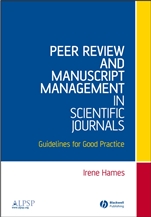
Peer Review and Manuscript Management in Scientific Journals: Guidelines for Good Practice
ISBN 9781405131599
Autor: Irene Hames
Wydawca: Wiley
Dostępność: 3-6 tygodni
Cena: 241,50 zł
Przed złożeniem zamówienia prosimy o kontakt mailowy celem potwierdzenia ceny.
ISBN13: |
9781405131599 |
ISBN10: |
1405131594 |
Autor: |
Irene Hames |
Oprawa: |
Paperback |
Rok Wydania: |
2007-03-27 |
Ilość stron: |
306 |
Wymiary: |
244x170 |
Tematy: |
PS |
This comprehensive yet concise book provides a thorough and complete guide to every aspect of managing the peer review process for scientific journals. Until now, little information has been readily available on how this important facet of the journal publishing process should be conducted properly. Peer Review and Manuscript Management in Scientific Journals fills this gap and provides clear guidance on all aspects of peer review, from manuscript submission to final decision.
Peer Review and Manuscript Management in Scientific Journals is an essential reference for science journal editors, editorial office staff and publishers. It is an invaluable handbook for the set–up of new editorial offices, as well as a useful reference for well–established journals which may need guidance on a particular situation, or may want to review their current practices. Although intended primarily for journals in science, much of its content will be relevant to other scholarly areas.
This book is co–published with the Association of Learned and Professional Society Publishers (ALPSP) (www.alpsp.org)
Spis treści:
Foreword.
Preface.
1. Introduction.
What should peer review do?.
What does peer review assume?.
What is this book trying to achieve?.
2. The peer–review process – how to get going.
The basic process.
The people involved in running the peer–review process.
Office organization.
Choice of system and procedures.
3. Manuscript submission and initial checks on completeness and suitability.
Submission guidance to authors.
Checking and logging of submitted manuscripts.
Transfer to editor.
Initial assessment of suitability and rejection without external review.
Manuscripts with language problems.
4. The full review process.
Identifying and selecting appropriate reviewers.
Finding reviewers.
Getting the manuscript and ass
ociated material to the reviewers.
Monitoring review progress.
Receiving and checking of returned reviews.
Back–to–back manuscripts.
Dealing with enquiries on manuscript status.
5. The decision–making process for reviewed manuscripts.
The organizational structure for decision making.
The decision–making process.
Checks to be made before communicating decisions to authors.
Communicating the decision to the authors.
Rebuttals and appeals from authors.
Dealing with revisions.
Dealing with resubmissions.
Acceptance.
Decision making to consistent standards and the problem of availability of space.
Special considerations in decision making: dual–use research and the possible misuse of information.
6. Moving to online submission and review.
How do you choose an online system?.
How to prepare to move to online working.
The launch and transition period.
What to expect after going live online.
Problems that may be encountered and how to deal with them.
A final note.
7. Reviewers – a precious resource.
Thanks and feedback to reviewers.
Reviewer training.
Ways to recompense reviewers.
How to develop and maintain reviewer loyalty.
Recognition of peer review as an accredited professional activity.
8. The obligations and responsibilities of the people involved in peer review.
Authors – their obligations and responsibilities.
Editors – their obligations and responsibilities.
Reviewers – their obligations and responsibilities.
Editorial office staff – their obligations and responsibilities.
Conflicts of interest – what they are and how to deal with them.
Moral dilemmas.
9. Misconduct in scientific research and publishing – what it is and how to deal with it.
What types of misconduct can occur?.
How should cases of alleged or suspected misconduct be handled?.
Whe
re can you turn for help?.
What sanctions can be imposed as a penalty for misconduct?.
Correcting the literature.
Dubious or fraudulent data remaining in the literature.
The future.
Appendix I The Golden Rules and the Peer–Review Good Practice Checklist.
Appendix II Examples of checklists, forms, guidance for reviewers and editorial letters.
Appendix III Useful websites.
Appendix IV Alternative models of peer review.
Index
Nota biograficzna:
Irene Hames moved from cell biology research into scientific publishing and has worked for many years on scientific journals. She is now the Managing Editor of The Plant Journal and was involved in its set up and overseeing its growth and development into a large and successful international journal. She is frequently called upon to give talks and advise on editorial issues and has been a member of a number of working parties on peer review.
Okładka tylna:
This comprehensive yet concise book provides a thorough and complete guide to every aspect of managing the peer review process for scientific journals. Until now, little information has been readily available on how this important facet of the journal publishing process should be conducted properly. Peer Review and Manuscript Management in Scientific Journals fills this gap and provides clear guidance on all aspects of peer review, from manuscript submission to final decision.
Peer Review and Manuscript Management in Scientific Journals is an essential reference for science journal editors, editorial office staff and publishers. It is an invaluable handbook for the set–up of new editorial offices, as well as a useful reference for well–established journals which may need guidance on a particular situation, or may want to review their current practices. Although intended primarily for journals in science, much of its content will be relevant to other scholarly are
as.
This book is co–published with the Association of Learned and Professional Society Publishers (ALPSP) (www.alpsp.org)
Koszyk
Książek w koszyku: 0 szt.
Wartość zakupów: 0,00 zł
Informacje


Kontakt
Gambit
Centrum Oprogramowania
i Szkoleń Sp. z o.o.
Al. Pokoju 29b/22-24
31-564 Kraków
Siedziba Księgarni
ul. Kordylewskiego 1
31-542 Kraków
+48 12 410 5991
+48 12 410 5987
+48 12 410 5989
Subskrypcje
Administratorem danych osobowych jest firma Gambit COiS Sp. z o.o. Na podany adres będzie wysyłany wyłącznie biuletyn informacyjny.
Autoryzacja płatności

Informacje na temat autoryzacji płatności poprzez PayU.

© Copyright 2012: GAMBIT COiS Sp. z o.o. Wszelkie prawa zastrzeżone.
Projekt i wykonanie: Alchemia Studio Reklamy