


Wydawcy
Katalog tematyczny
- Archeologia (109)
- Ekonomia, finanse, business (13704)
- Filozofia (1445)
- Historia (3040)
- Języki i językoznawstwo (2356)
- Lifestyle, hobby i rozrywka (475)
- Medycyna (9704)
- Nauki humanistyczne (4)
- Nauki o Ziemi i środowisku (2638)
- Nauki ścisłe (20412)
- Nauki społeczne (8486)
- Nauki techniczne (13450)
- Prawo (1696)
- Publikacje informacyjne i interdyscyplinarne (1288)
- Religia i wierzenia (917)
- Technika komputerowa (4067)
- Zdrowie, relacje międzyludzkie i rozwój osobisty (657)





Informacje szczegółowe o książce
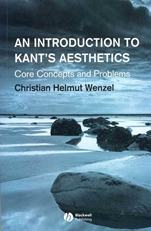
An Introduction to Kants Aesthetics: Core Concepts and Problems
ISBN 9781405130363
Autor: Christian Helmut Wenzel
Wydawca: Wiley
Dostępność: 3-6 tygodni
Cena: 192,15 zł
Przed złożeniem zamówienia prosimy o kontakt mailowy celem potwierdzenia ceny.
ISBN13: |
9781405130363 |
ISBN10: |
1405130369 |
Autor: |
Christian Helmut Wenzel |
Oprawa: |
Paperback |
Rok Wydania: |
2005-11-03 |
Ilość stron: |
200 |
Wymiary: |
229x152 |
Tematy: |
AB |
Kant’s Critique of the Power of Judgment is one of the most important and enduring contributions to philosophical aesthetics. It is also notoriously difficult. In An Introduction to Kant’s Aesthetics , Christian Wenzel discusses and demystifies this seminal work, guiding the reader each step of the way, placing key points of discussion in the context of Kant’s other work. The starting point of Kant’s aesthetics, and Wenzel’s treatment, is the observation that aesthetic judgments seem to hover uneasily between subjective and objective domains. On the one hand, there appear to be standards of taste, such that aesthetic judgments demand some kind of consensus; on the other hand, there simultaneously seem to exist no specific rules governing what is beautiful. Beginning with this premise, Kant delineates four moments of aesthetic judgment, considers the question of the beautiful, the sublime, and the ugly, and from this groundwork creates a new philosophical theory that reveals the essence of taste, and much else, about human nature besides. Wenzel artfully guides readers through Kant’s work with thoroughness and clarity, making Kant’s aesthetics accessible to newcomers and more rewarding for those returning to the subject.
Foreword by Henry E. Allison. Acknowledgments. About This Book. Note on the Translation. Introduction. The Aesthetic Dimension Between Subject and Object. The Meaning of “Aesthetic”. Categories as a Guide. The “Moments” of a Judgment of Taste. Part I: Disinterestedness: First Moment. Disinterestedness as a Subjective Criterion. Three Kinds of Satisfaction: Agreeable, Beautiful, Good. Part II: Universality: Second Moment. The Argument from Self–Reflection: Private, Public, Universal. Subjective Universality. A Case of Transcendental Logic. Singular “but” Universal. How to read Section 9. Part III: Purposiveness: Third Moment. Purpose without Will, Purposiveness without Purpose. Purposiveness and Form: Charm versus Euler. Of “Greatest Importance”: Beauty and Perfection. Beauty: Free, Dependent, and Ideal. Part IV: Necessity: Fourth Moment. Exemplary Necessity. Kant’s Interpretation of the sensus communis. The Deduction. PartV: Fine Art, Nature, and Genius. Fine Art and Why It Must Seem like Nature. Genius and Taste. Genius and Aesthetic Ideas. Part VI: Beyond Beauty. The Sublime. Beauty as the Symbol of Morality. The Analytic, the Dialectic, and the Supersensible. Part VII: Two Challenges . Can Kant’s Aesthetics Account for the Ugly?. Can there be Beauty and Genius in Mathematics?. Summary and Overview. Before Kant. Kant’s Aesthetics. After Kant. Glossary. Bibliography. Index
Christian Helmut Wenzel is Associate Professor at the National Chi Nan University in Taiwan. He is the author of The Problem of Subjective Universality of the Judgment of Taste in Kant ,published in German (2000).
"As an overall assessment, then, this is undoubtedly one of the most interesting and meticulous "guides" to Kant′s aesthetic theory. Even though Wenzel clearly adopts a slightly different approach to Kant′s aesthetic theory than this reviewer, this book is probably the best introductory volume currently available." Elisabeth Shellekens, The Journal of Aesthetics and Art Criticism "In sum, I highly recommend this book to students and scholars with some familiarity with Kant and the “Critique of Aesthetic Judgment.” This book will surely deepen their understanding of Kant." Kenneth F. Rogerson, Notre Dame Philosophical Reviews “Wenzel’s book is an invaluable aid for all serious students of Kant’s third Critique. The reconstruction of arguments is clear and concise; the annotated bibliography is remarkably knowledgeable and helpful.” Karl Ameriks, University of Notre Dame “This volume will be indispensable to any new reader of Kant′s third Critique who seeks illumination of its key concepts, insights into its philosophical context, and guidance for further study.” Eckart Förster, Johns Hopkins University
Koszyk
Książek w koszyku: 0 szt.
Wartość zakupów: 0,00 zł
Informacje


Kontakt
Gambit
Centrum Oprogramowania
i Szkoleń Sp. z o.o.
Al. Pokoju 29b/22-24
31-564 Kraków
Siedziba Księgarni
ul. Kordylewskiego 1
31-542 Kraków
+48 12 410 5991
+48 12 410 5987
+48 12 410 5989
Subskrypcje
Administratorem danych osobowych jest firma Gambit COiS Sp. z o.o. Na podany adres będzie wysyłany wyłącznie biuletyn informacyjny.
Autoryzacja płatności

Informacje na temat autoryzacji płatności poprzez PayU.

© Copyright 2012: GAMBIT COiS Sp. z o.o. Wszelkie prawa zastrzeżone.
Projekt i wykonanie: Alchemia Studio Reklamy