


Wydawcy
Katalog tematyczny
- Archeologia (109)
- Ekonomia, finanse, business (13704)
- Filozofia (1445)
- Historia (3040)
- Języki i językoznawstwo (2356)
- Lifestyle, hobby i rozrywka (475)
- Medycyna (9704)
- Nauki humanistyczne (4)
- Nauki o Ziemi i środowisku (2638)
- Nauki ścisłe (20412)
- Nauki społeczne (8486)
- Nauki techniczne (13450)
- Prawo (1696)
- Publikacje informacyjne i interdyscyplinarne (1288)
- Religia i wierzenia (917)
- Technika komputerowa (4067)
- Zdrowie, relacje międzyludzkie i rozwój osobisty (657)





Informacje szczegółowe o książce
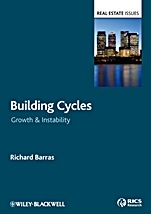
Building Cycles: Growth and Instability
ISBN 9781405130011
Autor: Richard Barras
Wydawca: Wiley
Dostępność: 3-6 tygodni
Cena: 512,40 zł
Przed złożeniem zamówienia prosimy o kontakt mailowy celem potwierdzenia ceny.
ISBN13: |
9781405130011 |
ISBN10: |
1405130016 |
Autor: |
Richard Barras |
Oprawa: |
Hardback |
Rok Wydania: |
2009-09-25 |
Ilość stron: |
448 |
Wymiary: |
249x181 |
Tematy: |
AM |
The global economic crisis of 2008 was precipitated by a housing market crash, thus highlighting the destabilizing influence of the property cycle upon the wider economy. This timely book by a world authority explores why cycles occur and how they affect the behaviour of real estate markets. The central argument put forward is that growth and instability are inextricably linked, and that building investment acts both as a key driver of growth and as the source of the most volatile cyclical fluctuations in an economy.
The role of building cycles in both economic growth and urban development is explored through a theoretical review and a comparative historical analysis of UK and US national data stretching back to the start of the nineteenth century, together with a case study of the development of London since the start of the eighteenth century.
A simulation model of the building cycle is presented and tested using data for the City of London office market. The analysis is then broadened to examine the operation of property cycles in global investment markets during the post–war period, focussing on their contribution to the diffusion of innovation, the accumulation of wealth and the propagation of market instability.
Building Cycles: Growth & Instability concludes by synthesizing the main themes into a theoretical framework, which can guide our understanding of the operation and impact of building cycles on the modern economy.
Postgraduate students on courses in property and in urban development as well as professional property researchers, urban economists and planners will find this a stimulating read demanding but accessible.
Preface
Abbreviations used in the text
1 Introduction: A Historical Approach
The idea of cyclical growth
A historical perspective
Historical examples
Imperial Rome
Tudor and Stuart London
An illustrative building cycle: London (1714 1900)
The structure of the book
2 Growth and Cycles: The Economic Debate
The underlying theme
The growth story
The classical economists
The neoclassical revolution
Technology and growth
Keynes
The neoclassical growth model
Modern growth theory
Historical dependence
Historical perspectives on business cycles
Pioneering studies
Measuring trend and cycle
A family of cycles
Long waves
Business cycle theory
Impulse and propagation: Multiplier accelerator models
Non–linear models
Rational expectations
New Classical theory
New Keynesian theory
Summary: Theories of growth and cycles
3 The Nature of Building Cycles
A long and violent cycle
Historical building cycle research
The first wave of empirical studies
Theoretical perspectives
The post–war empirical tradition
Three key studies
Modern property cycle research
Long cycles: Fact or artifact?
New perspectives and established traditions
viii Contents
The formation of market expectations
The integration of real estate and capital markets
Globalization and speculative bubbles
Towards a satisfactory theory of the building cycle
What we know about building cycles
A conceptual model of the building cycle
4 Building Investment and Economic Growth
Buildings as means of production
Investment and technical progress
Building versus equipment capital
Cyclical growth
Building investment as driver of growth
Building investment and UK (1855 2005)
A growth model with building capital
The trajectory of US growth (1929 2005)
Building investment as generator of cycles
The identification of economic cycles
UKinvestment cycles (1855 2005)
USinvestment cycles (1901 2005)
Appendix: The growth model
5 Building Investment and Urban Development
Urban innovation and accumulation
The city in history
Urban agglomeration
The growth of cities
Transport and suburbanization
A comparison of UK and US urban development cycles
The data
Structural models
Growth trajectories
Long cycles
Cycle phasing
Explanatory variables
Cycle histories
Variations in growth
The transport–building cycle
Turning points
A UK building cycle chronology (1785 2005)
Long cycles and major cycles
The first industrial revolution (1785 1856)
The second industrial revolution (1856 88)
The age of electricity (1888 1918)
Inter–war turbulence (1918 44)
The post–war consumer boom (1944 81)
The computer age (1981 2008?)
The London building cycle (1714 2005)
Middlesex deeds (1714 1900)
London house–building (1856 2005)
A London building cycle chronology
6 Case Study: The City of London Office Market
The development of the city economy
City of capital
The City in the sixteenth to eighteenth centuries
The Victorian and Edwardian City
The inter–war City
The post–war City
The growth trajectory of the City economy (1970 2005)
The City office–building cycle
Modelling the cycle
Cycle turning points
The cycle chronology
Victorian and Edwardian cycles (1866 1914)
Inter–war cycles (1921 35)
Early post–war cycles (1955 79)
The last two cycles (1979 2005)
Vintages of City office stock
Locational clusters
Building size
Redevelopment and obsolescence
Rent formation
Occupier profiles
7 A Simulation Model of the Building Cycle
Real estate models
Stock adjustment models
Rent adjustment models
Multi–equation models
Specification of the model
Underlying assumptions
Model structure
Determinants of model behaviour
Model simulations
Equilibrium and displacement
Cycle transmission
Damped and explosive cycles
Different construction lags
Floor and ceiling constraints
Persistent under– or over–supply
Alternative rent adjustment processes
Rent elastic occupier demand
Elastic depreciation
Business cycle in demand
Modelling the City of London office market
Take–up and occupier demand
Vacancy change
Rent adjustment
Development supply
Building completions
8 Property Cycles in Global Investment Markets
Instability and growth in real estate investment
The crash of 2008
The property cycle and the business cycle
Property as an investment medium
The post–war property cycle in the United Kingdom and United States
A model of the national property cycle
The housing market
The industrial and commercial property market
The interaction of occupier and investment markets
The globalization of the property cycle
The growth of the transnational investment market
Global cities, global cycle
The determinants of market behaviour
Some stylized facts about the global office cycle
The global diffusion of property innovation
The rise of the skyscraper
The spread of the shopping centre
Into the twenty–first century
Appendix: An error correction model of the property cycle
9 Understanding the Building Cycle
Building cycles and economic growth
Cyclical growth
Technological revolutions
Historical dependence
Growth and technical progress
Building investment and productivity growth
Technical progress in construction technology
Building cycles as driver of growth
Propagation of the building cycle
The trajectory of building investment
Impulse and propagation in cycle generation
A circular transmission process
Determinants of cyclical behaviour
A family of building cycles
The rhythm of post–war cycles
Building cycles and urban development
The urban development cycle
Urban growth and agglomeration
Innovation and accumulation in urban development
A self–reinforcing process of metropolitan growth
The transport–building cycle
Transport investment and suburbanization
The urban office economy
Integration of real estate and capital markets
Property as an investment medium
The contradiction between investor and occupier demand
The cyclical movement of real estate values
Contents xi
The intensification of the commercial building cycle
The property cycle and the business cycle
Speculative boom bust cycles
Globalization of the building cycle
The growth of the transnational investment market
The international convergence of cycles
The global office market
The global office cycle
The global diffusion of property innovation
Interactive innovation in retailing
Into the twenty–first century
Appendix A Building Trend and Cycle Analysis
Appendix B The Building Cycle Model
References
Index
Dr Richard Barras, Senior Partner, Property Market Analysis LLP
The range and scope of material covered is vast; that alone makes it a valuable reference source for anyone whose work touches on these issues, even if their research comes from a very different theoretical perspective. (Urban Studies, 26 April 2012)
This is an excellent book examining the role that building cycles play in both economic growth and urban Development In general, the book makes a very useful and timely contribution to the building industry. It is good value for money and I have no hesitation in recommending its purchase for all people with an interest in building cycles. (Construction Management and Economics, 1 May 2010)
Koszyk
Książek w koszyku: 0 szt.
Wartość zakupów: 0,00 zł
Informacje


Kontakt
Gambit
Centrum Oprogramowania
i Szkoleń Sp. z o.o.
Al. Pokoju 29b/22-24
31-564 Kraków
Siedziba Księgarni
ul. Kordylewskiego 1
31-542 Kraków
+48 12 410 5991
+48 12 410 5987
+48 12 410 5989
Subskrypcje
Administratorem danych osobowych jest firma Gambit COiS Sp. z o.o. Na podany adres będzie wysyłany wyłącznie biuletyn informacyjny.
Autoryzacja płatności

Informacje na temat autoryzacji płatności poprzez PayU.

© Copyright 2012: GAMBIT COiS Sp. z o.o. Wszelkie prawa zastrzeżone.
Projekt i wykonanie: Alchemia Studio Reklamy