


Wydawcy
Katalog tematyczny
- Archeologia (109)
- Ekonomia, finanse, business (13704)
- Filozofia (1445)
- Historia (3040)
- Języki i językoznawstwo (2356)
- Lifestyle, hobby i rozrywka (475)
- Medycyna (9704)
- Nauki humanistyczne (4)
- Nauki o Ziemi i środowisku (2638)
- Nauki ścisłe (20412)
- Nauki społeczne (8486)
- Nauki techniczne (13450)
- Budownictwo lądowe (1045)
- Budownictwo komunikacyjne (9)
- Hydraulika (33)
- Konstrukcje budowlane (95)
- Mechanika konstrukcji (182)
- Przemysł budowlany (7)
- Chemia przemysłowa (2258)
- Elektronika i telekomunikacja (3287)
- Energetyka (1122)
- Inne nauki stosowane (363)
- Inżynieria biochemiczna (507)
- Inżynieria transportu (232)
- Mechanika i materiały (3316)
- Nauka o środowisku (321)
- Rolnictwo (507)
- Technika, ogólnie (475)
- Prawo (1696)
- Publikacje informacyjne i interdyscyplinarne (1288)
- Religia i wierzenia (917)
- Technika komputerowa (4067)
- Zdrowie, relacje międzyludzkie i rozwój osobisty (657)





Informacje szczegółowe o książce
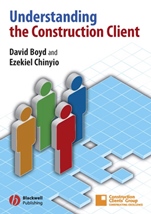
Understanding the Construction Client
ISBN 9781405129787
Autor: David Boyd, Ezekiel Chinyio
Wydawca: Wiley
Dostępność: 3-6 tygodni
Cena: 426,30 zł
Przed złożeniem zamówienia prosimy o kontakt mailowy celem potwierdzenia ceny.
ISBN13: |
9781405129787 |
ISBN10: |
1405129786 |
Autor: |
David Boyd, Ezekiel Chinyio |
Oprawa: |
Paperback |
Rok Wydania: |
2006-09-28 |
Ilość stron: |
330 |
Wymiary: |
244x170 |
Tematy: |
TN |
This book breaks new ground by creating a framework to understand clients’ actions and needs. Most construction management books focus on improving the construction process; this one focuses on a better engagement with the client. It challenges conceptions of both the construction industry and clients’ businesses so that a more effective process and greater client satisfaction can be achieved. The book suggests that ‘buildings are not about building but about changing and developing the client’. The technical, organisational and psychological aspects of this are described and analysed in detail so that current experience can be explained and better practice determined.
The book offers well–researched information about clients in a number of sectors – developers, supermarkets, NHS, government, airports and housing associations – which will help you understand what these client’s business or service needs are and how construction fits into this. It demonstrates how to develop an appreciation of the client’s perspective with a toolkit for ensuring successful client engagement. This makes Understanding the Construction Client a user–friendly and practical guide, as well as significant text for academia.
Spis treści:
Foreword – by Graham Farrant, Chair of Clients′ Constrction Group.
Preface: Building Not about Building!.
Chapter 1. Clients?.
1.1 Introduction.
1.2 The Nature of the Problem.
1.3 A Category of Clients.
1.4 What Clients Want.
1.5 A Problem of Delivery.
1.6 The Structure of the Book.
1.7 A Concluding Remark.
1.8 References.
Chapter 2 Model of Clients and Industry.
2.1 Introduction.
2.2 The Basic Thesis.
2.3 A Model of Clients.
2. Fundamental Awarenesses and the Model.
2.5 The Model for Sector Analysis.
2.6 References.
Chapter 3 The Client at Rest.
3.1 Clients Knowledge and Processes.
3.2 Clients See
the World Differently.
3.3 Normal Organisational Knowns.
3.4 Normal Organisational Unknowns.
3.5 People in Organisations.
3.6 Conclusions.
3.7 References.
Chapter 4 The Client in Change.
4.1 The Project Means and Ends.
4.2 Means and Ends as Values.
4.3 Building involves organisational change in the client.
4.4 Building Involves Unknowns that are Unformed.
4.5 Emotion of change.
4.6 Change creates gaps and contradictions.
4.7 The Means and Ends of Engagement.
4.8 What is to be done.
4.9 references.
Chapter 5 Developer Clients.
5.1 Introduction.
5.2 The Business Environment of Property Development.
5.3 Finance and Risk of Projects.
5.4 Business Constitution: Strategy to Operations.
5.5 The Experience of Building: from unknowns and contradictions to means and ends.
5.6 Key Points.
5.7 Books and Resources.
Chapter 6 Supermarkets Clients.
6.1 Introduction.
6.2 The Business Environment of Supermarkets: strategy.
6.3 Business Structure and Processes: The Tactical Plan.
6.4 Business Operations.
6.5 The Experience of Building: from unknowns and contradictions to means and ends.
6.6 Key Points.
6.7 Books and Resources.
Chapter 7 NHS Clients.
7.1 Introduction.
7.2 The Environment of NHS Acute Trusts.
7.3 NHS Acute Trusts: Gaps and contradictions.
7.4 The Means and Ends of Building.
7.5 Key Points.
7.6 Books and Resources.
Chapter 8 Government Clients.
8.1 Introduction.
8.2 The Political Domain: Service in a Political Environment.
8.3 The Management of Government Services.
8.4 The Operation of Government Services.
8.5 The Experience of Building: gaps and contradictions to means and ends.
8.6 Key Points.
8.7 Books and Resources.
Chapter 9 Airport Clients.
9.1 Introduction.
9.2 The Business Environment of Airports.
9.3 Business Structure Processes and Operations.
9.4 The Experience of Building: from unknowns and contradictions
to means and ends.
9.5 Key Points.
9.6 Books and Resources.
Chapter 10 Housing Association Clients.
10.1 Introduction.
10.2 The Business Environment of Housing Associations.
10.3 The Management of Housing Associations.
10.4 The Operation of Housing Associations.
10.5 The Experience of Building: gaps and contradictions to means and ends.
10.6 Key Points.
10.7 Books and Resources.
Chapter 11 Toolkit for Engagement.
11.1 Introduction and Summary.
11.2 Outline of Toolkit.
11.3 Working with the Client’s Change Process.
11.4 Understanding the Clients Business.
11.5 Managing the Construction Industry’s Fragmentation.
11.6 developing the Approach.
11.7 Conclusion.
11.8 References.
Chapter 12 Postscript.
Appendix.
The Interviewees
Nota biograficzna:
David Boyd is Deputy Head of the School of Property & Construction, University of Central England, Birmingham, UK. Ezekiel Chinyio is based at the Univeristy of Wolverhampton, UK.
Okładka tylna:
This book breaks new ground by creating a framework to understand clients’ actions and needs. Most construction management books focus on improving the construction process; this one focuses on a better engagement with the client. It challenges conceptions of both the construction industry and clients’ businesses so that a more effective process and greater client satisfaction can be achieved. The book suggests that ‘buildings are not about building but about changing and developing the client’. The technical, organisational and psychological aspects of this are described and analysed in detail so that current experience can be explained and better practice determined.
The book offers well–researched information about clients in a number of sectors – developers, supermarkets, NHS, government, airports and housing associations – which will help you understand what th
ese client’s business or service needs are and how construction fits into this. It demonstrates how to develop an appreciation of the client’s perspective with a toolkit for ensuring successful client engagement. This makes Understanding the Construction Client a user–friendly and practical guide, as well as significant text for academia.
Koszyk
Książek w koszyku: 0 szt.
Wartość zakupów: 0,00 zł
Informacje


Kontakt
Gambit
Centrum Oprogramowania
i Szkoleń Sp. z o.o.
Al. Pokoju 29b/22-24
31-564 Kraków
Siedziba Księgarni
ul. Kordylewskiego 1
31-542 Kraków
+48 12 410 5991
+48 12 410 5987
+48 12 410 5989
Subskrypcje
Administratorem danych osobowych jest firma Gambit COiS Sp. z o.o. Na podany adres będzie wysyłany wyłącznie biuletyn informacyjny.
Autoryzacja płatności

Informacje na temat autoryzacji płatności poprzez PayU.

© Copyright 2012: GAMBIT COiS Sp. z o.o. Wszelkie prawa zastrzeżone.
Projekt i wykonanie: Alchemia Studio Reklamy