


Wydawcy
Katalog tematyczny
- Archeologia (109)
- Ekonomia, finanse, business (13704)
- Filozofia (1445)
- Historia (3040)
- Języki i językoznawstwo (2356)
- Lifestyle, hobby i rozrywka (475)
- Medycyna (9704)
- Nauki humanistyczne (4)
- Nauki o Ziemi i środowisku (2638)
- Nauki ścisłe (20412)
- Astronomia (294)
- Biologia (5119)
- Biochemia (575)
- Biologia człowieka (14)
- Biologia komórkowa (377)
- Biologia molekularna (398)
- Biologia rozwoju (130)
- Biologia, ogólnie (1277)
- Botanika (280)
- Hydrobiologia (92)
- Mikrobiologia (363)
- Mykologia (22)
- Zoologia (303)
- Chemia (6540)
- Fizyka (3309)
- Matematyka (4574)
- Nauki ścisłe, ogólnie (503)
- Nauki społeczne (8486)
- Nauki techniczne (13450)
- Prawo (1696)
- Publikacje informacyjne i interdyscyplinarne (1288)
- Religia i wierzenia (917)
- Technika komputerowa (4067)
- Zdrowie, relacje międzyludzkie i rozwój osobisty (657)





Informacje szczegółowe o książce
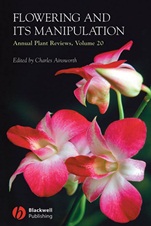
Annual Plant Reviews: Flowering and its Manipulation
ISBN 9781405128087
Autor: Charles Ainsworth
Wydawca: Wiley
Dostępność: 3-6 tygodni
Cena: 1 089,90 zł
Przed złożeniem zamówienia prosimy o kontakt mailowy celem potwierdzenia ceny.
ISBN13: |
9781405128087 |
ISBN10: |
1405128089 |
Autor: |
Charles Ainsworth |
Oprawa: |
Hardback |
Rok Wydania: |
2006-04-13 |
Ilość stron: |
320 |
Wymiary: |
244x165 |
Tematy: |
PS |
The flowering plants now dominate the terrestrial ecosystems of the planet, and there are good reasons for supposing that the flower itself has been a major contributing factor to the spread of the Angiosperms. The flowers of higher plants not only contain the organs of plant reproduction but are of fundamental importance in giving rise to fruits and seeds which constitute a major component of the human diet.
This volume opens with a chapter describing a model for the evolution of the Angiosperm flower. Chapters 2 to 5 describe the core development of the flower and include floral induction, floral pattering and organ initiation, floral shape and size, and inflorescence architecture. Chapters 6 to 8 focus on more specialised aspects of floral development: monoecy, cytoplasmic male sterility and flowering in perennials. Chapters 9 and 10 address more functional aspects: flower colour and scent. The book concludes, appropriately, with a chapter on flower senescence.
Applied aspects are stressed wherever appropriate, and the book is directed at researchers and professionals in plant genetics, developmental and molecular biology.
The volume has been designed to complement an earlier volume in our Annual Plant Reviews series, O’Neill, S. D. and Roberts, J. A. (2002) Plant Reproduction.
Spis treści:
Contributors.
Preface.
Part I. Core Development and Genetics.
1. A developmental genetic model for the origin of the flower (David A. Baum and Lena C. Hileman, Department of Botany, University of Wisconsin, Madison, Wisconsin, USA).
2. Floral Induction (Reynald Tremblay and Joseph Colasanti, Department of Molecular and Cell Biology, University of Guelph, Ontario, Canada).
3. Floral patterning and control of floral organ formation (Elena M. Kramer, Department of Organismic and Evolutionary Biology, Harvard University, Cambridge, MA, USA).
4. The Genetic Control of Flower Size and Shape (L
ynette Fulton, Martine Batoux, Ram Kishor Yadav and Kay Schneitz, Entwicklungsbiologie der Pflanzen, Wissenschaftszentrum Weihenstephan, Technische Universität München, Freising, Germany).
5. Inflorescence architecture: Moving beyond description (Susan R. Singer, Department of Biology, Carleton College, Northfield, Minnesota, USA).
Part II. Specialised Components of Development.
6. Close, yet separate: patterns of male and female floral development in monoecious species (Rafael Perl–Treves and Prem Anand Rajagopalan, Faculty of Life Sciences, Bar–Ilan University, Ramat Gan, Israel).
7. Cytoplasmic male sterility (Françoise Budar, Pascal Touzet & Georges Pelletier, Station de Génétique et d′Amélioration des Plantes, Institut Jean–Pierre Bourgin – INRA, Versailles, France).
8. The diversity and significance of flowering in perennials (Theresa Townsend, School of Plant Sciences, University of Reading, Berkshire, UK; Maria Albani, Max Planck Institute for Plant Breeding Research, Cologne, Germany; Mike Wilkinson, School of Plant Sciences, University of Reading, Berkshire, UK; George Coupland, Max Planck Institute for Plant Breeding Research, Cologne, Germany; and Nick H. Battey, School of Plant Sciences, University of Reading, Berkshire, UK)..
Part III. A Developmental Genetic Model for the Origin of the Flower.
9. Flower colour (Yoshikazu Tanaka, Institute for Advanced Technology, Suntory Ltd. Osaka, Japan, and Filippa Brugliera, Florigene Ltd., 16 Gipps Street, Collingwood, Victoria 3066, Australia).
10. Floral Scent: biosynthesis, regulation, and genetic modifications (Jennifer Schnepp and Natalia Dudareva, Department of Horticulture and Landscape Architecture, West Lafayette, Indiana, USA).
Part IV. Senescence.
11. Flower senescence: fundamental and applied aspects (Anthony D. Stead, Biological Sciences, Royal Holloway (University of London), Egham
, Surrey, UK; Wouter G. van Doorn, Wageningen University and Research Centre, Wageningen, The Netherlands; M. L. Jones, Floriculture/ Molecular Biology, Horticulture and Crop Science Department, The Ohio State University, Wooster, Ohio, USA; and C. Wagstaff, School of Biological Sciences, University of Southampton, Southampton, UK).
.
References.
Index.
Nota biograficzna:
Charles Ainsworth, Plant Molecular Biology Laboratory, Imperial College London, Kent, UK
Okładka tylna:
The flowering plants now dominate the terrestrial ecosystems of the planet, and there are good reasons for supposing that the flower itself has been a major contributing factor to the spread of the Angiosperms. The flowers of higher plants not only contain the organs of plant reproduction but are of fundamental importance in giving rise to fruits and seeds which constitute a major component of the human diet.
This volume opens with a chapter describing a model for the evolution of the Angiosperm flower. Chapters 2 to 5 describe the core development of the flower and include floral induction, floral pattering and organ initiation, floral shape and size, and inflorescence architecture. Chapters 6 to 8 focus on more specialised aspects of floral development: monoecy, cytoplasmic male sterility and flowering in perennials. Chapters 9 and 10 address more functional aspects: flower colour and scent. The book concludes, appropriately, with a chapter on flower senescence.
Applied aspects are stressed wherever appropriate, and the book is directed at researchers and professionals in plant genetics, developmental and molecular biology.
The volume has been designed to complement an earlier volume in our Annual Plant Reviews series, O’Neill, S. D. and Roberts, J. A. (2002) Plant Reproduction.
Koszyk
Książek w koszyku: 0 szt.
Wartość zakupów: 0,00 zł
Informacje


Kontakt
Gambit
Centrum Oprogramowania
i Szkoleń Sp. z o.o.
Al. Pokoju 29b/22-24
31-564 Kraków
Siedziba Księgarni
ul. Kordylewskiego 1
31-542 Kraków
+48 12 410 5991
+48 12 410 5987
+48 12 410 5989
Subskrypcje
Administratorem danych osobowych jest firma Gambit COiS Sp. z o.o. Na podany adres będzie wysyłany wyłącznie biuletyn informacyjny.
Autoryzacja płatności

Informacje na temat autoryzacji płatności poprzez PayU.

© Copyright 2012: GAMBIT COiS Sp. z o.o. Wszelkie prawa zastrzeżone.
Projekt i wykonanie: Alchemia Studio Reklamy