


Wydawcy
Katalog tematyczny
- Archeologia (109)
- Ekonomia, finanse, business (13704)
- Filozofia (1445)
- Historia (3040)
- Języki i językoznawstwo (2356)
- Lifestyle, hobby i rozrywka (475)
- Medycyna (9704)
- Nauki humanistyczne (4)
- Nauki o Ziemi i środowisku (2638)
- Nauki ścisłe (20412)
- Nauki społeczne (8486)
- Nauki techniczne (13450)
- Prawo (1696)
- Publikacje informacyjne i interdyscyplinarne (1288)
- Bibliotekoznawstwo, informacja naukowa i muzealnictwo (433)
- Encyklopedie i leksykony (181)
- Informacja naukowa (88)
- Zagadnienia interdyscyplinarne (391)
- Religia i wierzenia (917)
- Technika komputerowa (4067)
- Zdrowie, relacje międzyludzkie i rozwój osobisty (657)





Informacje szczegółowe o książce
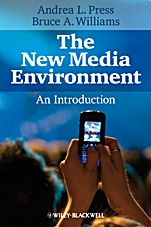
The New Media Environment: An Introduction
ISBN 9781405127677
Autor: Andrea L. Press, Bruce A. Williams
Wydawca: Wiley
Dostępność: 3-6 tygodni
Cena: 437,85 zł
Przed złożeniem zamówienia prosimy o kontakt mailowy celem potwierdzenia ceny.
ISBN13: |
9781405127677 |
ISBN10: |
1405127678 |
Autor: |
Andrea L. Press, Bruce A. Williams |
Oprawa: |
Hardback |
Rok Wydania: |
2010-07-02 |
Ilość stron: |
236 |
Wymiary: |
239x163 |
Tematy: |
GTS |
In the past two decades, the way we experience the world through media has altered in revolutionary ways. These changes affect the way we watch older media like television, movies, and radio, and offer up rich new interactive media, like video games and the Internet. Understanding these changes is a challenge that confronts us every day in our roles as citizens, consumers, parents, students, and workers.
The New Media Environment examines the new and rapidly developing field of media studies to discover what insights it has to offer students and general readers as they negotiate their way through the new – and thoroughly saturated – media environment. The perfect introduction to the field, the book chronicles the recent dramatic changes in communication technologies, arguing that most of life itself is now experienced as “mediated.” Press and Williams discuss the development of cable and satellite television, VCRs, DVDs, the Internet and personal computers, and emphasize the broader political, social, and economic context within which these new technologies have developed.
Spis treści:
Acknowledgements.
1. Introduction: Modern Life Is a Media Experience.
A Tale of Two Hurricanes.
What Is a Media Environment?
The Importance of Changing Media Environments.
The electronic media.
Media in the Twenty–First Century: What Has Changed?
The age of the Internet.
Conclusion
2. Ownership and Control in the New Media Environment.
Patterns of Media Ownership and Control.
Ownership and Control of the Media: Assumptions and Realities.
Alternative models of media ownership.
Who owns the media?
Ownership and control in a global context.
Does It Matter?
The Consequences of Concentration and Conglomeration.
The argument for market–driven media.
The argument against market–driven media.
What this means today.
Conclusion.<
br>3. Media and Democracy.
Introduction.
Changing Media Environments and Changing Democratic Politics.
Why nervous liberals are still with us: The enduring problem of propaganda.
John Dewey and the reconstruction of media and democratic politics.
Empirical research: How do media actually affect citizens?
Television and the “Age of Broadcast News”.
Politics in the New Media Environment.
Conclusion.
4. Studying Popular Culture: Texts, Reception, and Cultural Studies.
Introduction: Hollywood and Representations of Reality.
Media Studies and the Study of Reception: A Brief History of Its Methods and Findings.
Conclusion.
5. Studying Inequalities: Class, Gender, Race, and Sexuality in Media Studies.
A Critical Perspective on Inequality in Media Studies.
The Frankfurt School.
Cultural studies Media studies research findings on class, gender, race, and sexuality.
Gender in Media Studies Research: Are Gender Roles Culturally Reproduced?
Film and gender: Issues of reception and representation.
Television and gender: Issues of reception and representation.
Media and Race.
Sexuality.
Conclusion.
6. Studying Media Texts and Their Reception in the New Media Environment.
Transformative Images in the New Media Environment.
Globalization and the new shape of media identities.
Media Reception Research in the New Media Environment.
Global reception in the new media environment.
Gender, Race, Sexuality, and Social Class Inequality in New Media Reception: A New Study.
New Studies: Gender and Social Class Identities in the New Media Environment.
Politics, Media Impact and Use, and the New Media Environment
Old and New Media in the Individualized Media Environment: The New Media Environment Is Never Just New Media
Bias in old media and new.
Civic engagement in the new media environment.
Americans and Political Discussion: How the New Media Environment Is Changing the Civic L
andscape.
Conclusion.
7. Conclusion.
We Are Living in a Mediated Age.
The Complexity of Our Relationship With the Media.
Human Agency in Media Decisions and Directions.
In Closing: The Case of the RFID.
Index.
Nota biograficzna:
Andrea L. Press is Chair of Media Studies and Professor of Sociology at the University of Virginia. She is the author of Women Watching Television and the co–author (with Elizabeth Cole) of Speaking of Abortion, and has published widely in the area of media reception and feminist theory.
Bruce A. Williams is a Professor in the Department of Media Studies at the University of Virginia, and the author of After the News: Media Regimes and the New Information Environment (with Michael X. Delli Carpini) and Democracy, Dialogue, and Environmental Disputes: The Contested Languages of Social Regulation (with Albert Matheny). His current research interests focus on the role of a changing media environment in shaping citizenship in the United States.
Okładka tylna:
In the past two decades, the way we experience the world through media has altered in revolutionary ways. These changes affect the way we watch older media like television, movies, and radio, and offer up rich new interactive media, like video games and the Internet. Understanding these changes is a challenge that confronts us every day in our roles as citizens, consumers, parents, students, and workers.
The New Media Environment examines the new and rapidly developing field of media studies to discover what insights it has to offer students and general readers as they negotiate their way through the new – and thoroughly saturated – media environment. The perfect introduction to the field, the book chronicles the recent dramatic changes in communication technologies, arguing that most of life itself is now experienced as “mediate
d.” Press and Williams discuss the development of cable and satellite television, VCRs, DVDs, the Internet and personal computers, and emphasize the broader political, social, and economic context within which these new technologies have developed.
Koszyk
Książek w koszyku: 0 szt.
Wartość zakupów: 0,00 zł
Informacje


Kontakt
Gambit
Centrum Oprogramowania
i Szkoleń Sp. z o.o.
Al. Pokoju 29b/22-24
31-564 Kraków
Siedziba Księgarni
ul. Kordylewskiego 1
31-542 Kraków
+48 12 410 5991
+48 12 410 5987
+48 12 410 5989
Subskrypcje
Administratorem danych osobowych jest firma Gambit COiS Sp. z o.o. Na podany adres będzie wysyłany wyłącznie biuletyn informacyjny.
Autoryzacja płatności

Informacje na temat autoryzacji płatności poprzez PayU.

© Copyright 2012: GAMBIT COiS Sp. z o.o. Wszelkie prawa zastrzeżone.
Projekt i wykonanie: Alchemia Studio Reklamy