


Wydawcy
Katalog tematyczny
- Archeologia (109)
- Ekonomia, finanse, business (13704)
- Filozofia (1445)
- Historia (3040)
- Języki i językoznawstwo (2356)
- Lifestyle, hobby i rozrywka (475)
- Medycyna (9704)
- Nauki humanistyczne (4)
- Nauki o Ziemi i środowisku (2638)
- Nauki ścisłe (20412)
- Nauki społeczne (8486)
- Nauki techniczne (13450)
- Prawo (1696)
- Publikacje informacyjne i interdyscyplinarne (1288)
- Religia i wierzenia (917)
- Technika komputerowa (4067)
- Zdrowie, relacje międzyludzkie i rozwój osobisty (657)





Informacje szczegółowe o książce
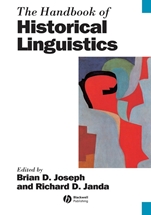
The Handbook of Historical Linguistics
ISBN 9781405127479
Autor: Brian Joseph, Richard Janda
Wydawca: Wiley
Dostępność: 3-6 tygodni
Cena: 255,15 zł
Przed złożeniem zamówienia prosimy o kontakt mailowy celem potwierdzenia ceny.
ISBN13: |
9781405127479 |
ISBN10: |
1405127473 |
Autor: |
Brian Joseph, Richard Janda |
Oprawa: |
Paperback |
Rok Wydania: |
2004-12-30 |
Ilość stron: |
904 |
Wymiary: |
244x170 |
Tematy: |
CF |
The Handbook of Historical Linguistics provides a detailed account of the numerous issues, methods, and results that characterize current work in historical linguistics, the area of linguistics most directly concerned with language change as well as past language states. In its introduction and 25 chapters, written by leading specialists in the field, this volume achieves two main goals. It covers the most important methods of historical linguistics including comparative reconstruction and internal reconstruction, reliable ways of determining language relatedness, and contemporary approaches to dialectological investigation. It also presents sophisticated overviews of the principles that emerge from the in–depth study of phonological, morphological, syntactic, and semantic change, including grammaticalization, and offers wide–ranging explorations of the major factors at work in the causation of change. The book begins with an extensive and uniquely comprehensive introduction by the editors that places the study of historical linguistics in its proper context both within the field of linguistics itself and within the historical sciences more generally. The well–conceived and lucidly written articles in this volume, supplemented with an extensive bibliography and detailed indexes, make The Handbook of Historical Linguistics an indispensable resource for anyone with an interest in history and/or language.
Part I: Introduction: . On Language, Change, and Language Change: Richard D. Janda & Brian D. Joseph, both The Ohio State University. Part II: Methods for Studying Language Change: . 1. The Comparative Method: Robert L. Rankin, University of Kansas. 2. On the Limits of the Comparative Method: S.P. Harrison, University of Western Australia. 3. Internal Reconstruction: Don Ringe, University of Pennsylvania. 4. How to Show Languages are Related: Methods for Distant Genetic Relationship: Lyle Campbell, University of Canterbury, New Zealand. 5. Diversity and Stability in Language: Johanna Nichols, University of California, Berkeley. Part III: Phonological Change: . 6. The Phonological Basis of Sound Change: Paul Kiparsky, Stanford University. 7. Neogrammarian Sound Change: Mark Hale, Concordia University. 8. Variationist Approaches to Phonological Change: Gregory R. Guy, York University. Part IV: Morphological and Lexical Change: . 9. Analogy: The Warp and Woof of Cognition: Raimo Anttila, University of California, Los Angeles. 10. Analogical Change: Hans Henrich Hock, University of Illinois, Urbana–Champaign. 11. “Phonologization”as the Start of Dephoneticization – Or, On Sound–Change and Its Aftermath: Of Extension, Generalization, Lexicalization, and Morphologization: Richard D. Janda, The Ohio State University. 12. Morphologization from Syntax: Brian D. Joseph, The Ohio State University. 13. Naturalness and Morphological Change: Wolfgang U. Dressler, Vienna University. Part V: Syntactic Change: . 14. Grammatical Approaches to Syntactic Change: David Lightfoot, Georgetown University. 15. Variationist Approaches to Syntactic Change: Susan Pintzuk, University of York. 16. Cross–linguistic Perspectives on Syntactic Change: Alice C. Harris, Vanderbilt University. 17. Functional Perspectives on Syntactic Change: Marianne Mithun, University of California, Santa Barbara. Part VI: Semantico–Pragmatic Change: . 18. Grammaticalization: Bernd Heine, University of Cologne. 19. Mechanisms of Change in Grammaticization: The Role of Frequency: Joan Bybee, University of New Mexico. 20. Constructions in Grammaticalization: Elizabeth Closs Traugott, Stanford University. 21. Principles of Semantic Change: Benjamin W. Fortson, IV. Part VII: Explaining Linguistic Change: . 22. Phonetics and Historical Phonology: John Ohala, University of California, Berkeley. 23. Contact as a Source of Language Change: Sarah Grey Thomason, University of Pittsburgh. 24. Dialectology and Linguistic Diffusion: Walt Wolfram & Natalie Schilling–Estes, North Carolina State University and Georgetown University. 25. Psycholinguistic Perspectives on Linguistic Change: Jean Aitchison, University of Oxford. Bibliography. Index
Brian D. Joseph is Professor of Linguistics and Kenneth E. Naylor Professor of South Slavic Linguistics at The Ohio State University. Within historical linguistics, his research focuses mainly on Indo–European languages. He has written and edited numerous books – including Language History, Language Change, and Language Relationship (with Hans H. Hock, 1996) and The Synchrony and Diachrony of the Balkan Infinitive (1983) – and has published over 160 articles. He became editor of the journal Language in 2002. Richard D. Janda is Senior Lecturer and Coordinator for Undergraduate Education in the Department of Linguistics at The Ohio State University. A specialist in both Germanic and Romance linguistics, he has written widely not only on diachronic but also on synchronic issues in phonology, morphology, and morphosyntax, as well as on historical linguistics in general. His more than 70 publications focus on drawing broader implications from the application of theory to specific problems of structure, function, variation, and change in individual languages.
" The Handbook of Historical Linguistics proves an atypical handbook in several positive senses, beginning with the introduction′s bold tackling of foundational issues. While many chapters offer the expected compact overviews of familiar topics, others are, we hope, destined to become influential as needed lucid statements on particular issues... and thought–provoking, original contributions... The value of The Handbook of Historical Linguistics is multifaceted; its influence will be far–reaching and long–lasting." Journal of Linguistics “The editors have assembled a remarkable array of contributors who can introduce readers to the professional standards of scholarship and scientific reasoning that characterize the field.” William Labov , University of Pennsylvania “An authoritative collection, by a stellar group of contributors, that presents historical linguistics as it really is – a multifaceted study that is both a branch of general linguistics and a field in its own right. No other survey covers the territory half so well.” Jay Jasanoff, Harvard University
Koszyk
Książek w koszyku: 0 szt.
Wartość zakupów: 0,00 zł
Informacje


Kontakt
Gambit
Centrum Oprogramowania
i Szkoleń Sp. z o.o.
Al. Pokoju 29b/22-24
31-564 Kraków
Siedziba Księgarni
ul. Kordylewskiego 1
31-542 Kraków
+48 12 410 5991
+48 12 410 5987
+48 12 410 5989
Subskrypcje
Administratorem danych osobowych jest firma Gambit COiS Sp. z o.o. Na podany adres będzie wysyłany wyłącznie biuletyn informacyjny.
Autoryzacja płatności

Informacje na temat autoryzacji płatności poprzez PayU.

© Copyright 2012: GAMBIT COiS Sp. z o.o. Wszelkie prawa zastrzeżone.
Projekt i wykonanie: Alchemia Studio Reklamy