


Wydawcy
Katalog tematyczny
- Archeologia (109)
- Ekonomia, finanse, business (13704)
- Filozofia (1445)
- Historia (3040)
- Języki i językoznawstwo (2356)
- Lifestyle, hobby i rozrywka (475)
- Medycyna (9704)
- Nauki humanistyczne (4)
- Nauki o Ziemi i środowisku (2638)
- Nauki ścisłe (20412)
- Astronomia (294)
- Biologia (5119)
- Chemia (6540)
- Chemia analityczna (361)
- Chemia fizyczna (346)
- Chemia nieorganiczna (137)
- Chemia organiczna (535)
- Krystalografia (27)
- Minerologia (46)
- Fizyka (3309)
- Matematyka (4574)
- Nauki ścisłe, ogólnie (503)
- Nauki społeczne (8486)
- Nauki techniczne (13450)
- Prawo (1696)
- Publikacje informacyjne i interdyscyplinarne (1288)
- Religia i wierzenia (917)
- Technika komputerowa (4067)
- Zdrowie, relacje międzyludzkie i rozwój osobisty (657)





Informacje szczegółowe o książce
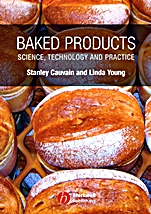
Baked Products: Science, Technology and Practice
ISBN 9781405127028
Autor: Stanley P. Cauvain, Linda S. Young
Wydawca: Wiley
Dostępność: 3-6 tygodni
Cena: 971,25 zł
Przed złożeniem zamówienia prosimy o kontakt mailowy celem potwierdzenia ceny.
ISBN13: |
9781405127028 |
ISBN10: |
1405127023 |
Autor: |
Stanley P. Cauvain, Linda S. Young |
Oprawa: |
Hardback |
Rok Wydania: |
2006-09-11 |
Ilość stron: |
244 |
Wymiary: |
267x187 |
Tematy: |
PN |
Taking a fresh approach to information on baked products, this exciting new book from industry consultants Cauvain and Young looks beyond the received notions of how foods from the bakery are categorised to explore the underlying themes which link the products in this commercially important area of the food industry.
First establishing an understanding of the key characteristics which unite existing baked product groups, the authors move on to discuss product development and optimisation, providing the reader with coverage of:
Key functional roles of the main bakery ingredients
Ingredients and their influences
Heat transfer and product interactions
Opportunities for future product development
Baked Products is a valuable practical resource for all food scientists and food technologists within bakery companies, ingredient suppliers and general food companies. Libraries in universities and research establishments where food science and technology is studied and taught will find the book an important addition to their shelves.
Spis treści:
Preface.
1 The current approaches to the classification of bakery products.
Introduction.
An historical background to the production of baked products.
The traditional basis for classifying bread and fermented goods, cakes, pastries and biscuits.
The concept of recipe balance in the development of baked products.
Reconsidering the basis for baked product classification.
2 The key characteristics of existing bakery product groups and typical variations within such groups.
What makes baked products different from other processed foods?.
An introduction to the methods used to characterise baked products.
Methods for evaluating the character of baked products.
Subjective scoring sheets.
Measurement of size.
Measurement of volume.
Measurement of colour.
Texture properties.
Measurement of cellular structure.
Meas
urement of product moisture content.
Water activity and its relevance.
Key physical characteristics of bread and fermented goods.
Key physical characteristics of sponges and cakes.
Key physical characteristics of biscuits, crackers and cookies.
Key physical characteristics of pastry.
3 The characterisation of bakery products by formulation and the key functional roles of the main ingredients used in baking.
Introduction.
The key functional roles of individual ingredients.
How baked product formulations are expressed.
Baker’s percentage.
Total weight percentage.
Ingredient level (absolute).
Other methods.
Conversion statistics.
Typical recipes used in the manufacture of baked products.
Relationships between product groups.
Flour types.
Sample recipes.
Bread and fermented goods.
Doughnuts.
Cakes.
Cookies, biscuits and crackers.
Pastries.
Unleavened breads.
Other products.
4 Ingredients and their influences.
Wheat flour.
Fibres.
Soya flour.
Cocoa powder.
Sugars and sweeteners.
Sucrose.
Dextrose/glucose syrups.
Invert sugar/honey.
Glycerol and sorbitol.
Fats and emulsifiers.
Fats.
Butter.
Margarines.
Emulsifiers.
Egg products.
Baking powders and their components.
Dried and candied fruits.
Chocolate chips.
Salt.
Yeast.
Ascorbic acid and other improvers.
Enzymes.
Water.
Milk products.
5 The nature of baked product structure.
Introduction.
Techniques to evaluate baked product structure.
The formation of cellular structures.
The formation of gluten.
The role of fat in the formation of baked product structures.
Mechanisms of structure formation and expansion in baked products.
Bread and fermented goods.
Cakes and sponges.
Biscuits and cookies.
Short and sweetened pastry.
Laminated products and crackers.
Flat breads.
Doughnuts.
Bagels and steam breads.
Hot–plate produc
ts.
6 Interactions between formulation and process methodologies.
Introduction.
The main processing methodologies.
Mixing – the importance of energy.
Mixing – gas incorporation.
Mixing – single– and multi–stage methods.
Dividing/scaling/depositing.
Forming/moulding/shaping.
Expansion and relaxation.
Baking.
Frying.
Boiling and steaming.
Using re–work.
The contribution of ingredients and formulation to the evolution of current processing methodologies.
7 Heat transfer and product interactions.
Introduction.
The heat transfer processes.
Refrigeration and Retarding.
Proving.
The baking of cake batters.
The baking of bread dough.
The baking of biscuit and cookie dough.
The baking of pastry products.
The baking of laminated products.
Microwave baking.
The frying of doughnuts and other products.
Baking on a hot–plate.
Cooling.
Deep freezing.
The foam to sponge conversion and the collapse of bakery products.
Ingredient, recipe and product interactions.
8 Understanding and manipulating the end product requirements.
The importance of records.
Optimising baked product quality through test baking.
Control of baked product characteristics by manipulation of ingredients, formulation and processing methods.
Optimising baked product quality through the application of knowledge–based systems.
Knowledge–based systems for bread products.
Using the Bread Advisor.
Fault diagnosis or quality enhancement.
Processing details.
Other software tools for fermented products.
Knowledge–based systems for cake products.
Determining raising or leavening agents in cake and biscuit/cookie products.
9 The opportunities for new product development.
The processes involved in the development of baked products.
The start.
The product development brief.
The product development process.
Characterising
the Product.
The potential for new product development using IT methodologies.
Cake product development using IT systems.
Software to determine process settings.
Ensuring product safety using software.
HACCP software.
Company specific knowledge.
Matching patterns in baking for innovation.
Using structure assessment in innovation.
Visualising the world of baked products.
Conclusion.
References.
Further reading.
Index
Nota biograficzna:
With a combined experience of 65 years in the baking industry with commercial and research companies Stan Cauvain and Linda Young are recognised international experts in the science and technology of baked products. They are now Directors and Vice Presidents of the consultancy company BakeTran, Stanley with responsibility for Research and Development and Linda for Knowledge Systemization and Training.
Okładka tylna:
Taking a fresh approach to information on baked products, this exciting new book from industry consultants Cauvain and Young looks beyond the received notions of how foods from the bakery are categorised to explore the underlying themes which link the products in this commercially important area of the food industry.
First establishing an understanding of the key characteristics which unite existing baked product groups, the authors move on to discuss product development and optimisation, providing the reader with coverage of:
Key functional roles of the main bakery ingredients
Ingredients and their influences
Heat transfer and product interactions
Opportunities for future product development
Baked Products is a valuable practical resource for all food scientists and food technologists within bakery companies, ingredient suppliers and general food companies. Libraries in universities and research establishments where food science and technology is studied and taught will find the book an impo
Koszyk
Książek w koszyku: 0 szt.
Wartość zakupów: 0,00 zł
Informacje


Kontakt
Gambit
Centrum Oprogramowania
i Szkoleń Sp. z o.o.
Al. Pokoju 29b/22-24
31-564 Kraków
Siedziba Księgarni
ul. Kordylewskiego 1
31-542 Kraków
+48 12 410 5991
+48 12 410 5987
+48 12 410 5989
Subskrypcje
Administratorem danych osobowych jest firma Gambit COiS Sp. z o.o. Na podany adres będzie wysyłany wyłącznie biuletyn informacyjny.
Autoryzacja płatności

Informacje na temat autoryzacji płatności poprzez PayU.

© Copyright 2012: GAMBIT COiS Sp. z o.o. Wszelkie prawa zastrzeżone.
Projekt i wykonanie: Alchemia Studio Reklamy