


Wydawcy
Katalog tematyczny
- Archeologia (109)
- Ekonomia, finanse, business (13704)
- Filozofia (1445)
- Historia (3040)
- Języki i językoznawstwo (2356)
- Lifestyle, hobby i rozrywka (475)
- Medycyna (9704)
- Nauki humanistyczne (4)
- Nauki o Ziemi i środowisku (2638)
- Geografia (299)
- Nauki o Ziemi (1661)
- Geologia (414)
- Hydrologia (237)
- Meteorologia i klimatologia (114)
- Paleontologia (33)
- Wulkanologia i sejsmologia (44)
- Planowanie przestrzenne (53)
- Środowisko (607)
- Nauki ścisłe (20412)
- Nauki społeczne (8486)
- Nauki techniczne (13450)
- Prawo (1696)
- Publikacje informacyjne i interdyscyplinarne (1288)
- Religia i wierzenia (917)
- Technika komputerowa (4067)
- Zdrowie, relacje międzyludzkie i rozwój osobisty (657)





Informacje szczegółowe o książce
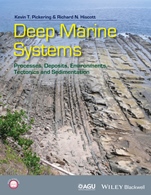
Deep Marine Systems: Processes, Deposits, Environments, Tectonics and Sedimentation
ISBN 9781405125789
Autor: Kevin T. Pickering, Richard N. Hiscott
Wydawca: Wiley
Dostępność: 3-6 tygodni
Cena: 358,05 zł
Przed złożeniem zamówienia prosimy o kontakt mailowy celem potwierdzenia ceny.
ISBN13: |
9781405125789 |
ISBN10: |
1405125780 |
Autor: |
Kevin T. Pickering, Richard N. Hiscott |
Oprawa: |
Paperback |
Rok Wydania: |
2015-11-06 |
Ilość stron: |
672 |
Wymiary: |
278x216 |
Tematy: |
RB |
The original Deep Marine Environments by Pickering, Hiscott & Hein ( Unwin Hyman) was first published in 1989, and quickly became established as the leading text in marine sedimentology. It is now regarded as a classic (though it has been o/p for about 5 years). Since 1989 there have been huge advances in our understanding of the processes involved in deep marine environments, and the current proposal envisages an almost complete rewrite of the material. Hence the new name. The book is aimed at an advanced undergraduate or graduate level readership, and there will also be a important market amongst professional and research sedimentologists, particularly in the oil industry. As the world’s premier sedimentology publisher we are uniquely well placed to reach these markets (our links with the IAS will be extremely valuable for example). There are no direct competitors to this title. All general sedimentology texts (eg our Leeder) deal with deep marine environments as part of their coverage, but there is no single volume available.
Chapter 1: Introduction . [KTP, RNH, MU]. Scope and rationale. Deep ocean basins. setting, geometry, size. Ocean–atmosphere system. coupling and circulation, El Niño etc. Major controls on deep–water sedimentation. Tectonics. general comments on types of plate margin etc. Climate. incl. Milankovitch. Sea level changes. Sediment flux and texture. Origins, flux, compositional maturity etc. Sources of data –– modern and ancient contrasts. Ocean drilling, seismic, sidescan, other geophysical techniques, isotopes, organisms, physical modelling, experiments, ancient–rock. outcrops, scale issues. Recent developments, current problems and future directions. . Part I: Process and Product . Chapter 2: Physical processes . [RNH, KTP, MU]. Density currents. incl. recent theoretical/experimental work. Sediment gravity flows. Turbidity currents and turbidites. Debris flows and their deposits. Thermohaline circulation. Internal waves. Tidal currents. Suspended sediment plumes. Glacial–marine processes. Liquefaction and fluidization. Sediment slides. Flow transformations and complex flows. incl. 2–layer flows etc. Event frequencies and magnitudes. incl.earthquake frequency, temporal spacing of events. Biomass productivity. organic–rich laminites, black shales, phosphorites, cherts etc. Effects of changing climate and sea level. Effects of punctuated tectonic events (e.g., earthquake triggers). . Chapter 3: Sediments . [KTP, RNH]. Introduction. Classification schemes by depositional process. Mutti & Ricci Lucchi (1972). Walker (1994), Walker & Muti (1973). Mutti (1979, 1992 genetic scheme). Ghibaudo (1992). Pickering, Hiscott, Stow & Watson (1986), Pickering, Hiscott & Hein. (1989) and present 2nd edition. Chemical sediments – expand section. Volcanic sediments. Biological sediments. Carbonate reefs and platforms. Calcareous ooze. Siliceous ooze. Tectonic provenance. Modern sands. Ancient sandstones. . Chapter 4: Time–space integration . [KTP & RNH]. Major bounding surfaces. condensed sections etc. Architectural elements. Seismic (Damuth diagram). Seismic examples of architectural elements if possible. Sedimentary. Hydrocarbon stratigraphic traps. Dating and correlation of elements. fossils, chemical techniques incl. stable isotopes, seismic and other geophysical techniques. Chronostratigraphic horizons. temporal resolution – rates of sediment accumulation. Bed thickness distributions. Include fractal dimensions and power–law distributions – exponential. power laws. Fractals. Asymmetric cycles. Effects of compaction. Decompaction algorithms. Time series analysis of data from deep–water systems. Methods. Proxies for climate change. etc. Eustatic forcing. Timing. Amplitude. Effects. Tectonic forcing. Recognition of recurrence intervals for tectonic events. Cascadia earthquake record. . Chapter 5: Palaeontology & Ichnofacies . [KTP & RNH]. benthic, planktonic foraminifera, radiolaria, sponge spicules. concept of depth zonation in trace fossils, doomed pioneers, etc. ichnofacies and sedimentary environments. . Chapter 6: Selected aspects of diagenesis, cementation and fluids in deep–water sediments . [MU] Mostly new here.. Petrographic aspects of deep–water sediments. carbonates, siliciclastics, chert, black shales, etc. Primary matrix vs. chemical cement. Physical properties of deep–water sediments. Water content, porosity, void ratio, bulk density. Grain fabric. Pelagic, hemipelagic, turbidite, bioturbated, fissile. Fluid pressure and permeability. Compaction trends. changes in primary porosity induced by burial. consolidation of sand (chemical) versus mud (mechanical). causes of underconsolidation. causes of overconsolidation. Secondary porosity. Deformation, dissolution. Sources of fluid. Mineral hydration and dehydration reactions. Hydrocarbons and gas hydrates. Patterns of fluid pressure and flow. Hydrostatic gradients. Overpressured systems and compartments. Carbonate systems. Passive margins. Active plate margins – plumbing accretionary prisms. Cold seeps. Hydrothermal systems. Black smokers. Metalliferous sediment. Sediment sealing of basement (Juan de Fuca Ridge flank). Control on seawater composition. . Part II: Systems . Chapter 7: Slope aprons and slope basins . [MU,KTP]. Introduction. Major external controls on slope development. Incl. salt tectonics and brines. Strike–slip borderlands?. Subduction zones?. Styles of slope deposition. Expand slope instability section/s to illustrate scale and variability Strong currents as recorded in some Gulf Coast basins. include Gulf of Mexico slope bathymetry side–lit images. Slope apron above accretionary prism. Onlaps. include data from seismic, Grès d′Annot, Tabernas etc. Fill–and–spill model (Prather model). Summary models. . Chapter 8: Contourite drifts . [RNH]. Introduction. Major controls on contourite drifts. Modern contourite drifts. Contourite versus turbidite. Ancient contourites. Summary models. . Chapter 9: Confined systems: Submarine canyons, gullies, channels and other sea valleys . [KTP]. Introduction. Canyons. Characteristics of modern canyons. Canyon evolution (nucleation, headward erosion, etc.). Ancient submarine canyons. Channel–levee complexes. Channel morphology and sedimentology. Erosional–, depositional– and mixed–channel characteristics. Growth and development. Comparing ancient and modern: existing problems. and application to integrated channel fill models. Type of basin and sediment source. Stage of development. Scale and observation. Submarine channel processes, architecture and. depositional models. Fluvial and submarine channel processes. Channelised flow. Channelised turbidity currents. Flow characteristics in submarine channels. Modern channel systems: case studies. Introduction to data base. Monterey Channel, West Coast USA. Cascadia Channel, West Coast USA. Astoria Channel, West Coast USA. Bering Sea channels. Mississippi Channel, Gulf of Mexico. Indus Fan channels, Indian Ocean. Amazon Fan channels, Atlantic Ocean. Rhône Channel, Western Mediterranean. Quantitative analysis of modern submarine channels. Methodology. Channel dimensions. Channel depth vs. down–channel distance. Channel width vs. down–channel distance. Cross sectional area vs. down–channel distance. Channel width vs. channel depth. Meander Geometry. Meander wavelength vs. meander loop radius. Meander wavelength vs. channel width. Sinuosity variation. Summary of quantitative analysis and implications. for the classification of fans. Ancient systems. Architecture of ancient channel–levee complexes: case studies. Brushy Canyon Formation, Middle Permian, Guadalupe Mountains, Texas. Cretaceous, Aleutian Islands. Ainsa System, south–central Pyrenees, Spain, south–central. Pyrenees, Spain. San Clemente nested channels, Capistrano Formation, California. Miocene (Tortonian) Solitary Channel, Tabernas Basin SE Spain. Namurian Shale Grit Formation slope channel fills,. Sealers Bay Channel, Oligocene, SW New Zealand. Late Precambrian Kongsfjord Formation Hamningberg Channel,. Finnmark, N. Norway. Gryphon Field channels, Upper Paleocene, North Sea. Quantitative analysis of ancient submarine channels. Dataset. Channel dimensions. Aspect ratios of intra–channel elements. Synthesis and channel models. Synthesis. Channel–fill type. Channel stacking. Sedimentary processes. Relationship between channels and levees. Quantitative synthesis. Channel models. Two end–member channel models. Application of erosional channel model to ancient channel infills. Sequence stratigraphy and architectural elements. Model for channel evolution in moderate to high sinuosity channels. Post–depositional modification of channel fills. Hydrocarbon prospectivity. Reservoir geometry. Preferential sites of sand accumulation in channels. Other modern and ancient sea valleys. Summary models. Chapter 10: Less–confined systems: Abyssal plains and other ocean–basin–floor sheet systems . [KTP]. Introduction. Abyssal plains and other ocean–basin floors. Modern. Hatteras abyssal plain. Sohm abyssal plain. Madieras abyssal plain. Ancient. Marnoso–arenacea. Cloridorme. Gault Formation. High–continuity ancient sandy systems. Stress that in ancient in general unsure of sheets as topo highs. incl. long–distance correlation of key (marker) beds. Kazusa Group. Gres d′Annot Formation. Kongsfjord Formation. Summary models. . Chapter 11: Submarine fans . [RNH]. Introduction. Major controls on submarine fans. Modern fans. Fan classifications. Ancient fans. Summary models. . Part III: Plate tectonics and sedimentation. Chapter 12: Evolving and mature extensional systems . [RNH, MU]. Introduction. Models for lithospheric extension. Subsidence curves and stratigraphy. Failed rift systems. Ocean–margin basins associated with rifting. Fragments of ancient passive margins. Oceanic spreading centres and fracture zones. Juan de Fuca Ridge flank. Burial of basement relief. Seamounts. Summary models. . Chapter 13: Active convergent margins . [MU] Mostly new stuff. Introduction. How deformation affects sedimentation. Changing seafloor physiography. Earthquakes trigger turbidity currents (Cascadia). How stratigraphy affects deformation. Location of decollement. Up–dip limit of seismogenic zone. Forearc deformation. Role of the decollement. Frontal accretion, imbricate thrusting. Out–of–sequence faults. Duplexes and underplating. Subduction erosion and extensional faulting. Gravitational collapse. Diapirism. Transverse and oblique faults. Mechanisms and patterns of forearc sediment bypassing. Submarine canyons. Unconfined flows. Trench wedge facies. Middle America. Peru–Chile. Aleutian. Japan. Mariana–Izu–Bonin. Accretionary prisms. Barbados. Cascadia. Middle America. Forearc and trench–slope basins. Izu–Bonin. Aleutians. Sumatra – Nias Island. New Zealand. Subduction–to–collision transition. Vanuatu. Taiwan. Timor Trough. Marginal (and backarc) basins. Sea of Japan. Shikoku Basin. Mariana Basin. Recognition of ancient analogues. Styles of structural deformation. Wet–sediment injections. Olistostromes and melanges. Time–space patterns of accretion. Metamorphism. Ancient subduction–accretion systems. Shimanto. Kodiak. Southern Uplands. Franciscan. Ancient foreland basins. Pyrenees. Lake District. Summary models. . Chapter 14: Oblique–slip plate margins . [MU/KTP]. Introduction. Kinematics of oblique–slip (strain ellipse). Modern oblique–slip plate margins. New Zealand. California Borderland. Sumatra. Ancient deep–marine oblique–slip plate margins. Pyrenees. North central Newfoundland. Summary models. . Part V. Integrated case studies . Purpose of these chapters is to emphasize benefits and limitations of interdisciplinary. . Chapter 15: Offshore System – Nankai . [MU]. Modern, active, integrated ODP intensive case study. Seismic. Coring. Lithostratigraphy. Biostratigraphy. Shipboard measurements. Multi–sensor data. Physical index properties. Fluid chemistry. Borehole measurements. Heat flow. Hydrology. Logging, borehole imaging. Core–log integration. Monitoring – borehole observatories. CORK. Fluid samplers. Three dimensional integration. Slope system. Trench–wedge system. Abyssal plain system. Dynamics of the accretionary prism. Seismogenic zone. . Chapter 16: Onland System – Ainsa, Eocene, Spanish Pyrenees . [KTP]. Ancient, active integrated outcrop–subsurface case study. . References . Index
Koszyk
Książek w koszyku: 0 szt.
Wartość zakupów: 0,00 zł
Informacje


Kontakt
Gambit
Centrum Oprogramowania
i Szkoleń Sp. z o.o.
Al. Pokoju 29b/22-24
31-564 Kraków
Siedziba Księgarni
ul. Kordylewskiego 1
31-542 Kraków
+48 12 410 5991
+48 12 410 5987
+48 12 410 5989
Subskrypcje
Administratorem danych osobowych jest firma Gambit COiS Sp. z o.o. Na podany adres będzie wysyłany wyłącznie biuletyn informacyjny.
Autoryzacja płatności

Informacje na temat autoryzacji płatności poprzez PayU.

© Copyright 2012: GAMBIT COiS Sp. z o.o. Wszelkie prawa zastrzeżone.
Projekt i wykonanie: Alchemia Studio Reklamy