


Wydawcy
Katalog tematyczny
- Archeologia (109)
- Ekonomia, finanse, business (13704)
- Filozofia (1445)
- Historia (3040)
- Języki i językoznawstwo (2356)
- Lifestyle, hobby i rozrywka (475)
- Medycyna (9704)
- Nauki humanistyczne (4)
- Nauki o Ziemi i środowisku (2638)
- Nauki ścisłe (20412)
- Astronomia (294)
- Biologia (5119)
- Biochemia (575)
- Biologia człowieka (14)
- Biologia komórkowa (377)
- Biologia molekularna (398)
- Biologia rozwoju (130)
- Biologia, ogólnie (1277)
- Botanika (280)
- Hydrobiologia (92)
- Mikrobiologia (363)
- Mykologia (22)
- Zoologia (303)
- Chemia (6540)
- Fizyka (3309)
- Matematyka (4574)
- Nauki ścisłe, ogólnie (503)
- Nauki społeczne (8486)
- Nauki techniczne (13450)
- Prawo (1696)
- Publikacje informacyjne i interdyscyplinarne (1288)
- Religia i wierzenia (917)
- Technika komputerowa (4067)
- Zdrowie, relacje międzyludzkie i rozwój osobisty (657)





Informacje szczegółowe o książce
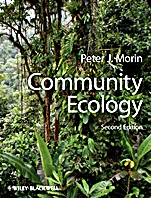
Community Ecology
ISBN 9781405124119
Autor: Peter J. Morin
Wydawca: Wiley
Dostępność: 3-6 tygodni
Cena: 316,05 zł
Przed złożeniem zamówienia prosimy o kontakt mailowy celem potwierdzenia ceny.
ISBN13: |
9781405124119 |
ISBN10: |
1405124113 |
Autor: |
Peter J. Morin |
Oprawa: |
Paperback |
Rok Wydania: |
2011-07-22 |
Numer Wydania: |
2nd Edition |
Ilość stron: |
418 |
Wymiary: |
246x189 |
Tematy: |
PS |
All life on earth occurs in natural assemblages called communities. Community ecology is the study of patterns and processes involving these collections of two or more species. Communities are typically studied using a diversity of techniques, including observations of natural history, statistical descriptions of natural patterns, laboratory and field experiments, and mathematical modelling. Community patterns arise from a complex assortment of processes including competition, predation, mutualism, indirect effects, habitat selection, which result in the most complex biological entities on earth – including iconic systems such as rain forests and coral reefs.
This book introduces the reader to a balanced coverage of concepts and theories central to community ecology, using examples drawn from terrestrial, freshwater, and marine systems, and focusing on animal, plant, and microbial species. The historical development of key concepts is described using descriptions of classic studies, while examples of exciting new developments in recent studies are used to point toward future advances in our understanding of community organization. Throughout, there is an emphasis on the crucial interplay between observations, experiments, and mathematical models.
This second updated edition is a valuable resource for advanced undergraduates, graduate students, and established scientists who seek a broad overview of community ecology. The book has developed from a course in community ecology that has been taught by the author since 1983.
Spis treści:
Preface.
Preface to the First Edition.
Part I: Communities: Basic Patterns and Elementary Processes.
1. Communities.
2. Competition: Mechanisms, Models, and Niches.
3. Competition: Experiments, Observations, and Null Models.
4. Predation and Communities. Empirical patterns.
5. Models of predation in simple communities.
6. Food Webs.
7. Mutualisms
.
8.Indirect Effects.
Part II: Factors Influencing Interactions Among Species.
9. Temporal Patterns: Seasonal Dynamics, Priority Effects, and Assembly Rules.
10. Habitat Selection.
11. Spatial Dynamics.
Part III: Large–scale, Integrative Community Phenomena.
12. Causes and Consequences of Diversity.
13. Succession.
14. Applied Community Ecology.
Appendix: Stability Analysis.
Bibliography.
Index.
Nota biograficzna:
Peter Morin is a leading experimental community ecologist. He is interested in many aspects of community ecology, including predator–prey interactions, food webs, and the causes and consequences of biological diversity.
Okładka tylna:
All life on earth occurs in natural assemblages called communities. Community ecology is the study of patterns and processes involving these collections of two or more species. Communities are typically studied using a diversity of techniques, including observations of natural history, statistical descriptions of natural patterns, laboratory and field experiments, and mathematical modelling. Community patterns arise from a complex assortment of processes including competition, predation, mutualism, indirect effects, habitat selection, which result in the most complex biological entities on earth – including iconic systems such as rain forests and coral reefs.
This book introduces the reader to a balanced coverage of concepts and theories central to community ecology, using examples drawn from terrestrial, freshwater, and marine systems, and focusing on animal, plant, and microbial species. The historical development of key concepts is described using descriptions of classic studies, while examples of exciting new developments in recent studies are used to point toward future advances in our understanding of community organization. Throughout, there is an emphasis on the crucial interplay between observat
ions, experiments, and mathematical models.
This second updated edition is a valuable resource for advanced undergraduates, graduate students, and established scientists who seek a broad overview of community ecology. The book has developed from a course in community ecology that has been taught by the author since 1983.
Koszyk
Książek w koszyku: 0 szt.
Wartość zakupów: 0,00 zł
Informacje


Kontakt
Gambit
Centrum Oprogramowania
i Szkoleń Sp. z o.o.
Al. Pokoju 29b/22-24
31-564 Kraków
Siedziba Księgarni
ul. Kordylewskiego 1
31-542 Kraków
+48 12 410 5991
+48 12 410 5987
+48 12 410 5989
Subskrypcje
Administratorem danych osobowych jest firma Gambit COiS Sp. z o.o. Na podany adres będzie wysyłany wyłącznie biuletyn informacyjny.
Autoryzacja płatności

Informacje na temat autoryzacji płatności poprzez PayU.

© Copyright 2012: GAMBIT COiS Sp. z o.o. Wszelkie prawa zastrzeżone.
Projekt i wykonanie: Alchemia Studio Reklamy