


Wydawcy
Katalog tematyczny
- Archeologia (109)
- Ekonomia, finanse, business (13704)
- Filozofia (1445)
- Historia (3040)
- Języki i językoznawstwo (2356)
- Lifestyle, hobby i rozrywka (475)
- Medycyna (9704)
- Nauki humanistyczne (4)
- Nauki o Ziemi i środowisku (2638)
- Nauki ścisłe (20412)
- Nauki społeczne (8486)
- Nauki techniczne (13450)
- Prawo (1696)
- Publikacje informacyjne i interdyscyplinarne (1288)
- Religia i wierzenia (917)
- Technika komputerowa (4067)
- Zdrowie, relacje międzyludzkie i rozwój osobisty (657)





Informacje szczegółowe o książce
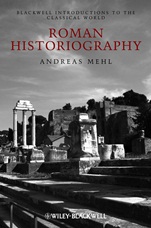
Roman Historiography: An Introduction to its Basic Aspects and Development
ISBN 9781405121835
Autor: Andreas Mehl, Hans–Friedrich Mueller
Wydawca: Wiley
Dostępność: 3-6 tygodni
Cena: 547,05 zł
Przed złożeniem zamówienia prosimy o kontakt mailowy celem potwierdzenia ceny.
ISBN13: |
9781405121835 |
ISBN10: |
1405121831 |
Autor: |
Andreas Mehl, Hans–Friedrich Mueller |
Oprawa: |
Hardback |
Rok Wydania: |
2011-04-18 |
Ilość stron: |
300 |
Wymiary: |
236x165 |
Tematy: |
CS |
Roman Historiography: An Introduction to its Basic Aspects and Development presents a comprehensive introduction to the development of Roman historical writings in the ancient world. Andreas Mehl traces the arc of ancient historical writing about Rome from its origins with the authors of clan history and fragmentary annalists to the writings of Byzantine scholar Procopius, the last major historian of the ancient world. Rooting his survey in the context of its Greek predecessors, and within the broader framework of Roman literature and society, Mehl discusses every historical writer of significance in the ancient Roman era and provides much more than simple biographical detail. Also considered are essential themes such as genre, teleology, the idea of Rome, and exemplary moral conduct. By paying scrupulous attention to political context and religious developments throughout the ancient world, Mehl reveals the evolution and interpenetration of both pagan and Christian historiography. This title offers a wealth of illuminating insights into the origins and development of the crucial historical writings of the living witnesses to the greatest empire the world has ever known.
Translator’s Preface. Introduction: The Importance of Ancient Historiography and the Purpose of this Book. Chapter 1: Ancient Literature and Roman Historiography. 1.1 Roman Literature and its Relation to Greek Literature. 1.2 Roman Historiography and the City of Rome. 1.3 The Claims of Artistry and Truth in Ancient, especially Roman, Historiography. 1.3.1 Literary Artistry and Moral Preoccupations in Ancient Historiography. 1.3.2 "History is what Actually Happened" –– Ancient Historiography and the Modern Science of History. Chapter 2: The Formation and Establishment of Tradition in the Ruling Class of the Early and Middle Roman Republic. 2.1 Family Histories and Clan Traditions. 2.2 The Annales Maximi and the Almanacs of Publius Mucius Scaevola. Chapter 3: Early Roman Historiography: Self–Justification and Memory in earlier Annalistic Writing. 3.1 Early Annalistic Writing (I). 3.1.1 Quintus Fabius Pictor. 3.1.2 Later Authors (From Cincius Alimentus to Postumius Albinus). 3.2 Early Annalistic Writing (II). 3.2.1 Marcus Porcius Cato. 3.2.2 Other Authors (from Cassius Hemina to Sempronius Asellio). 3.3 Early Historical Epic in Rome (Naevius and Ennius). Chapter 4: The Historiography of Rome between the Fronts of the Civil Wars. 4.1 Later Annalistic Writing: Optimates vs. Populares and Traditional Annalistic Writing vs. Contemporary History. 4.2 Autobiographies, Memoirs, Hypomnemata , Commentarii , and their Influence on the Historiography of Current Events. 4.2.1 Self–Representations until Cicero. 4.2.2 Caesar′s Commentarii. 4.3 The History of Current Events to Order and Contemporary Concepts of Historiography (Cicero). 4.4 Biography (Cornelius Nepos). 4.5 The Experience of the Collapsing and Ruined Republic. 4.5.1 Gaius Sallustius Crispus. 4.5.2 Gaius Asinius Pollio. 4.6 Antiquarian Writings. Chapter 5: Augustan Rome, Roman Empire, and other Peoples and Kingdoms. 5.1 Titus Livius: Roman History from Romulus to Augustus in its Entirety. 5.2 World History, the History of the World beyond Rome, and Roman History by Non–Romans and New Romans. 5.2.1 World History and Roman History (from Diodorus to Juba). 5.2.2 Dionysius of Halicarnassus: Early Rome and the Greeks. 5.2.3 Pompeius Trogus: World History round about Rome. 5.2.4 Universal Chronology (Castor and Dionysius). Chapter 6: Imperial History and the History of Emperors –– Imperial History as the History of Emperors. 6.1 Empire and "Republic": Senatorial Historiography. 6.1.1 Gaius (?) Velleius Paterculus. 6.1.2 Authors of the Julio–Claudian and Flavian Period (from Cremutius Cordus to Pliny the Younger). 6.1.3 Publius (?) Cornelius Tacitus. 6.1.4 Lucius Cl(audius) Cassius Dio Cocceianus. 6.2 Rome and Foreign Peoples. 6.2.1 Josephus / Flavius Josephus: Jews and Others. 6.2.2 Appian of Alexandria: A Retrospective View of the Establishment of Rome′s World Domination. 6.3 Imperial History as Imperial Biography. 6.3.1 Gaius Suetonius Tranquillus. 6.3.2 Marius Maximus and Herodian. 6.3.3 Historia Augusta / Scriptores Historiae Augustae. 6.4 Personal History and Biography in the High Empire beyond Roman Emperors. 6.4.1 Curtius Rufus and Arrian of Nicomedia: Histories of Alexander. 6.4.2 Plutarch of Chaeronea: Parallel Lives. 6.5 History in "Pocket–Size". 6.5.1 From the Epitome of Livy, the Epitome of Trogus, and Florus to Lucius Ampelius. 6.5.2 The Historical Epitomes of the Fourth Century A.D. (Aurelius Victor, Eutropius, Festus). 6.6 Exempla –Literature and Historical Understanding. Chapter 7: Roman History and Universal History between Classical Religion ("Paganism") and Christianity. 7.1 Zosimus and his Predecessors: Classically Religious Historiography and Historical Interpretation in a Christian Age. 7.2 Ammianus Marcellinus: Indifferent to Religion? 7.3 Christian Historiography. 7.3.1 Church History (Eusebius and Rufinus). 7.3.2 From Classically Religious Chronography to Christian Universal Chronicle (Eusebius, Jerome, Sulpicius). 7.3.3 Orosius: Universal History through the Lens of Theology. 7.3.4 Procopius of Caesarea: The History of Current Events in Transition from Rome to Byzantium. Chapter 8: Some Basic Principles of Ancient Historical Thought. Chronological Table. Select Bibliography 1. General Bibliography. 1.1 Editions, Translations, and Commentaries for the Historiographical and Biographical Works Treated in this Book. 1.2 Editions of Historiographical Works and Historical Epics in Greek and Latin that Survive only in Fragments. 1.3 Histories of Greek and Latin Literature, especially Historiography: Recent Surveys and Collections. 1.4 Ancient Historiography, especially Roman: its Basic Literary, Social, and Intellectual Contexts. 2. The Formation and Establishment of Tradition in the Ruling Class of the Early and Middle Roman Republic. 3. Early Roman Historiography: Self–Justification and Memory in Early Annalistic Writing. 4. The Historiography of Rome between the Fronts of the Civil Wars. 5. Augustan Rome, Roman Empire, and other Peoples and Kingdoms. 6. Imperial History and the History of Emperors –– Imperial History as the History of Emperors. 7. Roman History and Universal History between Classical Religion ("Paganism") and Christianity. Index.
Andreas Mehl is Professor of Ancient History at the Martin Luther University at Halle and Wittenberg. He is the author of Seleukos Nikator und sein Reich (1986); Tacitus über Kaiser Claudius: Die Ereignisse Am Hof (1974); and Römische Geschichtsschreibung: Grundlagen und Entwicklungen: eine Einführung (Stuttgart, 2001). Hans–Friedrich Mueller is the William D. Williams Professor of Classics at Union College in Schenectady, New York. He is the author of Roman Religion in Valerius Maximus (2002) and the editor of an abridgment of Edward Gibbon’s Decline and Fall of the Roman Empire (2003).
“In all, Mehl’s Roman Historiography amounts to a helpful handbook for students of the ancient world. It seems an especially good means for readers to gain a quick appraisal of the German approach to its subject. Although some may criticize Mehl’s assessments and emphases on occasion, the book presents a concise and readable introduction to work of Roman historians, biographers, chronographers, antiquarians, and kindred authors.” ( New England Classical Journal , 1 May 2013) Named CHOICE Outstanding Title for 2012 "Appropriate for advanced undergraduate students, this work provides a foundation for further study of classical historical writing. (Annotation ©2011 Book News Inc. Portland, OR)." (Book News, 1 August 2011)
Koszyk
Książek w koszyku: 0 szt.
Wartość zakupów: 0,00 zł
Informacje


Kontakt
Gambit
Centrum Oprogramowania
i Szkoleń Sp. z o.o.
Al. Pokoju 29b/22-24
31-564 Kraków
Siedziba Księgarni
ul. Kordylewskiego 1
31-542 Kraków
+48 12 410 5991
+48 12 410 5987
+48 12 410 5989
Subskrypcje
Administratorem danych osobowych jest firma Gambit COiS Sp. z o.o. Na podany adres będzie wysyłany wyłącznie biuletyn informacyjny.
Autoryzacja płatności

Informacje na temat autoryzacji płatności poprzez PayU.

© Copyright 2012: GAMBIT COiS Sp. z o.o. Wszelkie prawa zastrzeżone.
Projekt i wykonanie: Alchemia Studio Reklamy