


Wydawcy
Katalog tematyczny
- Archeologia (109)
- Ekonomia, finanse, business (13704)
- Filozofia (1445)
- Historia (3040)
- Języki i językoznawstwo (2356)
- Lifestyle, hobby i rozrywka (475)
- Medycyna (9704)
- Nauki humanistyczne (4)
- Nauki o Ziemi i środowisku (2638)
- Nauki ścisłe (20412)
- Nauki społeczne (8486)
- Nauki techniczne (13450)
- Prawo (1696)
- Publikacje informacyjne i interdyscyplinarne (1288)
- Religia i wierzenia (917)
- Technika komputerowa (4067)
- Zdrowie, relacje międzyludzkie i rozwój osobisty (657)





Informacje szczegółowe o książce
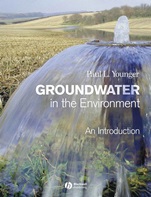
Groundwater in the Environment: An Introduction
ISBN 9781405121439
Autor: Paul L. Younger
Wydawca: Wiley
Dostępność: 3-6 tygodni
Cena: 350,70 zł
Przed złożeniem zamówienia prosimy o kontakt mailowy celem potwierdzenia ceny.
ISBN13: |
9781405121439 |
ISBN10: |
1405121432 |
Autor: |
Paul L. Younger |
Oprawa: |
Paperback |
Rok Wydania: |
2006-07-14 |
Ilość stron: |
336 |
Wymiary: |
243x188 |
Tematy: |
AT |
This accessible new textbook provides a thorough introduction to all aspects of groundwater systems and their management. Using straightforward language and analogies to everyday experiences, it explains the origins, nature, and behavior of subsurface water without resorting to complicated mathematics.
Groundwater in the Environment draws on case studies and cutting–edge research from around the world, giving a unique insight into groundwater occurring in a wide range of different climate zones and geological settings. This book:
provides a robust, practical introduction to groundwater quality, and a succinct summary of modern remedial technologies for polluted groundwaters
explores how groundwater fits into the wider natural environment, especially in relation to freshwater ecosystems
considers the vulnerability of groundwater systems and the effects of pollution, climate change, land–use change, and overexploitation
examines human dependence on water and the effect that this has on groundwater systems
presents vivid examples of geohazards associated with ground waters
explains the whys and wherefores of groundwater modeling
examines competing philosophies of groundwater management, making the case for approaches which take social, economic and ecological issues into account.
Goundwater in the Environment provides an up–to–date, essential introduction for undergraduate students of environmental sciences, geography and geology. It will also be invaluable to professionals working in various fields of natural resource management who need accessible information on groundwater but who are reluctant to read conventional texts full of mathematical notation. For practicing hydrogeologists and engineers without formal training in freshwater ecology, this book provides a `crash course′ in the new frontiers of groundwater management.
Artwork from th
e book is available to instructors online at www.blackwellpublishing.com/younger and by request on CD–ROM.
Spis treści:
Preface.
Acknowledgments.
1. Occurrence of Water Underground.
1.1. Groundwater and the Global Water Cycle.
1.2. The Natural Zonation of Water Underground.
1.3. Water Pressure, the Saturated Zone, Aquifers, and Aquitards.
1.4. Aquifer Properties: Effective Porosity, Permeability, Storage.
1.5. The Geology of Groundwater Occurrence.
2. Sources of Groundwater: Recharge Processes.
2.1. Provenance of Groundwater.
2.2. Recharge Processes.
2.3. Movement of Water through the Unsaturated Zone.
3. Groundwater Movement.
3.1. “The Force that Drives the Water through the Rocks”.
3.2. Quantifying Flow Rates: Darcy’s Law and Hydraulic Conductivity.
3.3. Groundwater Flow Patterns.
3.4. Quantifying the Hydraulic Properties of Aquifers.
4. Natural Groundwater Quality.
4.1. How to Read a Water Analysis.
4.2. Chemical Characteristics of Natural Groundwaters: Origins and Significance.
4.3. Displaying and Classifying Groundwater Quality.
4.4. The evolution of Natural Groundwater Quality.
5. Groundwater Discharge and Catchment Hydrology.
5.1. Groundwater Discharge Features.
5.2. The role of Groundwater in Generating Surface Runoff.
5.3. Estimating the Groundwater Component of Catchment Runoff.
5.4. Physical Controls on Groundwater Discharge at the Catchment Scale.
6. Groundwater and Freshwater Ecosystems.
6.1. Freshwater Ecosystems.
6.2. Groundwater–fed Wetland Ecosystems.
6.3. Fluvial Ecosystems and the Hyporheic Zone.
6.4. Groundwater Ecology.
7. Groundwater as a Resource.
7.1. Current Resource Utilization of Groundwater.
7.2. Constraints on Groundwater Utility.
7.3. Methods of Groundwater Abstraction.
7.4. Conjunctive use of Groundwaters with Surface Waters.
7.5. Groundwater as a Thermal Resource.
8. Groundwater Hazards.
8.1. Geohazards and Hydro–geohazards.
8.2. Natural Hydro–geohazards.
8.3. Hydro–geohazards Induced by Human Activities.
9. Groundwater Under Threat.
9.1. Threats to Groundwater Systems.
9.2. Depletion of Groundwater Quantity.
9.3. Degradation of Groundwater Quality.
10. Modeling Groundwater Systems.
10.1. Why Simulate Groundwater Systems?.
10.2. Conceptual Models.
10.3. Representing the Conceptual Model Mathematically.
10.4. Ways of Doing the Sums: Solving Physically Based Models.
10.5. One Step Beyond: Simulating Groundwater Quality.
10.6. Groundwater Modeling In Practice.
11. Managing Groundwater Systems.
11.1. Approaches to Groundwater Resource Management.
11.2. Towards Sustainable Groundwater Development.
11.3. Groundwater Control Measures to Mitigate Geohazards.
11.4. Preventing Groundwater Contamination.
11.5. Remediating Contaminated Groundwaters.
References.
Glossary.
Index
Nota biograficzna:
Paul L. Younger (PhD C.Geol. C.Eng.) is HSBC Professor of Environmental Technologies at the University of Newcastle, United Kingdom, where he directs water research within the Institute for Research on Environment and Sustainability, and is also a Director of the leading groundwater control contracting company, Project Dewatering Ltd. His groundwater engineering experience spans more than 20 years and six continents, ranging from hand–digging water wells with indigenous communities in the Americas, through sophisticated numerical modelling of pollutant migration in aquifers, to the design of novel remediation systems for extremely contaminated groundwaters.
Okładka tylna:
This accessible new textbook provides a thorough introduction to all aspects of groundwater systems and their management. Using straightforward language and analogies to
everyday experiences, it explains the origins, nature, and behavior of subsurface water without resorting to complicated mathematics.
Groundwater in the Environment draws on case studies and cutting–edge research from around the world, giving a unique insight into groundwater occurring in a wide range of different climate zones and geological settings. This book:
provides a robust, practical introduction to groundwater quality, and a succinct summary of modern remedial technologies for polluted groundwaters
explores how groundwater fits into the wider natural environment, especially in relation to freshwater ecosystems
considers the vulnerability of groundwater systems and the effects of pollution, climate change, land–use change, and overexploitation
examines human dependence on water and the effect that this has on groundwater systems
presents vivid examples of geohazards associated with ground waters
explains the whys and wherefores of groundwater modeling
examines competing philosophies of groundwater management, making the case for approaches which take social, economic and ecological issues into account.
Goundwater in the Environment provides an up–to–date, essential introduction for undergraduate students of environmental sciences, geography and geology. It will also be invaluable to professionals working in various fields of natural resource management who need accessible information on groundwater but who are reluctant to read conventional texts full of mathematical notation. For practicing hydrogeologists and engineers without formal training in freshwater ecology, this book provides a `crash course′ in the new frontiers of groundwater management.
Artwork from the book is available to instructors online at www.blackwellpublishing.com/younger and by request on CD–ROM.
Koszyk
Książek w koszyku: 0 szt.
Wartość zakupów: 0,00 zł
Informacje


Kontakt
Gambit
Centrum Oprogramowania
i Szkoleń Sp. z o.o.
Al. Pokoju 29b/22-24
31-564 Kraków
Siedziba Księgarni
ul. Kordylewskiego 1
31-542 Kraków
+48 12 410 5991
+48 12 410 5987
+48 12 410 5989
Subskrypcje
Administratorem danych osobowych jest firma Gambit COiS Sp. z o.o. Na podany adres będzie wysyłany wyłącznie biuletyn informacyjny.
Autoryzacja płatności

Informacje na temat autoryzacji płatności poprzez PayU.

© Copyright 2012: GAMBIT COiS Sp. z o.o. Wszelkie prawa zastrzeżone.
Projekt i wykonanie: Alchemia Studio Reklamy