


Wydawcy
Katalog tematyczny
- Archeologia (109)
- Ekonomia, finanse, business (13704)
- Filozofia (1445)
- Historia (3040)
- Języki i językoznawstwo (2356)
- Lifestyle, hobby i rozrywka (475)
- Medycyna (9704)
- Nauki humanistyczne (4)
- Nauki o Ziemi i środowisku (2638)
- Geografia (299)
- Nauki o Ziemi (1661)
- Geologia (414)
- Hydrologia (237)
- Meteorologia i klimatologia (114)
- Paleontologia (33)
- Wulkanologia i sejsmologia (44)
- Planowanie przestrzenne (53)
- Środowisko (607)
- Nauki ścisłe (20412)
- Nauki społeczne (8486)
- Nauki techniczne (13450)
- Prawo (1696)
- Publikacje informacyjne i interdyscyplinarne (1288)
- Religia i wierzenia (917)
- Technika komputerowa (4067)
- Zdrowie, relacje międzyludzkie i rozwój osobisty (657)





Informacje szczegółowe o książce
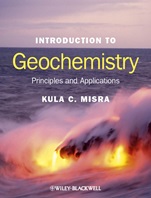
Introduction to Geochemistry: Principles and Applications
ISBN 9781405121422
Autor: Kula C. Misra
Wydawca: Wiley
Dostępność: 3-6 tygodni
Cena: 311,85 zł
Przed złożeniem zamówienia prosimy o kontakt mailowy celem potwierdzenia ceny.
ISBN13: |
9781405121422 |
ISBN10: |
1405121424 |
Autor: |
Kula C. Misra |
Oprawa: |
Paperback |
Rok Wydania: |
2012-04-13 |
Ilość stron: |
452 |
Wymiary: |
277x220 |
Tematy: |
RB |
BLURB NOT APPROVED BY AUTHOR. FOR INTERNAL USE ONLY.
Geochemistry is a core course in all earth science degree programs.
We have conducted careful research into the sort of text that is needed, looking carefully at the approach of all the competitors and analysing some 30 geochemistry course details from North American universities. Professor Bruce Yardley at Leeds University also provided valuable insight into students needs and commented on earlier drafts of the outline. The author’s blurb below and the contents are the result of this research (note the full proposal is 23 pages in length, the BPS details are much condensed.)
The proposed book is intended to serve as the text for an upper–level undergraduate course in geochemistry for geology majors with an introductory–level background in mineralogy, petrology, and calculus.
For reasons stated in the next section, none of the geochemistry books available at present meets this need adequately. Since I started teaching our introductory course on geochemistry some 15 years ago, I haven’t been able to find a textbook that spans the breadth of material I cover in my course at a level I consider appropriate for geology majors. Apparently, many of my colleagues at other universities have experienced the same problem. It is my hope that the proposed book will bridge this gap.
The proposed book is designed to meet what may be considered the essential requirements of a text suitable for an upper level undergraduate course in geochemistry: The strengths of the book may be summarized as follows:
(a) It covers a broad rage of topics that bear on the distribution and abundance of elements (and isotopes) in geologic systems on different scales as a result of chemical and isotopic reactions
(b) It develops relevant geochemical principles in a logical sequence and with an appropriate balance between qualitative reasoning and quantitative rigor.
(c) The book emphasizes the pract
ical applications of geochemical principles to geological systems on different scales. Examples of such applications discussed in the book include stability of mineral assemblages of fixed and variable compositions under specified geochemical conditions, chemical weathering, diagenesis of sediments, geothermometry and geobarometry, partial melting and crystallization of magmas; age–dating of minerals and rocks; organic matter in sediments, mass balance in the oceans, biogeochemical cycles; global warming; evolution of crust, oceans, and atmosphere through geologic time, etc.
(d) It teaches how to construct and interpret phase diagrams involving different variables — pressure, temperature, activity, chemical potential, fugacity, partial pressure, Eh, pH, etc — as necessary to address the problem being considered.
(e) It helps the students develop problem–solving techniques through worked–out examples and a challenging problem–set at the end of each chapter.
Spis treści:
Outline of the Proposed Book.
Principles and applications of chemical and isotopic reactions that control the distribution and abundance of elements and isotopes in geologic systems at different scales constitute the central theme of the proposed book..
The strategy adopted here is to start with interactions at the smallest scale (atoms and molecules), then deal with multi–phase, mesoscale systems (e.g., mineral assemblages), and finally apply the accumulated wisdom to the understanding of macroscale/megascale systems (e.g., mantle–crust; crust–hydrosphere–atmosphere). This is a logical structure because the total response of a geologic system can normally be rationalized on the basis of what happens (or is likely to happen) on smaller scales within the system.
As can be seen from the outline (attached), the book consists of 13 chapters, which (excluding Chapter 1 – Introduction) are divided into fo
ur parts as summarized below:.
Part I – Crystal Chemistry.
This part contains a brief review of atomic structure of the elements (Ch. 2) and chemical bonds that hold atoms together in compounds (Ch. 3)..
Part II – Chemical Reactions.
This part starts with a discussion of the basic concepts of equilibrium thermodynamics for closed systems comprised of pure phases (Ch. 4) and then introduces the concept of chemical potential (Ch. 5) that is required to handle more complex, multi–component systems. The next three chapters explore applications of the thermodynamic principles to selected categories of chemical reactions that are of particular interest to earth scientists: geothermometry and geobarometry (Ch. 6); reactions involving aqueous solutions (Ch. 7), with emphasis on dissolution/precipitation of carbonate minerals and chemical weathering of silicate minerals; and oxidation–reduction reactions, especially at the near–surface environment (Ch. 8). The last chapter of this part (Ch. 9) briefly discusses the kinetics of chemical reactions, which constrain the progress of thermodynamically viable reactions..
Part III – Isotope Geochemistry.
The first chapter in this part (Ch. 10) deals with radiogenic isotopes, with focus on their application to age–dating of minerals and rocks. Fractionation of stable isotopes (oxygen, hydrogen, sulfur, and carbon) and their geologic applications (geothermometry, source issues, interpretation of paleoclimate, etc.) are discussed in the next chapter (Ch. 11)..
Part IV – Geochemical Systems.
Application of the principles developed in earlier chapters to understand geochemical interactions among mantle, crust, hydrosphere, and atmosphere is the subject matter of this part the book. This part is divided into two chapters. The first one, the mantle–crust system (Ch 12), begins with an overview of the solar system and origin of the earth. The main focus of the ch
apter, the mantle–crust interaction, is dominated by two themes: (a) magma generation by partial melting in the upper mantle and magma crystallization into igneous rocks that have formed the oceanic crust and much of the continental crust; and (b) evolution of the crust through geologic time based on the framework of plate tectonics. The last chapter of the book (Ch 13) reviews the compositions of the atmosphere and the oceans, discusses biogeochemical cycles, and ends with a discussion of the interactions that have shaped the evolution of the crust, oceans, and atmosphere through geologic time.
Okładka tylna:
BLURB NOT APPROVED BY AUTHOR. FOR INTERNAL USE ONLY.
Geochemistry is a core course in all earth science degree programs.
We have conducted careful research into the sort of text that is needed, looking carefully at the approach of all the competitors and analysing some 30 geochemistry course details from North American universities. Professor Bruce Yardley at Leeds University also provided valuable insight into students needs and commented on earlier drafts of the outline. The author’s blurb below and the contents are the result of this research (note the full proposal is 23 pages in length, the BPS details are much condensed.)
The proposed book is intended to serve as the text for an upper–level undergraduate course in geochemistry for geology majors with an introductory–level background in mineralogy, petrology, and calculus.
For reasons stated in the next section, none of the geochemistry books available at present meets this need adequately. Since I started teaching our introductory course on geochemistry some 15 years ago, I haven’t been able to find a textbook that spans the breadth of material I cover in my course at a level I consider appropriate for geology majors. Apparently, many of my colleagues at other universities have experienced the same problem. It is my hope that the proposed
Koszyk
Książek w koszyku: 0 szt.
Wartość zakupów: 0,00 zł
Informacje


Kontakt
Gambit
Centrum Oprogramowania
i Szkoleń Sp. z o.o.
Al. Pokoju 29b/22-24
31-564 Kraków
Siedziba Księgarni
ul. Kordylewskiego 1
31-542 Kraków
+48 12 410 5991
+48 12 410 5987
+48 12 410 5989
Subskrypcje
Administratorem danych osobowych jest firma Gambit COiS Sp. z o.o. Na podany adres będzie wysyłany wyłącznie biuletyn informacyjny.
Autoryzacja płatności

Informacje na temat autoryzacji płatności poprzez PayU.

© Copyright 2012: GAMBIT COiS Sp. z o.o. Wszelkie prawa zastrzeżone.
Projekt i wykonanie: Alchemia Studio Reklamy