


Wydawcy
Katalog tematyczny
- Archeologia (109)
- Ekonomia, finanse, business (13704)
- Filozofia (1445)
- Historia (3040)
- Języki i językoznawstwo (2356)
- Lifestyle, hobby i rozrywka (475)
- Medycyna (9704)
- Nauki humanistyczne (4)
- Nauki o Ziemi i środowisku (2638)
- Nauki ścisłe (20412)
- Nauki społeczne (8486)
- Nauki techniczne (13450)
- Prawo (1696)
- Publikacje informacyjne i interdyscyplinarne (1288)
- Religia i wierzenia (917)
- Technika komputerowa (4067)
- Zdrowie, relacje międzyludzkie i rozwój osobisty (657)





Informacje szczegółowe o książce
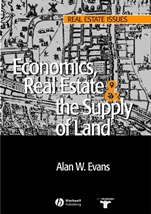
Economics, Real Estate and the Supply of Land
ISBN 9781405118620
Autor: Alan W. Evans
Wydawca: Wiley
Dostępność: 3-6 tygodni
Cena: 605,85 zł
Przed złożeniem zamówienia prosimy o kontakt mailowy celem potwierdzenia ceny.
ISBN13: |
9781405118620 |
ISBN10: |
1405118628 |
Autor: |
Alan W. Evans |
Oprawa: |
Paperback |
Rok Wydania: |
2004-05-26 |
Ilość stron: |
276 |
Wymiary: |
247x174 |
Tematy: |
KC |
The book draws together the economic literature relating to the supply of land for development. The standard view appears to be that the owners of land have no interest other than to allow their land to be used for the activity which would yield the highest income. But in reality this is not so and the book′s aim is to demonstrate this, to set out the reasons and to show the economic effects of the fact that landowners have other motives.
The book covers the supply of land for urban development and shows how land has characteristics which differentiate it from other factors of production which will also affect its supply for some uses, e.g. land is fixed in location and its price and value are inseparable from where it is.
New light is cast on the market for land (by concentrating on the supply side), and on land use planning (by taking an economic viewpoint).
Spis treści:
Chapter 1: Introduction: The Market for Land and Property.
The supply of land.
The demand for land.
The development of a theory of the supply of land.
Chapter 2: Land Values, Rents and Demand.
Introduction.
Ricardian rent theory.
Neoclassical rent theory.
Ricardian theory remembered.
Planning controls and rent theory.
Hierarchical planning systems.
Urban rent theory.
Rents, economic and commercial.
Summary and conclusion.
Chapter 3: Coping with Changes in Demand.
Introduction.
The extensive margins.
The intensive margin.
Capital longevity and the asymmetry of change.
The process of change in the housing market.
Summary and conclusions.
Chapter 4: How Efficient is the Property Market?.
Introduction.
The economic concept of efficiency.
Efficient markets.
The evidence.
Tests of market efficiency.
Conclusions.
Chapter 5: Market Inefficiency: Causes and Consequences.
Introduction.
Why the property market is imperfect and inefficient.
Price d
etermination and the theory of the core.
The consequences.
Conclusions.
Chapter 6: The Supply of Land for a Particular Use: Speculation and Uncertainty.
Introduction.
Speculation.
Uncertainty.
Summary and conclusion.
Chapter 7: The Supply of Land for a Particular Use: Occupier Performances and Residential Attachment.
Introduction.
Owner occupier attachment.
Some empirical evidence.
Summary and conclusions.
Chapter 8: The Ownership of Land.
Introduction.
Tenants, owner occupiers, and the supply of land.
Ownership and change.
Summary and conclusions.
Chapter 9: Land Ownership, Politics and Society.
Introduction.
Society and the ownership of land.
Alternative forms of ownership and tenancy.
A libertarian view.
Summary.
Chapter 10: Ownership and Control: Monopoly.
Introduction.
Monopoly rents and wine production.
Monopoly rents and shopping centres.
Summary and conclusions.
Chapter 11: Ownership and Control: Minimum Rents.
Introduction.
Minimum rents.
Minimum rents in an urban environment.
Summary and conclusions.
Chapter 12: Information, Uncertainty and the Property Market.
Introduction.
Modelling the search for information.
Searching for housing in practice.
The housing market.
The developer and land supply restriction.
Summary and conclusions.
Chapter 13: Land Availability and Land Banking.
Introduction.
Land availability.
Land banking by private firms.
Public land banking.
Summary and conclusions.
Chapter 14: Contiguity: Site Assembly.
Introduction.
A game theory approach.
A question of time.
Conclusion.
Chapter 15: Contiguity: Compulsory Purchase and the Scale of Development.
Introduction.
Compulsory purchase and the speed of acquisition.
Scale economies, acquisition costs, and history.
Summary and conclusion.
Chapter 16: Co
ntiguity: Land Reallocation and the Price of Land.
Introduction.
Land reallocation or adjustment.
Size of site and the price of land.
Summary and conclusions.
Chapter 17: The Taxation of Land and Development Gains.
Introduction.
The undeserving landowner.
Betterment.
Economic theory and taxes on development.
Land taxation in recent British history.
Summary and conclusions.
Chapter 18: Annual Taxation and the Nationalisation of Land.
Introduction.
Property taxes and the rates.
Site value taxation.
Land nationalisation.
Summary and conclusions.
Chapter 19: Themes and Changes in Perception.
Recapitulation.
Coda
Nota biograficzna:
Alan Evans, Professor of Environmental Economics, Centre for Spatial and Real Estate Economics, School of Business, University of Reading
Okładka tylna:
The book draws together the economic literature relating to the supply of land for development. The standard view appears to be that the owners of land have no interest other than to allow their land to be used for the activity which would yield the highest income. But in reality this is not so and the book′s aim is to demonstrate this, to set out the reasons and to show the economic effects of the fact that landowners have other motives.
The book covers the supply of land for urban development and shows how land has characteristics which differentiate it from other factors of production which will also affect its supply for some uses, e.g. land is fixed in location and its price and value are inseparable from where it is.
New light is cast on the market for land (by concentrating on the supply side), and on land use planning (by taking an economic viewpoint).
Koszyk
Książek w koszyku: 0 szt.
Wartość zakupów: 0,00 zł
Informacje


Kontakt
Gambit
Centrum Oprogramowania
i Szkoleń Sp. z o.o.
Al. Pokoju 29b/22-24
31-564 Kraków
Siedziba Księgarni
ul. Kordylewskiego 1
31-542 Kraków
+48 12 410 5991
+48 12 410 5987
+48 12 410 5989
Subskrypcje
Administratorem danych osobowych jest firma Gambit COiS Sp. z o.o. Na podany adres będzie wysyłany wyłącznie biuletyn informacyjny.
Autoryzacja płatności

Informacje na temat autoryzacji płatności poprzez PayU.

© Copyright 2012: GAMBIT COiS Sp. z o.o. Wszelkie prawa zastrzeżone.
Projekt i wykonanie: Alchemia Studio Reklamy