


Wydawcy
Katalog tematyczny
- Archeologia (109)
- Ekonomia, finanse, business (13704)
- Filozofia (1445)
- Historia (3040)
- Języki i językoznawstwo (2356)
- Lifestyle, hobby i rozrywka (475)
- Medycyna (9704)
- Nauki humanistyczne (4)
- Nauki o Ziemi i środowisku (2638)
- Nauki ścisłe (20412)
- Astronomia (294)
- Biologia (5119)
- Chemia (6540)
- Chemia analityczna (361)
- Chemia fizyczna (346)
- Chemia nieorganiczna (137)
- Chemia organiczna (535)
- Krystalografia (27)
- Minerologia (46)
- Fizyka (3309)
- Matematyka (4574)
- Nauki ścisłe, ogólnie (503)
- Nauki społeczne (8486)
- Nauki techniczne (13450)
- Prawo (1696)
- Publikacje informacyjne i interdyscyplinarne (1288)
- Religia i wierzenia (917)
- Technika komputerowa (4067)
- Zdrowie, relacje międzyludzkie i rozwój osobisty (657)





Informacje szczegółowe o książce
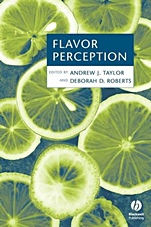
Flavor Perception
ISBN 9781405116275
Autor: Andrew J. Taylor, Deborah D. Roberts
Wydawca: Wiley
Dostępność: 3-6 tygodni
Cena: 1 051,05 zł
Przed złożeniem zamówienia prosimy o kontakt mailowy celem potwierdzenia ceny.
ISBN13: |
9781405116275 |
ISBN10: |
1405116277 |
Autor: |
Andrew J. Taylor, Deborah D. Roberts |
Oprawa: |
Hardback |
Rok Wydania: |
2004-06-15 |
Ilość stron: |
304 |
Wymiary: |
238x156 |
Tematy: |
PN |
Unlike other human senses, the exact mechanisms that lead to our perception of flavor have not yet been elucidated. It is recognised that the process involves a wide range of stimuli, which are thought likely to interact in a complex way, but, since the chemical compounds and physical structures that activate the flavor sensors change as the food is eaten, measurements of the changes in stimuli with time are essential to an understanding of the relationship between stimuli and perception.
It is clear that we need to consider the whole process – the release of flavor chemicals in the mouth, the transport processes to the receptors, the specificity and characteristics of the receptors, the transduction mechanisms and the subsequent processing of signals locally and at higher centres in the brain.
This book provides a state–of–the–art review of our current understanding of the key stages of flavor perception for those working in the flavor field, whether in the academic or industrial sector. In particular, it is directed at food scientists and technologists, ingredients suppliers and sensory scientists.
Spis treści:
Contributors.
Preface.
1. Measuring proximal stimuli involved in flavour perception (Andrew J. Taylor and Joanne Hort, Division of Food Sciences, University of Nottingham, UK).
2. The role of oral processing in flavour perception (Jon F. Prinz and Rene De Wijk, Wageningen Centre for Food Sciences, Wageningen, The Netherlands).
3. The cellular basis of flavour perception: taste and aroma (Nancy E. Rawson and Xia Li, Monell Chemical Senses, Philadelphia, USA).
4. Structural recognition between odorants, olfactory–binding proteins and olfactory receptors, first events in odour coding (J.C. Pernollet and Loïc Briand, INRA, Jouy En Josas, France).
5. Oral chemesthesis: an integral component of flavour (Barry G. Green, School of Medicine, Yale Univ
ersity, Connecticut, USA).
6. Flavour perception and the learning of food preferences (Anthony A. Blake, Firmenich SA, Geneva, Switzerland).
7. Functional magnetic resonance imaging of human olfaction (M. Wiesmann, Abteilung für Neuroradiologie, Universitätsklinikum München – Großhadern, München, Germany, Birgit Kettenmann, Department of Radiology, Virginia Commonwealth University Health System, Virginia, USA and Gerd G. Kobal, Sensory Research, WSA Philip Morris USA, Richmond, Virginia, USA).
8. Flavor interactions at the sensory level (Russell R. Keast, Pamela H. Dalton and Paul A.S. Breslin, Monell Chemical Senses Centre, Philadelphia, USA).
9. Psychological processes in flavour perception (John Prescott, School of Psychology, James Cook University, Cairns, Australia).
Index.
Nota biograficzna:
Andrew J. Taylor is Professor of Flavour Technology at the University of Nottingham, UK.
Deborah D. Roberts is at Food and Flavor Science Consulting LLC, Chesterfield, Missouri, USA.
Okładka tylna:
Unlike other human senses, the exact mechanisms that lead to our perception of flavor have not yet been elucidated. It is recognised that the process involves a wide range of stimuli, which are thought likely to interact in a complex way, but, since the chemical compounds and physical structures that activate the flavor sensors change as the food is eaten, measurements of the changes in stimuli with time are essential to an understanding of the relationship between stimuli and perception.
It is clear that we need to consider the whole process – the release of flavor chemicals in the mouth, the transport processes to the receptors, the specificity and characteristics of the receptors, the transduction mechanisms and the subsequent processing of signals locally and at higher centres in the brain.
This book provides a state–of&#
8211;the–art review of our current understanding of the key stages of flavor perception for those working in the flavor field, whether in the academic or industrial sector. In particular, it is directed at food scientists and technologists, ingredients suppliers and sensory scientists.
Koszyk
Książek w koszyku: 0 szt.
Wartość zakupów: 0,00 zł
Informacje


Kontakt
Gambit
Centrum Oprogramowania
i Szkoleń Sp. z o.o.
Al. Pokoju 29b/22-24
31-564 Kraków
Siedziba Księgarni
ul. Kordylewskiego 1
31-542 Kraków
+48 12 410 5991
+48 12 410 5987
+48 12 410 5989
Subskrypcje
Administratorem danych osobowych jest firma Gambit COiS Sp. z o.o. Na podany adres będzie wysyłany wyłącznie biuletyn informacyjny.
Autoryzacja płatności

Informacje na temat autoryzacji płatności poprzez PayU.

© Copyright 2012: GAMBIT COiS Sp. z o.o. Wszelkie prawa zastrzeżone.
Projekt i wykonanie: Alchemia Studio Reklamy