


Wydawcy
Katalog tematyczny
- Archeologia (109)
- Ekonomia, finanse, business (13704)
- Filozofia (1445)
- Historia (3040)
- Języki i językoznawstwo (2356)
- Lifestyle, hobby i rozrywka (475)
- Medycyna (9704)
- Nauki humanistyczne (4)
- Nauki o Ziemi i środowisku (2638)
- Nauki ścisłe (20412)
- Astronomia (294)
- Biologia (5119)
- Biochemia (575)
- Biologia człowieka (14)
- Biologia komórkowa (377)
- Biologia molekularna (398)
- Biologia rozwoju (130)
- Biologia, ogólnie (1277)
- Botanika (280)
- Hydrobiologia (92)
- Mikrobiologia (363)
- Mykologia (22)
- Zoologia (303)
- Chemia (6540)
- Fizyka (3309)
- Matematyka (4574)
- Nauki ścisłe, ogólnie (503)
- Nauki społeczne (8486)
- Nauki techniczne (13450)
- Prawo (1696)
- Publikacje informacyjne i interdyscyplinarne (1288)
- Religia i wierzenia (917)
- Technika komputerowa (4067)
- Zdrowie, relacje międzyludzkie i rozwój osobisty (657)






Informacje szczegółowe o książce
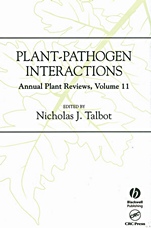
Annual Plant Reviews: Plant–Pathogen Interactions
ISBN 9781405114332
Autor: Nicholas J. Talbot
Wydawca: Wiley
Dostępność: 3-6 tygodni
Cena: 1 170,75 zł
Przed złożeniem zamówienia prosimy o kontakt mailowy celem potwierdzenia ceny.
ISBN13: |
9781405114332 |
ISBN10: |
1405114339 |
Autor: |
Nicholas J. Talbot |
Oprawa: |
Hardback |
Rok Wydania: |
2004-04-30 |
Ilość stron: |
264 |
Wymiary: |
244x166 |
Tematy: |
PS |
Annual Plant Reviews, Volume 11
Plant diseases are destructive and threaten virtually any crop grown on a commercial scale. They are kept in check by plant breeding strategies that have introgressed disease resistance genes into many important crops, and by the deployment of costly control measures, such as antibiotics and fungicides. However, the capacity for the agents of plant disease – viruses, bacteria, fungi and oomycetes – to adapt to new conditions, overcoming disease resistance and becoming resistant to pesticides, is very great. For these reasons, understanding the biology of plant diseases is essential for the development of durable control strategies.
This volume provides an overview of our current knowledge of plant–pathogen interactions and the establishment of plant disease, drawing together fundamental new information on plant infection mechanisms and host responses. The role of molecular signals, gene regulation and the physiology of pathogenic organisms are emphasised, but the role of the prevailing environment in the conditioning of disease is also discussed.
This is a book for researchers and professionals in plant pathology, cell biology, molecular biology and genetics.
Visit www.blackwellplantsci.com the plant science site from Blackwell Publishing.
Spis treści:
List of Contributors.
Preface.
1. Emerging themes in plant–pathogen interactions.
Nicholas J. Talbot, University of Exeter, UK.
2. Tobacco mosaic virus.
John Carr, University of Cambridge, UK.
3. Infection with potyviruses.
Minna–Liisa Rajamäki, Tuula Mäki–Valkama, Kristiina Mäkinen and Jari Valkonen, Department of Applied Biology, University of Helsinki, Finland.
4. The Ralstonia solanacearum–plant interaction.
Christian Boucher and Stéphane Genin, CNRS – INRA, Castanet Tolosa, France.
5. The Pseudomonas syringae–bean interaction.
Susan S. Hirano and Christen D. Upper, University of Wisconsin, Madison, USA.
6. Fungal pathogenesis in the rice blast fungus Magnaporthe Grisea.
Chaoyang Xue, Lei Li, Kyeyong Seong and Jin–Rong Xu, Department of Botany and Plant Pathology, Purdue University, West Lafayette, Indiana, USA.
7. The Ustilago maydis–maize interaction.
Maria D. Garcia–Pedrajas, Steven J. Klosterman, David L. Andrews and Scott E. Gold, Department of Plant Pathology, University of Georgia, Athens, USA.
8. Blumeria graminis f. sp hordei, an obligate pathogen of barley.
Maike Both and Pietro D. Spanu, Department of Biological Sciences, Imperial College, London, UK.
9. The Phytophthora infestans–potato interaction.
Pieter van West, Department of Molecular and Cell Biology, University of Aberdeen, UK and Vivianne G.A.A.Vleeshouwers, Laboratory of Plant Breeding, Wageningen University, The Netherlands.
References.
Index
Nota biograficzna:
Professor Nicholas J. Talbot is at the School of Biological Sciences, University of Exeter, UK
Okładka tylna:
Annual Plant Reviews, Volume 11
Plant diseases are destructive and threaten virtually any crop grown on a commercial scale. They are kept in check by plant breeding strategies that have introgressed disease resistance genes into many important crops, and by the deployment of costly control measures, such as antibiotics and fungicides. However, the capacity for the agents of plant disease – viruses, bacteria, fungi and oomycetes – to adapt to new conditions, overcoming disease resistance and becoming resistant to pesticides, is very great. For these reasons, understanding the biology of plant diseases is essential for the development of durable control strategies.
This volume provides an overview of our current
knowledge of plant–pathogen interactions and the establishment of plant disease, drawing together fundamental new information on plant infection mechanisms and host responses. The role of molecular signals, gene regulation and the physiology of pathogenic organisms are emphasised, but the role of the prevailing environment in the conditioning of disease is also discussed.
This is a book for researchers and professionals in plant pathology, cell biology, molecular biology and genetics.
Visit www.blackwellplantsci.com the plant science site from Blackwell Publishing.
Koszyk
Książek w koszyku: 0 szt.
Wartość zakupów: 0,00 zł
Informacje


Kontakt
Gambit
Centrum Oprogramowania
i Szkoleń Sp. z o.o.
Al. Pokoju 29b/22-24
31-564 Kraków
Siedziba Księgarni
ul. Kordylewskiego 1
31-542 Kraków
+48 12 410 5991
+48 12 410 5987
+48 12 410 5989
Subskrypcje
Administratorem danych osobowych jest firma Gambit COiS Sp. z o.o. Na podany adres będzie wysyłany wyłącznie biuletyn informacyjny.
Autoryzacja płatności

Informacje na temat autoryzacji płatności poprzez PayU.

© Copyright 2012: GAMBIT COiS Sp. z o.o. Wszelkie prawa zastrzeżone.
Projekt i wykonanie: Alchemia Studio Reklamy