


Wydawcy
Katalog tematyczny
- Archeologia (109)
- Ekonomia, finanse, business (13704)
- Filozofia (1445)
- Historia (3040)
- Języki i językoznawstwo (2356)
- Lifestyle, hobby i rozrywka (475)
- Medycyna (9704)
- Nauki humanistyczne (4)
- Nauki o Ziemi i środowisku (2638)
- Nauki ścisłe (20412)
- Astronomia (294)
- Biologia (5119)
- Chemia (6540)
- Chemia analityczna (361)
- Chemia fizyczna (346)
- Chemia nieorganiczna (137)
- Chemia organiczna (535)
- Krystalografia (27)
- Minerologia (46)
- Fizyka (3309)
- Matematyka (4574)
- Nauki ścisłe, ogólnie (503)
- Nauki społeczne (8486)
- Nauki techniczne (13450)
- Prawo (1696)
- Publikacje informacyjne i interdyscyplinarne (1288)
- Religia i wierzenia (917)
- Technika komputerowa (4067)
- Zdrowie, relacje międzyludzkie i rozwój osobisty (657)





Informacje szczegółowe o książce
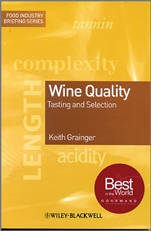
Wine Quality: Tasting and Selection
ISBN 9781405113663
Autor: Keith Grainger
Wydawca: Wiley
Dostępność: 3-6 tygodni
Cena: 431,55 zł
Przed złożeniem zamówienia prosimy o kontakt mailowy celem potwierdzenia ceny.
ISBN13: |
9781405113663 |
ISBN10: |
1405113669 |
Autor: |
Keith Grainger |
Oprawa: |
Paperback |
Rok Wydania: |
2009-01-16 |
Ilość stron: |
184 |
Wymiary: |
233x166 |
Tematy: |
PN |
The Wiley–Blackwell Food Industry Briefing Series
Devised to increase the effectiveness and efficiency with which knowledge can be gained of the many subject areas that constitute the food industry, and on which the industry relies for its existence, this important series is intended expressly to benefit executives, managers and supervisors within the industry. Each book distils the subject matter of the topic, providing its essence for easy and speedy assimilation.
Wine Quality
Tasting and Selection
Keith Grainger
Throughout the eight thousand years of vinous history wines have been tasted and their qualities examined in at least a basic way. Today producers can control the growing and winemaking processes, and the consumer may choose from a vast array of wines, both fine and ordinary. Tasting and evaluating these requires knowledge, skill and diligence.
This book provides a concise, easy to use and clearly presented understanding of the techniques of wine tasting, quality assessment and evaluation. The reader is taken through the various stages of a structured and professional approach to tasting and the book examines the questions as to what constitutes quality in wines, how quality can be recognised and how it is achieved. Also discussed are the faults that can destroy wines at any quality level, and misconceptions as to quality and guarantees.
Clearly presented and easily readable the book includes:
Diagrams
Tables
Tasting vocabularies
Colour Plates
Written by Keith Grainger, highly regarded international wine educator and wine consultant, this book provides a concise, quick reference aimed at busy wine industry professionals, students or others who wish to gain a detailed knowledge of the concepts of wine tasting and quality assessment.
Spis treści:
Series Editor’s Foreword.
Preface.
Acknowledgements.
Introduction.
CHAPTER 1 Wine Tasting.
1.1 W
ine tasting & laboratory analysis.
1.2 What makes a good wine taster?
1.3 Where and when to taste –suitable conditions.
1.4 Appropriate equipment.
1.5 Tasting order.
1.6 Temperature of wines for tasting.
1.7 Tasting for specific purposes.
1.8 Structured tasting technique.
1.9 The importance of keeping notes.
CHAPTER 2 Appearance.
2.1 Clarity.
2.2 Intensity.
2.3 Colour.
2.4 Other observations.
CHAPTER 3 Nose.
3.1 Condition.
3.2 Intensity.
3.3 Development.
3.4 Aroma characteistics.
CHAPTER 4 Palate.
4.1 Sweetness/bitterness/acidity/saltiness/umami.
4.2 Dryness/sweetness.
4.3 Acidity.
4.4 Tannin.
4.5 Alcohol.
4.6 Body.
4.7 Flavour intensity.
4.8 Flavour characteristics.
4.9 Other observations.
4.10 Length.
CHAPTER 5 Tasting Conclusions.
5.1 Quality.
5.2 Reasons for quality.
5.3 Readiness for drinking/potential for ageing.
5.4 Price/value.
5.5 Identification/true to type?
5.6 Grading wine – the award of points.
5.7 Blind tasting.
5.7.1 Why taste blind?
5.7.2 Blind or sighted?
5.7.3 Tasting for quality.
5.7.4 Practicalities.
5.7.5 Examination tastings.
CHAPTER 6 Wine Faults and Flaws.
6.1 Chloroanisoles and bromoanisoles.
6.2 Fermentation in the bottle & bacterial spoilage.
6.3 Protein haze.
6.4 Oxidation.
6.5 Excessive volatile acidity.
6.6 Excessive sulphur dioxide.
6.7 Reductivity.
6.8 Brettanomyces.
6.9 Dekkera.
6.10 Geraniol.
6.11 Geosmin.
6.12 Ethyl acetate.
6.13 Excessive acetaldehyde.
6.14 Candida acetaldehyde.
6.15 Smoke taint.
CHAPTER 7 Quality – Assurances and guarantees?
7.1 Compliance with ‘Quality Wine’ legislation as an assurance of quality?
7.11 The European Union and Third Countries.
7.12 Table Wine and QWPSR.
7.13 The concept of Appellation Contrôlée.
7.2 Tasting comp
etitions as an assessment of quality?
7.3 Classifications as an official assessment of quality?
7.4 ISO 9001 Certification as an assurance of quality?
7.5 Established brands as a guarantee of quality?
7.6 Price as an indication of quality?
CHAPTER 8 Quality – The Natural Factors and a Sense of Place.
8.1 Typcity and regionality.
8.2 The impact of climate upon quality wine production.
8.3 The role of soils.
8.4 Terroir.
8.5 The vintage factor.
CHAPTER 9 Constraints upon Quality Wine Production.
9.1 Financial.
9.2 Skills and diligence.
9.3 Legal.
9.4 Environmental.
CHAPTER 10 Production of Quality Wines.
10.1 Yield.
10.2 Density of Planting.
10.3 Age of vines.
10.4 Winter pruning.
10.5 Stressing the vines.
10.6 Green harvesting.
10.7 Harvesting.
10.7.1 Mechanical harvesting.
10.7.2 Hand picking.
10.8 Delivery and processing of fruit.
10.9 Selection and sorting.
10.10 Use of pumps/gravity.
10.11 Control of fermentations.
10.12 Use of gasses.
10.13 Barrels.
10.14 Selection from vats or barrels.
10.15 Storage.
CHAPTER 11 Selection by Buyers.
11.1 Supermarket dominance.
11.2 Price point/margin.
11.3 Selecting for market and customer base.
11.4 Styles and individuality.
11.5 Continuity.
11.6 The place of individual wines in the range.
11.7 Exclusivity.
11.8 Specification.
11.9 Technical analysis.
Glossary.
Bibliography.
Useful Websites.
Exhibitions
Nota biograficzna:
Keith Grainger, Wine Educator, UK
Okładka tylna:
The Wiley–Blackwell Food Industry Briefing Series
Devised to increase the effectiveness and efficiency with which knowledge can be gained of the many subject areas that constitute the food industry, and on which the industry relies for its existence, this important series is intended expressly to benefit executives, managers and supervisors w
ithin the industry. Each book distils the subject matter of the topic, providing its essence for easy and speedy assimilation.
Wine Quality
Tasting and Selection
Keith Grainger
Throughout the eight thousand years of vinous history wines have been tasted and their qualities examined in at least a basic way. Today producers can control the growing and winemaking processes, and the consumer may choose from a vast array of wines, both fine and ordinary. Tasting and evaluating these requires knowledge, skill and diligence.
This book provides a concise, easy to use and clearly presented understanding of the techniques of wine tasting, quality assessment and evaluation. The reader is taken through the various stages of a structured and professional approach to tasting and the book examines the questions as to what constitutes quality in wines, how quality can be recognised and how it is achieved. Also discussed are the faults that can destroy wines at any quality level, and misconceptions as to quality and guarantees.
Clearly presented and easily readable the book includes:
Diagrams
Tables
Tasting vocabularies
Colour Plates
Written by Keith Grainger, highly regarded international wine educator and wine consultant, this book provides a concise, quick reference aimed at busy wine industry professionals, students or others who wish to gain a detailed knowledge of the concepts of wine tasting and quality assessment.
Koszyk
Książek w koszyku: 0 szt.
Wartość zakupów: 0,00 zł
Informacje


Kontakt
Gambit
Centrum Oprogramowania
i Szkoleń Sp. z o.o.
Al. Pokoju 29b/22-24
31-564 Kraków
Siedziba Księgarni
ul. Kordylewskiego 1
31-542 Kraków
+48 12 410 5991
+48 12 410 5987
+48 12 410 5989
Subskrypcje
Administratorem danych osobowych jest firma Gambit COiS Sp. z o.o. Na podany adres będzie wysyłany wyłącznie biuletyn informacyjny.
Autoryzacja płatności

Informacje na temat autoryzacji płatności poprzez PayU.

© Copyright 2012: GAMBIT COiS Sp. z o.o. Wszelkie prawa zastrzeżone.
Projekt i wykonanie: Alchemia Studio Reklamy