


Wydawcy
Katalog tematyczny
- Archeologia (109)
- Ekonomia, finanse, business (13704)
- Filozofia (1445)
- Historia (3040)
- Języki i językoznawstwo (2356)
- Lifestyle, hobby i rozrywka (475)
- Medycyna (9704)
- Nauki humanistyczne (4)
- Nauki o Ziemi i środowisku (2638)
- Nauki ścisłe (20412)
- Nauki społeczne (8486)
- Edukacja (229)
- Kryminologia, opieka spełeczna (284)
- Obronność (10)
- Polityka (1389)
- Psychologia (777)
- Socjologia (410)
- Społeczeństwo i kultura (187)
- Nauki techniczne (13450)
- Prawo (1696)
- Publikacje informacyjne i interdyscyplinarne (1288)
- Religia i wierzenia (917)
- Technika komputerowa (4067)
- Zdrowie, relacje międzyludzkie i rozwój osobisty (657)





Informacje szczegółowe o książce
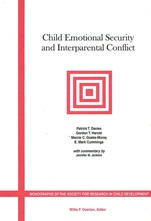
Child Emotional Security and Interparental Conflict
ISBN 9781405112345
Autor: Patrick T. Davies, Gordon T. Harold, Marcie C. Goeke–Morey, E. Mark Cummings, Jennifer M. Jenkins,
Wydawca: Wiley
Dostępność: 3-6 tygodni
Cena: 263,55 zł
Przed złożeniem zamówienia prosimy o kontakt mailowy celem potwierdzenia ceny.
ISBN13: |
9781405112345 |
ISBN10: |
1405112344 |
Autor: |
Patrick T. Davies, Gordon T. Harold, Marcie C. Goeke–Morey, E. Mark Cummings, Jennifer M. Jenkins, |
Oprawa: |
Paperback |
Rok Wydania: |
2003-01-04 |
Ilość stron: |
144 |
Wymiary: |
228x152 |
Tematy: |
JB |
This Monograph tests a theory proposing that high levels of conflict between parents leads to an increased child risk for mental health difficulties by shaking the child′s sense of security in the family. Signs of child insecurity in face of interparental conflict are reflected in: a.) greater fear and distress, b.) prolonged attempts to become involved in or avoid parental conflicts, and c.) negative evaluations of the implications parental conflict has for the well–being of the family and self. Consistent with this theory, child reports of fear, avoidance, and involvement were prominent responses to interparental conflict, especially relative to reactions predicted by other theories. Moreover, interparental conflict was associated with greater insecurity in children. And this insecurity was associated with greater mental health difficulties, even when considering the role of prior mental health, child perceptions of parental conflict, and parent–child relations. The strength of these associations further depended on the quality of the larger family context.
Spis treści:
Abstract.
I. Introduction and Literature Review.
II. Study 1: Child Responses to Interparental Conflict: Comparing the Relative Roles Of Emotional Security and Social Learning Processes.
III. Study 2: Relations Between Interparental Conflict, Child Emotional Security, and Adjustment in the Context of Cognitive Appraisals.
IV. Study 3: Parental Conflict and Child Security in the Family System.
V. Study 4: Family Characteristics as Potentiating and Protective Factors in the Association Between Parental Conflict and Child Functioning.
VI. Conclusions, Implications, and Future Directions.
VII. References.
VIII. Acknowledgements.
IX. Commentary: Mechanisms in the Development of Emotional Organization.
X. Contributors.
xi. Statement of Editorial Policy.
Nota biograficzna:
Patrick T. Davies
(Ph.D., West Virginia University, 1995) is an Associaite Professor of Psychology at the University of Rochester. His primary research interests relate to understanding children′s normal and abnormal development in the context of family relationships and processes. He is a co–author (with Mark Cummings) of Children and Marital Conflict (1994) and Developmental Psychopathology and Family Process (2000).
Gordon Harold (Ph.D., 1998, Cardiff University) is a lecturer in the School of Psychology at Cardff University, Wales. His primary research interests relate to understanding the effects of interparental conflict on children′s emotional and behavioral development, the genetic basis of children′s emotional and behavioral problems, and methodological issues associated with the analysis of longitudinal family data. He is co–author with Jan Prior and Jenny Reynolds of the book Not in Front of the Children? (2001).
Marcie C. Goeke–Morey (Ph.D., 1999, University of Notre Dame) is a research assistant professor in the Department of Psychology at the University of Notre Dame. Her research interests include the socio–emotional development of children within the family context, with particular emphasis on the influence of fathers and the constructive and positive elements of family life and relationships.
E. Mark Cummings (Ph.D., 1977, University of California, Los Angeles) is professor of psychology and the Notre Dame Chair in Psychology at the University of Notre Dame. His research interests are broadly concerned with relations between adaptive and maladaptive family functioning and children′s normal development and development of risk for psychopathology. Dr. Cummings is co–author of a half dozen books, including (with Patrick T. Davies) of Children and Marital Conflict (1994) and Developmental Psychopathology and Family Process (2000).
Okład
ka tylna:
This Monograph tests a theory proposing that high levels of conflict between parents leads to an increased child risk for mental health difficulties by shaking the child′s sense of security in the family. Signs of child insecurity in face of interparental conflict are reflected in: a.) greater fear and distress, b.) prolonged attempts to become involved in or avoid parental conflicts, and c.) negative evaluations of the implications parental conflict has for the well–being of the family and self. Consistent with this theory, child reports of fear, avoidance, and involvement were prominent responses to interparental conflict, especially relative to reactions predicted by other theories. Moreover, interparental conflict was associated with greater insecurity in children. And this insecurity was associated with greater mental health difficulties, even when considering the role of prior mental health, child perceptions of parental conflict, and parent–child relations. The strength of these associations further depended on the quality of the larger family context.
Koszyk
Książek w koszyku: 0 szt.
Wartość zakupów: 0,00 zł
Informacje


Kontakt
Gambit
Centrum Oprogramowania
i Szkoleń Sp. z o.o.
Al. Pokoju 29b/22-24
31-564 Kraków
Siedziba Księgarni
ul. Kordylewskiego 1
31-542 Kraków
+48 12 410 5991
+48 12 410 5987
+48 12 410 5989
Subskrypcje
Administratorem danych osobowych jest firma Gambit COiS Sp. z o.o. Na podany adres będzie wysyłany wyłącznie biuletyn informacyjny.
Autoryzacja płatności

Informacje na temat autoryzacji płatności poprzez PayU.

© Copyright 2012: GAMBIT COiS Sp. z o.o. Wszelkie prawa zastrzeżone.
Projekt i wykonanie: Alchemia Studio Reklamy