


Wydawcy
Katalog tematyczny
- Archeologia (109)
- Ekonomia, finanse, business (13704)
- Filozofia (1445)
- Historia (3040)
- Języki i językoznawstwo (2356)
- Lifestyle, hobby i rozrywka (475)
- Medycyna (9704)
- Nauki humanistyczne (4)
- Nauki o Ziemi i środowisku (2638)
- Nauki ścisłe (20412)
- Nauki społeczne (8486)
- Edukacja (229)
- Kryminologia, opieka spełeczna (284)
- Obronność (10)
- Polityka (1389)
- Psychologia (777)
- Socjologia (410)
- Społeczeństwo i kultura (187)
- Nauki techniczne (13450)
- Prawo (1696)
- Publikacje informacyjne i interdyscyplinarne (1288)
- Religia i wierzenia (917)
- Technika komputerowa (4067)
- Zdrowie, relacje międzyludzkie i rozwój osobisty (657)





Informacje szczegółowe o książce
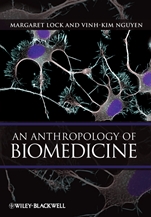
An Anthropology of Biomedicine
ISBN 9781405110723
Autor: Margaret Lock, Vinh–Kim Nguyen
Wydawca: Wiley
Dostępność: 3-6 tygodni
Cena: 475,65 zł
Przed złożeniem zamówienia prosimy o kontakt mailowy celem potwierdzenia ceny.
ISBN13: |
9781405110723 |
ISBN10: |
1405110724 |
Autor: |
Margaret Lock, Vinh–Kim Nguyen |
Oprawa: |
Hardback |
Rok Wydania: |
2010-04-09 |
Ilość stron: |
520 |
Wymiary: |
252x178 |
Tematy: |
JB |
The concept of a universal, standardizable body that can best be technologically manipulated in isolation from its context has become a foundation of biomedicine. An Anthropology of Biomedicine introduces biomedicine from an anthropological perspective, exploring the entanglement of material bodies with history, environment, culture, and politics. Focusing on the ways in which the application of biomedical technologies bring about radical changes to societies at large, medical anthropologist Margaret Lock and physician and medical anthropologist Vinh–Kim Nguyen develop and integrate the theory that the human body in health and illness is not an ontological given but a moveable, malleable entity – the elusive product of nature and culture that refuses to be pinned down.
Tracking the historic global application of biomedical technologies –– including the management of epidemics as part of colonial medicine, the control of populations, organ transplants, assisted reproductions, genetic testing and screening, and other technologies –– the authors reveal the intended and unintended local consequences and the exacerbation of global inequalities and health disparities that such technologies bring about. The argument is put forward that in addition to focusing on the massive impact of poverty and social inequality on health and illness, attention must be given to local biologies, culture, and politics; as well as to the culture of biomedicine and the unexamined assumptions embedded in it. An Anthropology of Biomedicine serves as an important new introduction to the global implications of the implementation of biomedicine.
Spis treści:
Introduction.
Improving Global Health: the Challenge.
Biomedicine as Technology.
Does Culture Exist?
A Word about Ethnography.
Outline of Chapters.
Part I: Technologies and Bodies in Context.
Chapter 1: Biomedical Tec
hnologies in Practice.
Technological Mastery of the Natural World and Human Development.
Technology and Boundary Crossings.
Biomedicine as Technology: some Implications.
Technologies of Bodily Governance.
Technologies of the Self.
The power of biological reductionism.
Techno/Biologicals.
Chapter 2: The Normal Body.
Cholera in the Nineteenth Century.
Representing the Natural Order.
Truth to nature.
The natural body.
A numerical approach.
Other natures.
Interpreting the body.
How normal became possible.
When normal does not exist.
Problems with making normal.
Pathologizing the "normal".
Limitations to biomedical "objectivity".
Better than well?
Chapter 3: Anthropologies of Medicine.
The Body Social.
Contextualizing Medical Knowledge.
Medical Pluralism.
The Modernization of "Traditional" Medicine.
Medical Hybridization.
Biodiversity and Indigenous Medical Knowledge.
Self–Medication.
A Short History of Medicalization.
Opposition to Medicalization.
The Social Construction of Illness and Disease.
The Politics of Medicalization.
Beyond Medicalization?
In Pursuit of Health.
In Summary.
Chapter 4: Local Biologies and Human Difference.
The End of Menstruation.
Local biologies.
Rethinking Biology in the Midst of Life′s Complexity.
Is Biology Real?
Kuru and Endo–Cannibalism.
Racism and Birth Weight.
Of Microbes and Humans.
Antibiotics and Resistant Microbes.
Debates about the Origin of HIV.
In summary.
Part II: The Biological Standard.
Chapter 5: The Right Population.
The Origins of Population as a "Problem".
Addressing the "problem" of population.
Improving the Stock of Nations.
Alternative Modernity and Indian Family Planning.
The One Child Policy.
Biomedical technology and sex selection.
Contextualizing sex selection: India and "family balancing".
Co
ntextualizing sex selection: disappeared girls in China.
Sex selection in a global context.
Reproducing Nationalism.
Summary.
Chapter 6: Colonial Disease and Biological Commensurability.
An anthropological perspective on global biomedicine.
Biomedicine as a tool of Empire.
Acclimatization and racial difference.
Colonial epidemics: Microbial theories prove their worth.
Resistance to the biomedicalisation of epidemics.
Microbiology as a global standard.
Infertility and childbirth as critical events.
Birthing in the Belgian Congo.
A global practice of fertility control.
Intimate colonialism: the biomedicalization of domesticity.
Biomedicine, evangelism and consciousness.
The biological standardization of hunger.
The colonial discovery of malnutrition.
Albumin as surplus.
The biologization of salvation.
In Summary.
Chapter 7: Grounds for Comparison: Biology and Human Experiments.
The laboratory as the site of comparison.
The colonial laboratoryExperimental bodies.
Rise of the clinical trial.
Taming difference by chance.
The alchemy of the randomized controlled trial.
The problem of generalizability.
Medical standardization and contested evidence.
Globalizing Clinical Research.
Creating markets for biomedical technologies in developing countries.
Testing biomedical interventions for the world′s poor.
Disputes over perinatal HIV transmission trials.
What should count as significant evidence?
Living with Vampires: perceptions of research.
Experimental communities: social relations.
In summary.
Part III: Moral Boundaries and Human Transformations.
Chapter 8: Who owns the body?
Commodification of Human Biologicals.
Objects of Worth and their Alienation.
The Wealth of Inalienable Goods.
A BioEconomy of Human Biologicals.
Who Owns the Body?
The Commodification of Eggs and Sperm.
Immortalized Cell Lines.
The
Exotic Other.
Biological Databases.
Concluding Comments.
Chapter 9: The Social Life of Organs.
Bioavailability –– Who becomes a donor?
A Shortage of Organs.
Inventing a New Death.
The Good–as–Dead.
Struggling for National Consensus.
The Social Life of Human Organs.
When Resources are Short.
Altruisim, Entitlement, and Commodification.
Chapter 10: Kinship, Infertility, and Assisted Reproduction.
Assisted Reproductive Technologies.
Problematizing Infertility Figures.
From Underfertility to Overfertility.
Reproducing Culture.
Assisted Reproduction in the United States.
Assisted Reproduction in Egypt.
Assisted Reproduction in Israel.
ART in Global Perspective.
Chapter 11: The Matter of the Self.
The Discovery of an Unconscious Self.
Unlocking the pathogenic secret.
The pathogenic secret as a technology of the self.
The making of post–traumatic stress disorder.
The practitioner–self.
The sources of therapeutic efficacy.
The self’s therapeutic powers.
Technologies of health promotion.
Technologies of empowerment.
Technologies of self–help.
Confessional technologies.
Conclusion.
Part IV: Elusive Agents and Moral Disruptions.
Chapter 12: Genes as embodied risk.
From Hazard to Embodied Risk.
From Generation to Re–Writing Life.
Genomic Hype.
Geneticization.
Genetic Testing and Human Contingency.
Genetic Citizenship and Future Promise in America.
Biosociality and the Affiliation of Genes.
Genetic Screening.
Preimplantation Genetic Diagnosis.
Chapter 13: Genomics, epigenomics, and uncertain futures.
De–Throning the Gene?
Eclipse of the Genotype–Phenotype Dogma.
Epigenetics: beyond genetic determinism.
Epigenomics.
The APOE Gene and Alzheimer′s Disease.
Genetic Testing for Late Onset Alzheimer′s Disease.
Interpre
tations of Risk Estimates.
Learning (again) to live with Uncertainty.
Chapter 14: Human Difference Revisited.
Molecular Biology and Racial Politics.
The molecularization of race.
Commodifying "race" and ancestry.
Looping effects.
Epilogue.
Notes.
Bibliography.
Index.
Nota biograficzna:
Margaret Lock is the Marjorie Bronfman Professor Emerita in the Department of Social Studies of Medicine and the Department of Anthropology at McGill University. Among her numerous awards are the Gold Medal for Research by the Social Sciences and Humanities Research Council of Canada and the Wellcome Medal of Britain′s Royal Anthropological Society. In 2005 she was awarded both a Killam Prize and Trudeau Foundation Fellowship. She is the author and/or co–editor of 14 books and has published more than 190 articles.
Vinh–Kim Nguyen is a physician and a medical anthropologist. He practices medicine in Montréal at the Clinique l′Actuel, which specializes in HIV and hepatitis, and the Emergency Department of the Jewish General Hospital, and teaches at the University of Montreal where he is an Associate Professor in Social Medicine. As a researcher, he is affiliated with both Global Health Unit of the Montreal University Hospitals′ Research Centre and the Max Planck Institute for Social Anthropology in Halle, Germany. He was recently awarded the Aurora prize for his research by the Social Sciences and Humanities Research Council of Canada.
Okładka tylna:
The concept of a universal, standardizable body that can best be technologically manipulated in isolation from its context has become a foundation of biomedicine. An Anthropology of Biomedicine introduces biomedicine from an anthropological perspective, exploring the entanglement of material bodies with history, environment, culture, and politics. Focusing on the ways in which the ap
plication of biomedical technologies bring about radical changes to societies at large, medical anthropologist Margaret Lock and physician and medical anthropologist Vinh–Kim Nguyen develop and integrate the theory that the human body in health and illness is not an ontological given but a moveable, malleable entity – the elusive product of nature and culture that refuses to be pinned down.
Tracking the historic global application of biomedical technologies –– including the management of epidemics as part of colonial medicine, the control of populations, organ transplants, assisted reproductions, genetic testing and screening, and other technologies –– the authors reveal the intended and unintended local consequences and the exacerbation of global inequalities and health disparities that such technologies bring about. The argument is put forward that in addition to focusing on the massive impact of poverty and social inequality on health and illness, attention must be given to local biologies, culture, and politics; as well as to the culture of biomedicine and the unexamined assumptions embedded in it. An Anthropology of Biomedicine serves as an important new introduction to the global implications of the implementation of biomedicine.
Koszyk
Książek w koszyku: 0 szt.
Wartość zakupów: 0,00 zł
Informacje


Kontakt
Gambit
Centrum Oprogramowania
i Szkoleń Sp. z o.o.
Al. Pokoju 29b/22-24
31-564 Kraków
Siedziba Księgarni
ul. Kordylewskiego 1
31-542 Kraków
+48 12 410 5991
+48 12 410 5987
+48 12 410 5989
Subskrypcje
Administratorem danych osobowych jest firma Gambit COiS Sp. z o.o. Na podany adres będzie wysyłany wyłącznie biuletyn informacyjny.
Autoryzacja płatności

Informacje na temat autoryzacji płatności poprzez PayU.

© Copyright 2012: GAMBIT COiS Sp. z o.o. Wszelkie prawa zastrzeżone.
Projekt i wykonanie: Alchemia Studio Reklamy