


Wydawcy
Katalog tematyczny
- Archeologia (109)
- Ekonomia, finanse, business (13704)
- Filozofia (1445)
- Historia (3040)
- Języki i językoznawstwo (2356)
- Lifestyle, hobby i rozrywka (475)
- Medycyna (9704)
- Nauki humanistyczne (4)
- Nauki o Ziemi i środowisku (2638)
- Nauki ścisłe (20412)
- Nauki społeczne (8486)
- Edukacja (229)
- Kryminologia, opieka spełeczna (284)
- Obronność (10)
- Polityka (1389)
- Psychologia (777)
- Socjologia (410)
- Społeczeństwo i kultura (187)
- Nauki techniczne (13450)
- Prawo (1696)
- Publikacje informacyjne i interdyscyplinarne (1288)
- Religia i wierzenia (917)
- Technika komputerowa (4067)
- Zdrowie, relacje międzyludzkie i rozwój osobisty (657)





Informacje szczegółowe o książce
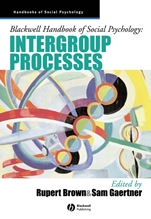
Blackwell Handbook of Social Psychology: Intergroup Processes
ISBN 9781405106542
Autor: Rupert Brown, Sam Gaertner
Wydawca: Wiley
Dostępność: 3-6 tygodni
Cena: 330,75 zł
Przed złożeniem zamówienia prosimy o kontakt mailowy celem potwierdzenia ceny.
ISBN13: |
9781405106542 |
ISBN10: |
1405106549 |
Autor: |
Rupert Brown, Sam Gaertner |
Oprawa: |
Paperback |
Rok Wydania: |
2002-10-25 |
Ilość stron: |
572 |
Wymiary: |
252x178 |
Tematy: |
JC |
This authoritative, state of the art overview of the field of intergroup processes is divided into nine major sections on cognition, motivation, emotion, communication and social influence, changing intergroup relations, social comparison, self–identity, methods, and applications.
Includes 25 specially commissioned chapters offer unparalleled coverage of the whole field of intergroup processes.
A carefully chose team of authors from around the world ensures a truly international perspective.
Fully referenced chapters include bibliographies for easy access to further study.
This handbook is essential reading for upper–level students looking for succinct overviews and for researchers seeking an authoritative definition of the field, which also indicates likely future trends.
Spis treści:
Series Editors′ Preface.
Preface.
Acknowledgements.
Part I: Sociocognitive Processes.
1.The Root of all Evil in Intergroup Relations? Unearthing the Categorization Process. (Penelope Oakes).
2. Stereotypes: Content, Structures, Processes, and Context. (Don Operatio and Susan T. Fiske).
3. Category Dynamics and the Modification of Outgroup Stereotypes. (Myron Rothbart).
4. Developmental and Socialization Influences on Intergroup Bias. (Frances E. Aboud and Maria Amato).
Part II: Motivation.
5. Social Orientations in the Minimal Group Paradigm. (Richard Y. Bourhis and André Gagnon).
6. Aversive Discrimination. (Amélie Mummendey and Sabine Otten).
7.The Social Identity Perspective in Intergroup Relations: Theories, Themes and Controversies. (John C. Turner and Katherine J. Reynolds).
8. Affect as a Cause of Intergroup Bias. (David Wilder and Andrew F. Simon).
Part III: Prejudice.
9. Implicit and Explicit Attitudes: Examination of the Relationship between Measures of Intergroup Bias. (John F. Dovidio, Kerry Kawakami, and Kelly R. Beach).
10. Classic
and Contemporary Analysis of Racial Prejudice. (Patricia G. Devine, E. Ashby Plant, and Irene V. Blair).
11. Sexism: Attitudes, Beliefs and Behaviours. (Janet K. Swim and Bernadette Campbell).
12. Psychological Consequences of Devalued Identities. (Jennifer Crocker and Diane M. Quinn).
Part IV: Language and Influence.
13. How Language Contributes to Persistence of Stereotypes as well as other, more general, Intergroup Issues. (Klaus Fiedler and Jeannette Schmid).
14. Social Influence in an Intergroup Context. (Diane M. Mackie and Crystal L. Wright).
Part V: Social Comparison.
15. The Social Psychology of Minority–Majority Relations. (Bernd Simon, Birgit Aufderheide, and Claudia Kampmeier).
16. The Impact of Relative Group Status: Affective, Perceptual and Behavioural Consequences. (Naomi Ellemers and Manuela Barreto.
17. Social Justice. Tom R. Tyler).
Part VI: Cultural Influence.
18. Culture and its Implications for Intergroup Behaviour. (Harry C. Triandis and David Trafimow).
19. Acculturation. (Karmela Liebkind).
Part VII: Changing Intergroup Relations.
20. Strategic Collective Action. Social Psychology and Social Change. (Stephen C. Wright).
21.Trust and Intergroup Negotiation. (Roderick M. Kramer and Peter J. Carnevale).
22. Toward Reduction of Prejudice. Intergroup Contact and Social Categorization. (Marilynn B. Brewer and Samuel L Gaertner).
Part VIII: Applications.
23. When and How School Desegregation Improves Intergroup Relations. (Janet W. Schofield and Rebecca Eurich–Fulcer).
24. Addressing and Redressing Discrimination: Affirmative Action in Social Psychological Perspective. (Faye J. Crosby, Bernardo M. Ferdman, and Blanche R. Wingate).
25. Intergroup Relations and National and International Relations. (Thomas F. Pettigrew).
Index.
Nota biograficzna:
Rupert Brown is Professor of Social Psychology at the University of Kent. He has written widely in the fiel
d of group and intergroup processes, his publications including Group Processes (Blackwell, 2000) and Prejudice (Blackwell, 1995).
Sam Gaertner is Professor of Social Psychology at the University of Delaware. He has published numerous articles on intergroup relations and has recently complete the volume Reducing Intergroup Bias (with J. Dovidio, 2000). His study of racism among ′well–intentioned′ people won the Gordon Allport intergroup relations prize.
Okładka tylna:
This authoritative, state of the art overview of the field of intergroup processes is divided into nine major sections on cognition, motivation, emotion, communication and social influence, changing intergroup relations, social comparison, self–identity, methods, and applications.
Includes 25 specially commissioned chapters offer unparalleled coverage of the whole field of intergroup processes.
A carefully chose team of authors from around the world ensures a truly international perspective.
Fully referenced chapters include bibliographies for easy access to further study.
This handbook is essential reading for upper–level students looking for succinct overviews and for researchers seeking an authoritative definition of the field, which also indicates likely future trends.
Koszyk
Książek w koszyku: 0 szt.
Wartość zakupów: 0,00 zł
Informacje


Kontakt
Gambit
Centrum Oprogramowania
i Szkoleń Sp. z o.o.
Al. Pokoju 29b/22-24
31-564 Kraków
Siedziba Księgarni
ul. Kordylewskiego 1
31-542 Kraków
+48 12 410 5991
+48 12 410 5987
+48 12 410 5989
Subskrypcje
Administratorem danych osobowych jest firma Gambit COiS Sp. z o.o. Na podany adres będzie wysyłany wyłącznie biuletyn informacyjny.
Autoryzacja płatności

Informacje na temat autoryzacji płatności poprzez PayU.

© Copyright 2012: GAMBIT COiS Sp. z o.o. Wszelkie prawa zastrzeżone.
Projekt i wykonanie: Alchemia Studio Reklamy