


Wydawcy
Katalog tematyczny
- Archeologia (109)
- Ekonomia, finanse, business (13704)
- Filozofia (1445)
- Historia (3040)
- Języki i językoznawstwo (2356)
- Lifestyle, hobby i rozrywka (475)
- Medycyna (9704)
- Nauki humanistyczne (4)
- Nauki o Ziemi i środowisku (2638)
- Geografia (299)
- Nauki o Ziemi (1661)
- Geologia (414)
- Hydrologia (237)
- Meteorologia i klimatologia (114)
- Paleontologia (33)
- Wulkanologia i sejsmologia (44)
- Planowanie przestrzenne (53)
- Środowisko (607)
- Nauki ścisłe (20412)
- Nauki społeczne (8486)
- Nauki techniczne (13450)
- Prawo (1696)
- Publikacje informacyjne i interdyscyplinarne (1288)
- Religia i wierzenia (917)
- Technika komputerowa (4067)
- Zdrowie, relacje międzyludzkie i rozwój osobisty (657)





Informacje szczegółowe o książce
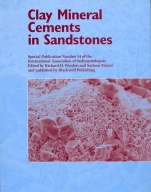
Clay Mineral Cements in Sandstones
ISBN 9781405105873
Autor: Richard Worden, Sadoon Morad
Wydawca: Wiley
Dostępność: 3-6 tygodni
Cena: 876,75 zł
Przed złożeniem zamówienia prosimy o kontakt mailowy celem potwierdzenia ceny.
ISBN13: |
9781405105873 |
ISBN10: |
1405105879 |
Autor: |
Richard Worden, Sadoon Morad |
Oprawa: |
Paperback |
Rok Wydania: |
2002-12-10 |
Ilość stron: |
520 |
Wymiary: |
246x187 |
Tematy: |
RB |
Clay minerals are one of the most important groups of minerals that destroy permeability in sandstones. However, they also react with drilling and completion fluids and induce fines migration during hydrocarbon production. They are a very complex family of minerals that are routinely intergrown with each other, contain a wide range of solid solutions and form by a variety of processes under a wide range temperatures and rock and fluid compositions.
In this volume, clay minerals in sandstones are reviewed in terms of their mineralogy and general occurrence, their stable and radiogenic isotope geochemistry, XRD quantification, their effects on the petrophysical properties of sandstones and their relationships to sequence stratigraphy and palaeoclimate. The controls on various clay minerals are addressed and a variety of geochemical issues, including the importance of mass flux, links to carbonate mineral diagenesis and linked clay mineral diagenesis in interbedded mudstone–sandstone are explored. A number of case studies are included for kaolin, illite and chlorite cements, and the occurrence of smectite in sandstone is reviewed. Experimental rate data for clay cements in sandstones are reviewed and there are two model–based case studies that address the rates of growth of kaolinite and illite.
The readership of this volume will include sedimentologists and petrographers who deal with the occurrence, spatial and temporal distribution patterns and importance of clay mineral cements in sandstones, geochemists involved in unraveling the factors that control clay mineral cement formation in sandstones and petroleum geoscientists involved in predicting clay mineral distribution in sandstones. The book will also be of interest to geologists involved in palaeoclimate studies basin analysis.
Spis treści:
Review papers.
1. Clay minerals in sandstones: controls on formation, distribution and evolution: R. H. Worden and S. Morad.
2.
Predictive diagenetic clay–mineral distribution in siliciclastic rocks within a sequence stratigraphic framework: J.M. Ketzer, S. Morad and A. Amorosi.
3. Oxygen and hydrogen isotope composition of diagenetic clay minerals in sandstones: a review of the data and controls: S. Morad, R. H. Worden and J.M. Ketzer.
4. Palaeoclimate controls on spectral gamma–ray radiation from sandstones: A. Ruffell, R.H. Worden and R. Evans.
5. Smectite in sandstones: a review of the controls on occurrence and behaviour during diagenesis: J. M. McKinley, R. H. Worden and A. H. Ruffell.
6. Patterns of clay mineral diagenesis in interbedded mudrocks and sandstones: an example from the Palaeocene of the North Sea: H.F. Shaw and D.M. Conybeare, D.M.
7. Cross–formational flux of aluminium and potassium in Gulf Coast (USA) sediments:M. Wilkinson, R.S. Haszeldine and K.L. Milliken.
8. Silicate–carbonate reactions in sedimentary systems: fluid composition control and potential for generation of overpressure: I. Hutcheon and S. Desrocher.
9. Experimental studies of clay mineral occurrence: D. A. C. Manning.
10. Effect of clay content upon some physical properties of sandstone reservoirs: Paul F. Worthington.
11. Quantitative analysis of clay and other minerals in sandstones by X–ray powder diffraction (XRPD): S. Hillier.
12. A review of radiometric dating techniques for clay mineral cements in sandstones: P. J. Hamilton.
Chlorite case study.
13. Chlorite authigenesis and porosity preservation in the Upper Cretaceous marine sandstones of the Santos Basin, offshore eastern Brazil: S. M. C. Anjos, L. F. De Ros and C. M. A. Silva.
Kaolinite case studies.
14. Origin and diagenetic evolution of kaolin in reservoir sandstones and associated shales of the Jurassic and Cretaceous, Salam Field, Western Desert (Egypt): R. Marfil, A. Delgado, C. Rossi, A. La Iglesia and K. Ramseyer.
15. Microscale distribution of kaolinite in Brea
thitt Formation sandstones (middle Pennsylvanian): implications for mass balance: K. L. Milliken.
16. The role of the Cimmerian unconformity (Early Cretaceous) in the kaolinitization and related reservoir–quality evolution in Triassic sandstones of the Snorre Field, North Sea: J.M. Ketzer, S. Morad, J.P. Nystuen and L.F. De Ros.
17. The formation and stability of kaolinite in Brent sandstone reservoirs: a modelling approach: É. Brosse, T. Margueron, C. Cassou, B. Sanjuan, A. Canham, J.–P. Girard, J.–C. Lacharpagne and F. Sommer.
Illite case studies.
18. Illite fluorescence microscopy: a new technique in the study of illite in the Merrimelia Formation, Cooper Basin, Australia: N. M. Lemon and C. J. Cubitt.
19. Geochemical modelling of diagenetic illite and quartz cement formation in Brent sandstone reservoirs: example of the Hild Field, Norwegian North Sea: B. Sanjuan, J.–P. Girard, S. Lanini, A. Bourguignon and E. Brosse.
20. The effect of oil emplacement on diagenetic clay mineralogy: the Upper Jurassic Magnus Sandstone Member, North Sea: R.H. Worden and S.A. Barclay.
Glauconite case study.
21. Application of glauconite morphology in geosteering and for on–site reservoir quality assessment in very fine–grained sandstones: Carnarvon Basin, Australia: J.P.Schulz–Rojahn, D.A. Seeburger and G.J. Beacher.
Index
Okładka tylna:
Clay minerals are one of the most important groups of minerals that destroy permeability in sandstones. However, they also react with drilling and completion fluids and induce fines migration during hydrocarbon production. They are a very complex family of minerals that are routinely intergrown with each other, contain a wide range of solid solutions and form by a variety of processes under a wide range temperatures and rock and fluid compositions.
In this volume, clay minerals in sandstones are reviewed in terms of their mineralogy and general occur
rence, their stable and radiogenic isotope geochemistry, XRD quantification, their effects on the petrophysical properties of sandstones and their relationships to sequence stratigraphy and palaeoclimate. The controls on various clay minerals are addressed and a variety of geochemical issues, including the importance of mass flux, links to carbonate mineral diagenesis and linked clay mineral diagenesis in interbedded mudstone–sandstone are explored. A number of case studies are included for kaolin, illite and chlorite cements, and the occurrence of smectite in sandstone is reviewed. Experimental rate data for clay cements in sandstones are reviewed and there are two model–based case studies that address the rates of growth of kaolinite and illite.
The readership of this volume will include sedimentologists and petrographers who deal with the occurrence, spatial and temporal distribution patterns and importance of clay mineral cements in sandstones, geochemists involved in unraveling the factors that control clay mineral cement formation in sandstones and petroleum geoscientists involved in predicting clay mineral distribution in sandstones. The book will also be of interest to geologists involved in palaeoclimate studies basin analysis.
Koszyk
Książek w koszyku: 0 szt.
Wartość zakupów: 0,00 zł
Informacje


Kontakt
Gambit
Centrum Oprogramowania
i Szkoleń Sp. z o.o.
Al. Pokoju 29b/22-24
31-564 Kraków
Siedziba Księgarni
ul. Kordylewskiego 1
31-542 Kraków
+48 12 410 5991
+48 12 410 5987
+48 12 410 5989
Subskrypcje
Administratorem danych osobowych jest firma Gambit COiS Sp. z o.o. Na podany adres będzie wysyłany wyłącznie biuletyn informacyjny.
Autoryzacja płatności

Informacje na temat autoryzacji płatności poprzez PayU.

© Copyright 2012: GAMBIT COiS Sp. z o.o. Wszelkie prawa zastrzeżone.
Projekt i wykonanie: Alchemia Studio Reklamy