


Wydawcy
Katalog tematyczny
- Archeologia (109)
- Ekonomia, finanse, business (13704)
- Filozofia (1445)
- Historia (3040)
- Języki i językoznawstwo (2356)
- Lifestyle, hobby i rozrywka (475)
- Medycyna (9704)
- Nauki humanistyczne (4)
- Nauki o Ziemi i środowisku (2638)
- Nauki ścisłe (20412)
- Nauki społeczne (8486)
- Edukacja (229)
- Kryminologia, opieka spełeczna (284)
- Obronność (10)
- Polityka (1389)
- Psychologia (777)
- Socjologia (410)
- Społeczeństwo i kultura (187)
- Nauki techniczne (13450)
- Prawo (1696)
- Publikacje informacyjne i interdyscyplinarne (1288)
- Religia i wierzenia (917)
- Technika komputerowa (4067)
- Zdrowie, relacje międzyludzkie i rozwój osobisty (657)





Informacje szczegółowe o książce
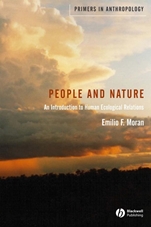
People and Nature: An Introduction to Human Ecological Relations
ISBN 9781405105712
Autor: Emilio F. Moran
Wydawca: Wiley
Dostępność: 3-6 tygodni
Cena: 457,80 zł
Przed złożeniem zamówienia prosimy o kontakt mailowy celem potwierdzenia ceny.
ISBN13: |
9781405105712 |
ISBN10: |
1405105712 |
Autor: |
Emilio F. Moran |
Oprawa: |
Hardback |
Rok Wydania: |
2005-12-22 |
Ilość stron: |
236 |
Wymiary: |
240x158 |
Tematy: |
JBK |
Evidence of climate change, loss of biological diversity, tropical deforestation, and an impending crisis in potable water prompt the question: how have we created a situation where our planet—our very future—is at risk? In People and Nature: An Introduction to Human Ecological Relations, noted environmental scientist Emilio Moran provides a lively introduction to ecological anthropology, environmental geography, and human ecology. He examines the evolving relations between human communities and nature, and, by thoughtful analysis, offers a vision of what we must do to have a future worth living.
Spis treści:
Preface.
List of Figures.
1. Human Agency and the State of the Earth.
Introduction.
Can one conceive of ecosystems without human agents?.
Human agency: individuals making a difference.
Overwhelming evidence for concern with the condition of the earth system.
Looking back and looking forward.
2. A Reminder: How Things Were.
The study of human ecological relations.
The contemporary study of environmental issues.
The evolution of human–environment interactions.
Hunter–gatherers: Setting our preferences.
How did we decide to become farmers?.
Herding and farming: An uneasy relationship.
More food for the masses.
3. The Great Forgetting.
Earth Transformations in prehistory.
The archeology of environmental change.
The urban–industrial revolution and the unleashing of Prometheus.
The contemporary situation: Human–dominated ecosystems.
4. The Web of Life: Are We in It?.
The web of life and trophic relations: Thinking ecologically.
Ecosystem productivity and net primary production.
Land Use and long–term disturbance.
5. What Makes People Want to Change the Environment?.
Learning, Adaptation, and Information.
Mitigation and the Cautionary Principle.
Transforming the face of the earth
through making better decisions.
Population and the Environment.
6. Rebuilding Communities and Institutions.
Community in human evolution.
What is sacred in human evolution?.
Tragedies of the commons.
Institutions and self–organization.
Bioregionalism, deep ecology and embedding people in nature.
7. Can We Learn When We Have Enough?.
Material boys and material girls.
Patterns of consumption in developed countries.
Patterns of consumption in developing countries.
A feeding frenzy and a crisis in public health.
Burning fossils fuels instead of calories.
Do we have enough material goods now?.
8. Quality of Life: When Less Is More.
Resource abundance vs resource scarcity.
When less is more.
The scale of the problem and the scale of the solutions.
Restoring Our Balance: Valuing community, and trust, rather than more "stuff".
Are we happier when we have more?.
References.
Index
Nota biograficzna:
Emilio F. Moran is Rudy Professor of Anthropology at Indiana University and also Professor of Environmental Sciences, Adjunct Professor of Geography, and Director of the Anthropological Center for Training and Research on Global Environmental Change.
Okładka tylna:
Evidence of climate change, loss of biological diversity, tropical deforestation, and an impending crisis in potable water prompt the question: how have we created a situation where our planet—our very future—is at risk? In People and Nature: An Introduction to Human Ecological Relations, noted environmental scientist Emilio Moran provides a lively introduction to ecological anthropology, environmental geography, and human ecology. He examines the evolving relations between human communities and nature, and, by thoughtful analysis, offers a vision of what we must do to have a future worth living.
Koszyk
Książek w koszyku: 0 szt.
Wartość zakupów: 0,00 zł
Informacje


Kontakt
Gambit
Centrum Oprogramowania
i Szkoleń Sp. z o.o.
Al. Pokoju 29b/22-24
31-564 Kraków
Siedziba Księgarni
ul. Kordylewskiego 1
31-542 Kraków
+48 12 410 5991
+48 12 410 5987
+48 12 410 5989
Subskrypcje
Administratorem danych osobowych jest firma Gambit COiS Sp. z o.o. Na podany adres będzie wysyłany wyłącznie biuletyn informacyjny.
Autoryzacja płatności

Informacje na temat autoryzacji płatności poprzez PayU.

© Copyright 2012: GAMBIT COiS Sp. z o.o. Wszelkie prawa zastrzeżone.
Projekt i wykonanie: Alchemia Studio Reklamy