


Wydawcy
Katalog tematyczny
- Archeologia (109)
- Ekonomia, finanse, business (13704)
- Filozofia (1445)
- Historia (3040)
- Języki i językoznawstwo (2356)
- Lifestyle, hobby i rozrywka (475)
- Medycyna (9704)
- Nauki humanistyczne (4)
- Nauki o Ziemi i środowisku (2638)
- Nauki ścisłe (20412)
- Nauki społeczne (8486)
- Nauki techniczne (13450)
- Prawo (1696)
- Publikacje informacyjne i interdyscyplinarne (1288)
- Religia i wierzenia (917)
- Technika komputerowa (4067)
- Zdrowie, relacje międzyludzkie i rozwój osobisty (657)





Informacje szczegółowe o książce
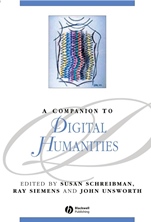
A Companion to Digital Humanities
ISBN 9781405103213
Autor: Susan Schreibman, Ray Siemens, John Unsworth
Wydawca: Wiley
Dostępność: 3-6 tygodni
Cena: 938,70 zł
Przed złożeniem zamówienia prosimy o kontakt mailowy celem potwierdzenia ceny.
ISBN13: |
9781405103213 |
ISBN10: |
1405103213 |
Autor: |
Susan Schreibman, Ray Siemens, John Unsworth |
Oprawa: |
Hardback |
Rok Wydania: |
2004-11-10 |
Ilość stron: |
640 |
Wymiary: |
237x165 |
Tematy: |
CSA |
A Companion to Digital Humanities provides a complete yet concise overview of this emerging discipline. The volume contains 37 original articles written by leaders in the field, addressing the central concerns of those interested in the subject. The articles are grouped into topical sections focusing on the experience of particular disciplines in applying computational methods to humanities research problems; the basic principles of humanities computing across applications and disciplines; specific applications and methods; and production, dissemination, and archiving. The Companion is accompanied by a website that will evolve with its readership, featuring useful supplementary materials, standard readings that are publicly available, essays to be included in future editions, and other materials –– visit www.ach.org/companion.
Notes on Contributors. Foreword: Roberto Busa. Introduction: Susan Schreibman, Ray Siemens and John Unsworth. Part I: History:. 1. The History of Humanities Computing: Susan Hockey (University College London). 2. Archaeology: Nick Eiteljorg. 3. Art History: Michael Greenhalgh (Australian National University). 4. Classics: Greg Crane. 5. History: Will Thomas (University of Virginia). 6. Lexicography: Russ Wooldridge (University of Toronto). 7. Linguistics: Jan Hajic (Charles University). 8. Literary Studies: Thomas Rommel (International University Bremen). 9. Music: Ichiro Fujinaga (McGill University) & Susan Weiss (Johns Hopkins University). 10. New Media: Geoff Rockwell (McMaster University) and Andrew Mactavish (McMaster University). 11. Performing Arts: David Saltz, UGA. 12. Philosophy and Religion: Charles Ess (Drury University). Part II: Principles:. 13. How Computers Work: Andrea Laue (University of Virginia). 14. Classification and its structures: Michael Sperberg McQueen. 15. Databases: Steve Ramsay (University of Georgia). 16. What is Already Encoded by the Text: Jerry McGann (University of Virginia). 17. Text Encoding: Allen Renear. 18. Perspectives and Communities: Perry Willett (Indiana University). 19. Models: Willard McCarty (King′s College London). Part III: Applications:. 20. Analysis and Authorship Studies: Hugh Craig (University of Newcastle, NSW). 21. Preparation and Analysis of Linguistic Corpora: Nancy Ide (Vassar College). 22. Electronic Scholarly Editing: Martha Nell Smith (Maryland Institute for Technology in the Humanities). 23. Textual Analysis: John Burrows. 24. Thematic Research Collections: Carole Palmer (University of Illinois at Urbana–Champaign). 25. Print Scholarship and Digital Resources: Claire Warwick (University College London). 26. Digital Media and the Analysis of Film: Bob Kolker. 27. Cognitive Stylistics and the Literary Imagination: Ian Lancashire (University of Toronto). 28. Multivariant Narratives: Marie–Laure Ryan. 29. Speculative Computing: Aesthetic Provocations in Humanities Computing: Johanna Drucker (University of Virginia) & Bethany Nowviskie (University of Virginia). 30. Robotic Poetics: Bill Winder (University of British Columbia). Part IV: Production, Dissemination, Archiving:. 31. Project Design: Daniel Pitti (University of Virginia). 32. Conversion of Primary Sources: Marilyn Deegan (Oxford University) & Simon Tanner (Kings College London). 33. Text Tools: John Bradley (Kings College London). 34. Interface, Aesthetics, and Usability: Matt Kirschenbaum (University of Maryland, College Park). 35. Electronic Publishing: Michael Jensen. 36. Digital Libraries in the Humanities: Howard Besser (New York University). 37. Preservation: Abby Smith. Index
Susan Schreibman is Assistant Director of Maryland Institute for Technology in the Humanities at the University of Maryland, a faculty member of the University of Maryland Libraries, and Affiliate Faculty in the Department of English. Her recent publications include Computer–Mediated Discourse: Reception Theory and Versioning and ongoing work on the Thomas MacGreevy Archive. Ray Siemens is Canada Research Chair in Humanities Computing and Associate Professor of English at the University of Victoria. Formerly he was Professor of English at Malaspina University–College and Visiting Senior Research Fellow at the Centre for Computing in the Humanities at King′s College London. Founding editor of the electronic scholarly journal Early Modern Literary Studies , he is also editor of several Renaissance texts and coeditor of several collections on humanities computing topics. John Unsworth is Dean of the Graduate School of Library and Information Science at the University of Illinois, Urbana–Champaign. He is founding coeditor of Postmodern Culture, an e–journal, and founding Director of the University of Virginia’s Institute for Advanced Technology in the Humanities.
"A Companion to Digital Humanities stands on its own as a post–Revolution snapshot. It shows what happened immediately after computing became both practical, necessary and omnipresent in the Humanities.... Let there be another volume like this to document the next five years." ( Classical Journal Online , May 2009) “Offers the best general introduction to this amorphous field.” (Literary Research Guide)
Koszyk
Książek w koszyku: 0 szt.
Wartość zakupów: 0,00 zł
Informacje


Kontakt
Gambit
Centrum Oprogramowania
i Szkoleń Sp. z o.o.
Al. Pokoju 29b/22-24
31-564 Kraków
Siedziba Księgarni
ul. Kordylewskiego 1
31-542 Kraków
+48 12 410 5991
+48 12 410 5987
+48 12 410 5989
Subskrypcje
Administratorem danych osobowych jest firma Gambit COiS Sp. z o.o. Na podany adres będzie wysyłany wyłącznie biuletyn informacyjny.
Autoryzacja płatności

Informacje na temat autoryzacji płatności poprzez PayU.

© Copyright 2012: GAMBIT COiS Sp. z o.o. Wszelkie prawa zastrzeżone.
Projekt i wykonanie: Alchemia Studio Reklamy