


Wydawcy
Katalog tematyczny
- Archeologia (109)
- Ekonomia, finanse, business (13704)
- Filozofia (1445)
- Historia (3040)
- Języki i językoznawstwo (2356)
- Lifestyle, hobby i rozrywka (475)
- Medycyna (9704)
- Nauki humanistyczne (4)
- Nauki o Ziemi i środowisku (2638)
- Nauki ścisłe (20412)
- Nauki społeczne (8486)
- Nauki techniczne (13450)
- Prawo (1696)
- Publikacje informacyjne i interdyscyplinarne (1288)
- Religia i wierzenia (917)
- Technika komputerowa (4067)
- Zdrowie, relacje międzyludzkie i rozwój osobisty (657)





Informacje szczegółowe o książce
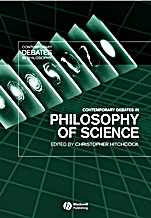
Contemporary Debates in Philosophy of Science
ISBN 9781405101516
Autor: Christopher Hitchcock
Wydawca: Wiley
Dostępność: 3-6 tygodni
Cena: 637,35 zł
Przed złożeniem zamówienia prosimy o kontakt mailowy celem potwierdzenia ceny.
ISBN13: |
9781405101516 |
ISBN10: |
1405101512 |
Autor: |
Christopher Hitchcock |
Oprawa: |
Hardback |
Rok Wydania: |
2003-11-25 |
Ilość stron: |
364 |
Wymiary: |
259x186 |
Tematy: |
HP |
Contemporary Debates in Philosophy of Science features original essays on some of the most hotly debated issues in the field. Are there laws of social science? Are causes physically connected to their effects? Is the mind a system of modules shaped by natural selection?
Eight central questions shape the volume, with each question treated by a pair of opposing essays. This distinctive format offers readers a unique opportunity to observe philosophers engaging in head–to–head debate. Together, the essays provide an accessible introduction to the major topics in contemporary philosophy of science, including empiricism, confirmation, realism, laws, causation, and explanation. Showcasing original arguments for well–defined positions, as well as clear and concise statements of sophisticated philosophical views, this volume is an excellent resource for professional philosophers and students alike.
Spis treści:
Notes on Contributors.
Preface.
Introduction: What is the Philosophy of Science?.
Part I: Do Thought Experiments Transcend Empiricism?.
1. Why Thought Experiments Transcend Empiricism: James Robert Brown (University of Toronto).
2. Why Thought Experiments do not Transcend Empiricism: John Norton (University of Pittsburgh).
Part II: Does Probability Capture the Logic of Scientific Confirmation or Justification?.
3. Probability Captures the Logic of Scientific Confirmation: Patrick Maher (University of Illinois at Urbana–Champaign).
4. Why Probability Does not Capture the Logic of Scientific Justification: Kevin Kelly (Carnegie Mellon University) and Clark Glymour (Carnegie Mellon University).
Part III: Can a Theory′s Predictive Success Warrant Belief in the Unobservable Entities it Postulates?.
5. A Theory′s Predictive Success Can Warrant Belief in the Unobservable Entities it Postulates: Jarrett Leplin (University of North Carolina, Greensboro).
6. A Theory′s Predictive Success Does not Warrant Belief in the Unobservable Entities it Postulates: André Kukla (University of Toronto) and Joel Walmsley (University of Toronto).
Part IV: Are There Laws in the Social Sciences?.
7. There are no Laws in the Social Sciences: John Roberts (University of North Carolina, Chapel Hill).
8. There are Laws in the Social Sciences: Harold Kincaid (University of Alabama at Birmingham).
Part V: Are Causes Physically Connected to their Effects?.
9. Causes are Physically Connected to Their Effects: Why Preventers and Omissions are not Causes: Phil Dowe (University of Queensland, Australia).
10. Causes Need Not be Physically Connected to their Effects: The Case for Negative Causation: Jonathan Schaffer (University of Massachusetts, Amherst).
Part VI: Is There a Puzzle about the Low Entropy Past?.
11. On the Origins of the Arrow of Time: Why There is Still a Puzzle About the Low Entropy Past: Huw Price (University of Edinburgh).
12. There is No Puzzle About the Low Entropy Past: Craig Callender.
Part VII: Do Genes Encode Information About Phenotypic Traits:.
13. Genes Encode Information for Phenotypic Traits: Sahotra Sarkar (University of Texas at Austin).
14. Genes Do not Encode Information for Phenotypic Traits: Peter Godfrey–Smith (Stanford University).
Part VIII: Is the Mind a System of Modules Shaped by Natural Selection?.
15. The Mind is a System of Modules Shaped by Natural Selection: Peter Carruthers (University of Maryland).
16. The Mind is Not (Just) a System of Modules Shaped (Just) by Natural Selection: Fiona Cowie (California Institute of Technology) and James Woodward (California Institute of Technology).
Index
Nota biograficzna:
Christopher Hitchcock is Professor of Philosophy at the California Institute of Technology. His articles have appeared in journals such as The Philosophical Review, T
he Journal of Philosophy, Noûs, Philosophy of Science, The British Journal for the Philosophy of Science, and Synthese.
Okładka tylna:
Contemporary Debates in Philosophy of Science features original essays on some of the most hotly debated issues in the field. Are there laws of social science? Are causes physically connected to their effects? Is the mind a system of modules shaped by natural selection?
Eight central questions shape the volume, with each question treated by a pair of opposing essays. This distinctive format offers readers a unique opportunity to observe philosophers engaging in head–to–head debate. Together, the essays provide an accessible introduction to the major topics in contemporary philosophy of science, including empiricism, confirmation, realism, laws, causation, and explanation. Showcasing original arguments for well–defined positions, as well as clear and concise statements of sophisticated philosophical views, this volume is an excellent resource for professional philosophers and students alike.
Koszyk
Książek w koszyku: 0 szt.
Wartość zakupów: 0,00 zł
Informacje


Kontakt
Gambit
Centrum Oprogramowania
i Szkoleń Sp. z o.o.
Al. Pokoju 29b/22-24
31-564 Kraków
Siedziba Księgarni
ul. Kordylewskiego 1
31-542 Kraków
+48 12 410 5991
+48 12 410 5987
+48 12 410 5989
Subskrypcje
Administratorem danych osobowych jest firma Gambit COiS Sp. z o.o. Na podany adres będzie wysyłany wyłącznie biuletyn informacyjny.
Autoryzacja płatności

Informacje na temat autoryzacji płatności poprzez PayU.

© Copyright 2012: GAMBIT COiS Sp. z o.o. Wszelkie prawa zastrzeżone.
Projekt i wykonanie: Alchemia Studio Reklamy